



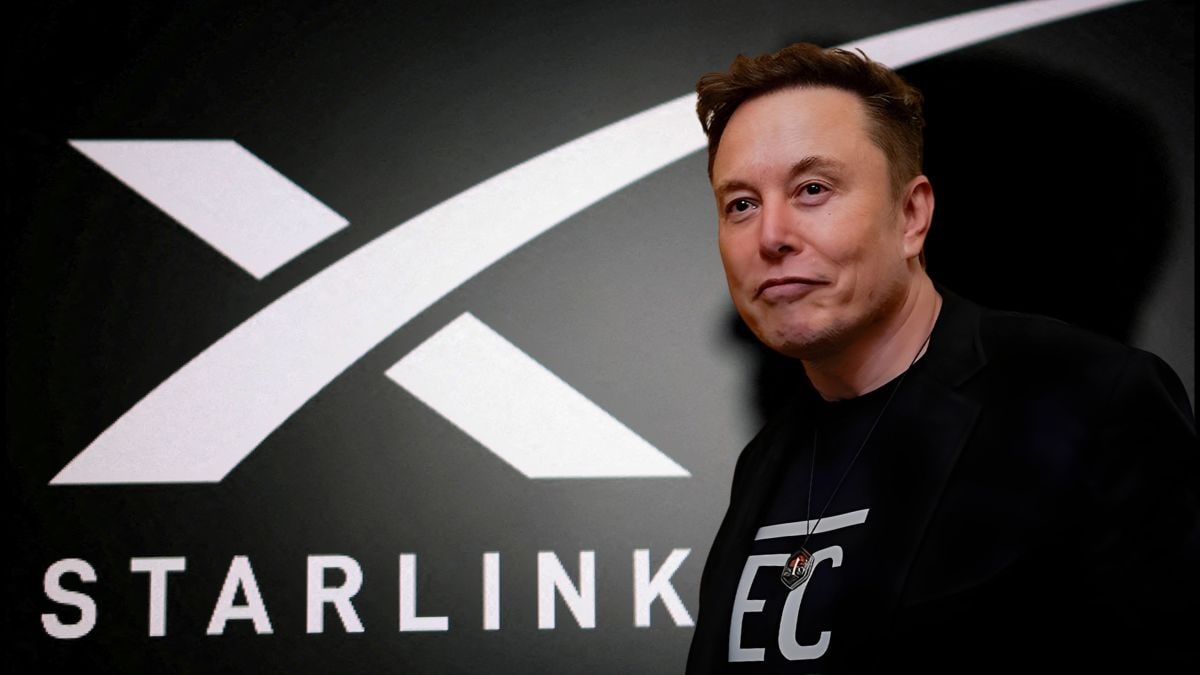
Elon Musk this morning revived the debate over satellite internet in India, all the while pitching Starlink as a way to bridge the rural digital divide. This came just as the company reapplied for regulatory clearance for its next‑generation Gen 2 constellation with direct‑to‑device capabilities.
Musk posted on X: “Starlink would help the least served in India, especially in rural areas.”
He was responding to another post that flagged the alleged scale of the connectivity gap, which claimed that 11,256 of India’s listed villages still had no 4G coverage as of May 2026. T
The same post even claimed that India had 1.093 billion internet subscriptions in March 2026, but only 440.87 million were rural, with rural subscription density at 48.31 per 100 people versus 126.80 in urban India.
Meanwhile, the company submitted a fresh application to the Indian National Space Promotion and Authorisation Centre (IN‑SPACe) seeking authorisation for its Gen 2 low‑Earth‑orbit constellation, which is expected to operate at altitudes of roughly 340–615 kilometres and add direct‑to‑device (D2D) connectivity to standard smartphones, as per an ET exclusive.
IN‑SPACe earlier rejected Starlink’s application for the roughly 30,000‑satellite Gen 2 network, citing non‑conformity of certain features and spectrum bands with Indian requirements.
In July 2025, the regulator approved only the Gen 1 constellation of 4,408 satellites, which meant Starlink could provide traditional broadband‑style services but not space‑to‑phone links.
The data Musk amplified through his "quote tweet" cited the Telecom Regulatory Authority of India’s performance indicators for the March 2026 quarter. TRAI reports 1,092.79 million internet subscribers at the end of March, of which 440.87 million are rural, and 651.93 million are urban, with rural penetration at 48.31 subscribers per 100 people and urban at 126.80 per 100 people.
The numbers seem to help Musk’s argument that India’s headline success in wireless coverage does not solve its rural lag, particularly in areas where fibre and 4G rollout have been slow. But can Starlink plug those gaps at sustainable price points? That is a question the world’s richest man (by net worth) is yet to answer.
