



I still remember blowing dust out of cartridge slots and swapping burnt CDs with my schoolmates back in 2005, long before "digital library" meant anything to a PC gamer like me.
By the time I moved to a PS3 and then upgraded through a PS4 Pro to my current PS5, the disc tray had already become more ritual than requirement.
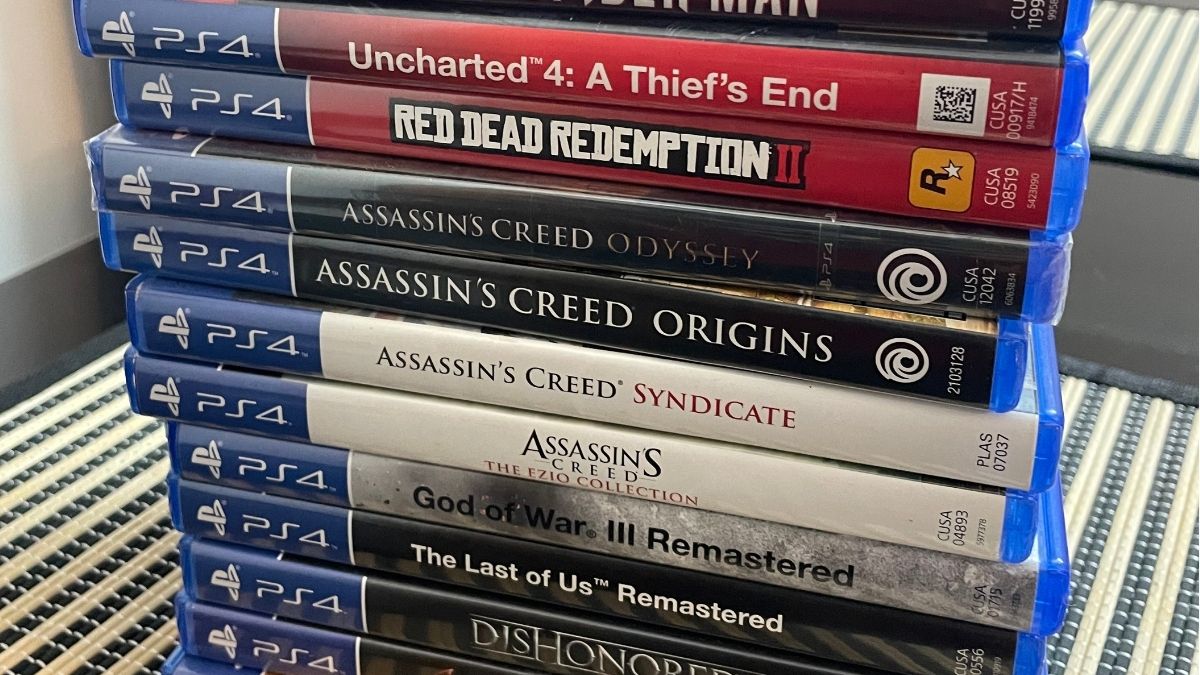
But it was a ritual I liked, the satisfying click of a case, the shelf of physical proof that these worlds were, in some tangible way, mine.
So when Sony confirmed it would stop producing discs for new games from January 2028, it felt personal, like watching a familiar chapter of gaming quietly close. And many millennial gamers such as myself felt the same. Some even more strongly, given the social-media backlash.
What happened to PlayStation?
Sony Interactive Entertainment has confirmed that from January 2028, no new PlayStation game will be sold on a physical disc, marking arguably the most consequential shift in console gaming since the format's inception.
In an official post, SIE said the move reflects how "the general preference for digital media significantly outpaces physical discs," and framed it as a "natural direction" for the platform.
Existing titles and anything released before the cut-off remain unaffected, and retailers will still stock game boxes—only now they will contain a download code rather than a Blu-ray disc.
This was one of those moments where I, as a gamer, was dumbfounded.
Tale of three platforms
Microsoft's Xbox division, which admitted in June 2026 to a hardware component crisis and years of financial strain, has been fighting to stage a comeback through Game Pass growth and exclusive titles rather than physical media debates.
Valve's Steam, meanwhile, remains the industry's quiet juggernaut, repeatedly smashing concurrent-user records and crossing 42 million simultaneous players in early 2026, powered largely by its open, PC-based ecosystem.
Sony's move effectively cedes the "ownership" argument to PC gaming at precisely the moment Steam is thriving on it.
Now, as gamers, we have recently come to terms with the fact that the next-gen consoles would be the ultimate leveller. There won't be a clear winner among the three. This also means that people like myself would have no qualms jumping from one platform to another.
To be honest, the only thing stopping Indian gamers from porting to Xbox or Steam is that their hardware is not available the way the PlayStation is, in the country. So, this decision by Sony, at a time like this, makes even less sense.
Piracy debate resurfaces
Then there is the ethical debate around piracy...
Sony's shift has reignited an old but pointed argument online: if a player never truly owned a disc or cartridge to begin with, is downloading an unauthorised copy of a game they cannot otherwise access really "piracy" in the traditional sense?
Proponents of this view argue that digital licences, which can vanish if a storefront shuts down or a publisher delists a title, blur the line between ownership and rental, weakening the moral case against unauthorised copying.
Critics counter that this logic conveniently ignores that piracy still deprives creators of revenue and that licensing terms, however imperfect, are agreed upon at purchase.
This is precisely why PC gaming, despite embracing digital storefronts, has never fully abandoned external media and modding support: platforms such as Steam allow offline installers, backups and user-generated content partly to preserve a sense of ownership that keeps players within legitimate ecosystems rather than pushing them towards piracy.
It would also be prudent for Sony to note that the recent spike in sales of Blu-Ray discs in visual media is no coincidence. Consumers have started to rebel against online streaming platforms, and the day gamers adopt the same approach would be nearer than you think.
Winning back the sceptics
Sony could defuse much of the backlash without reversing its disc decision by offering officially licensed USB or cartridge-based physical keys for major titles, sold in collector's editions, effectively preserving the "something to hold" experience without the cost of disc manufacturing and distribution.
Bundling such physical keys with exclusive in-game content or artwork, similar to Nintendo's cartridge model, would let Sony claim it never truly abandoned physical gaming, only its format.
But let us, for argument's sake, say that all three together decide to phase out physical media. Twenty years on from those scratched PC CDs, I might then feel oddly at peace, even if a part of me will miss cracking open a fresh case to play the game.
Digital-only gaming was always going to arrive eventually, and Sony may have simply drawn first blood. What matters now is whether the gaming industry remembers that ownership, however it is packaged, is what keeps players loyal. Will PlayStation, Xbox, and Steam find their own way to honour that old feeling of actually holding a game in your hands? That's up to them.
But if it does not work out, it will only take one rebel studio, with one excellent game, publishing its title on DVDs or some external media, that can run natively on PCs to bring back the glory days of gaming. That moment could spark a revolution that finally ends the console wars... by ending console dominance.
