



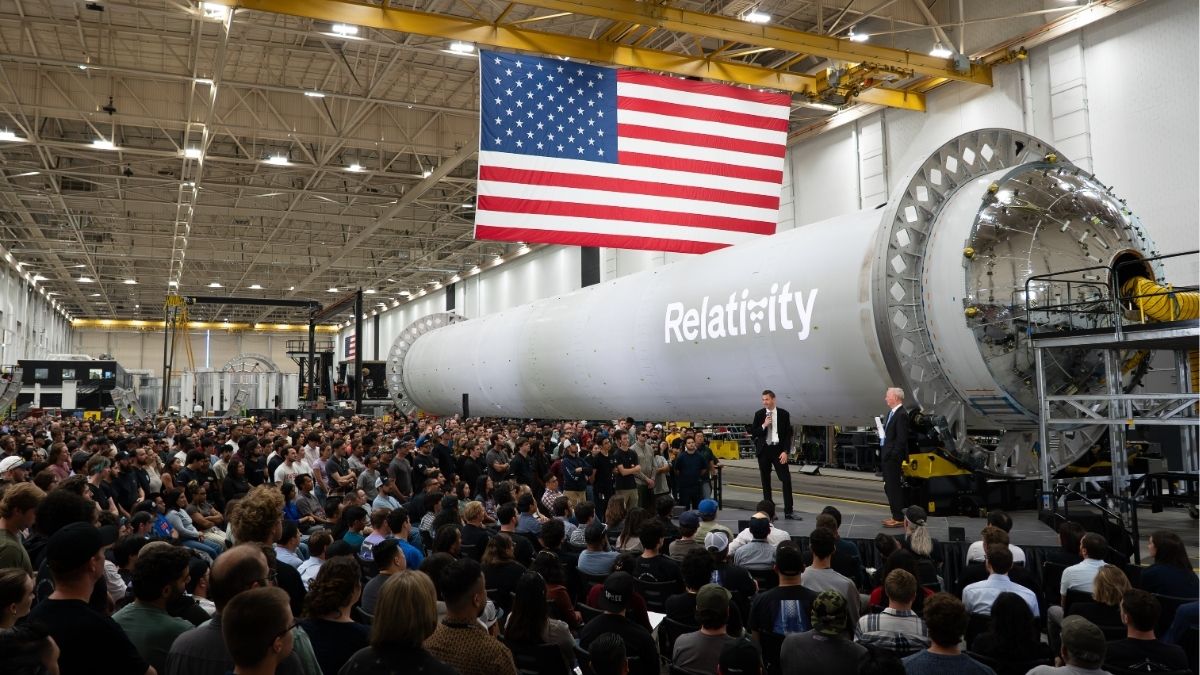
On June 17, 2026, NASA gave space lovers something exciting to talk about. It announced a new partnership with a private company called Relativity Space to study Mars more deeply than ever before. This is part of a growing trend where NASA joins hands with private firms to save money, work faster, and prepare the way for sending humans to the Red Planet one day.
In simple words, NASA will provide the brain of the mission, a set of advanced instruments called Aeolus, while Relativity Space will provide the body, meaning the spacecraft, the rocket (named Terran R), and the day-to-day running of the mission.
What makes this deal special?
It is NASA's first six-year reimbursable Space Act Agreement. That long word simply means a stable, long-term arrangement where both sides share the work and the costs. NASA Administrator Jared Isaacman said such teamwork combines NASA's deep knowledge of instruments with the speed, money, and fresh thinking of private companies. The aim is honest and clear: gather more information about Mars, more often, so that future landings by robots or by astronauts become safer.
The Aeolus mission is planned to launch in 2028 from Cape Canaveral. “The big job of this mission is to give the first complete daily picture of the Martian atmosphere: the winds, the temperatures, the dust, and the clouds. It is significant because Mars has very thin air and frightening dust storms. If we do not understand the weather properly, any spacecraft trying to land there could be in serious danger. So this data will help engineers design better landing systems, the tricky stage scientists call entry, descent, and landing,” explained space analyst Girish Linganna.
This work builds on more than twenty years of NASA's Mars study, including famous missions like MAVEN, Mars Reconnaissance Orbiter, and Mars Odyssey. Scientists at NASA's Ames Research Center in California will build four key instruments. The first measures wind speed and temperature up to about 60 km above the surface. The second tracks temperature layers, dust, and water-ice clouds. The third one studies surface heat and energy. The fourth is a wide camera that takes daily pictures to watch the weather and dust storms. NASA will run these instruments for at least one full Martian year, which is about 687 Earth days. Interestingly, all the information collected will be shared freely with scientists around the world.
Is the tie-up with Relativity Space worth it?
There is, however, one big question mark. Relativity Space is led by Eric Schmidt, the former CEO of Google, and the company uses clever 3D-printed rocket technology. “This 3D-printed technology has not yet even reached orbit with its rockets. Experts worry whether an untested rocket can be trusted to carry such an important NASA payload all the way to Mars, and on time? Others feel this risk is worth taking, because success would prove that private companies can reach deep space too,” remarked Linganna.
Aeolus is purely science-focused, built to predict Martian weather for future human missions. The race to Mars heats up as looking ahead, India is already planning Mangalyaan-2 around 2030, with a possible orbiter, lander, and rover.
