



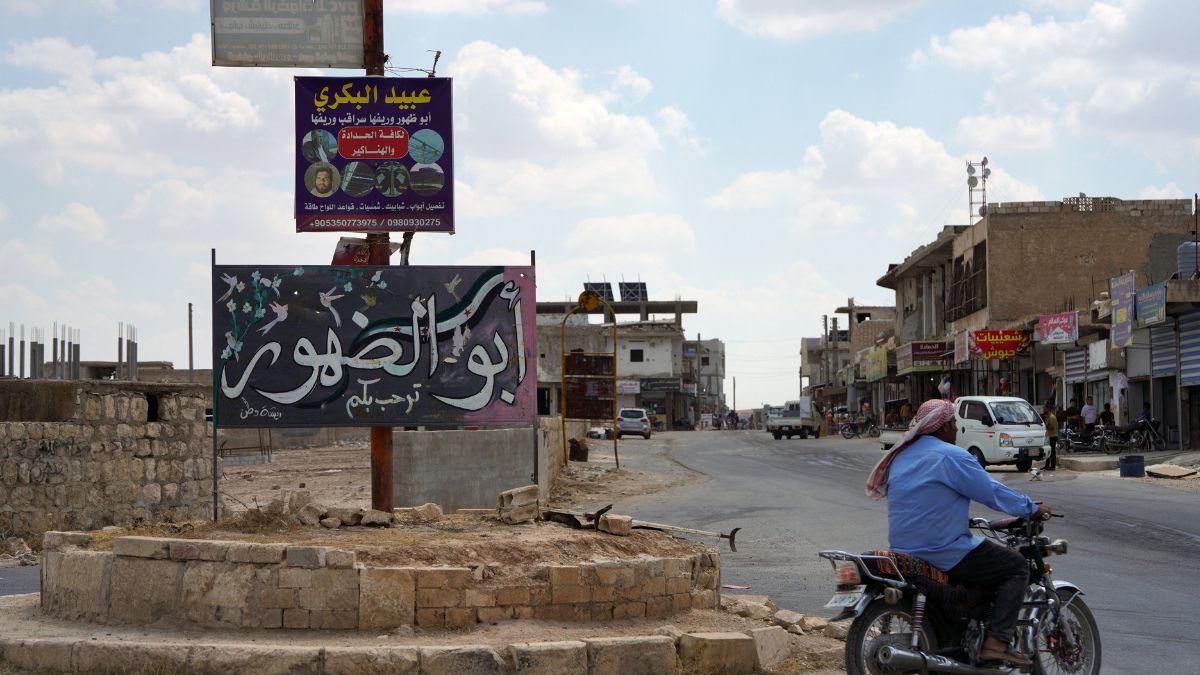
Israel's air strikes on the Abu al-Duhur military airbase in northwestern Syria on August 18 were justified by Jerusalem as an act of deterrence. However, they may prove to be costly in the long term. The stated aim of the attack was to stop Turkish troops from establishing a foothold at the airbase. Since the fall of Bashar al-Assad, Syria's new ruler, Ahmad al-Sharaa, has stayed close to Ankara, which backed his rebel forces for years before he took power. Israeli intelligence concluded that Turkey intended to renovate the base and install advanced radar and missile interception systems, which would hurt the Israeli air force's freedom of movement over Syria, northern Iraq and the routes it uses against Iranian threats. The bombing of runways and facilities was designed to draw a red line for Ankara, resembling an Israeli strike on Syria's T4 airbase in April last year. But provoking a NATO power could turn out to be a different game altogether.
Israeli Prime Minister Benjamin Netanyahu's office said Syria had been warned repeatedly that any Turkish deployment near Aleppo would be treated as a direct threat. The domestic political situation in Israel could well be another reason that explains Netanyahu’s aggression. With elections due in October and the Likud Party trailing in most opinion polls, the prime minister seems to be searching for options to display his national security credentials.
Turkey has made the point openly, accusing Netanyahu of pursuing expansionist and destabilising policies to bolster his standing before the polls. Washington, too, appears to share the sentiment. Tom Barrack, the US ambassador to Turkey, who is also the special envoy for Syria and Iraq, criticised the Israeli attacks. "We are deeply concerned that the confirmed Israeli airstrikes on Abu al-Duhur Airbase constitute an unnecessary escalation that does not advance regional stability," Barrack wrote on X, an unusually blunt rebuke of an Israeli operation from a serving American diplomat. The US also urged Damascus towards restraint, suggesting that border issues would be easier to manage once the Israeli election is over.
The Trump administration regards its outreach to al-Sharaa as one of its notable foreign policy achievements, and hopes to draw Damascus into an American-aligned camp. An uncoordinated Israeli strike on Syrian soil undermines that effort. Trump's ties with Turkish President Recep Tayyip Erdogan remain warm even as his patience with Netanyahu visibly wears thin. American officials have also disclosed that Israel declined to activate a joint US-Israel-Syria coordination centre in Jordan meant to manage border incidents, choosing instead to step up its own incursions.
Turkey has reasons to be angry. Having armed, trained and protected al-Sharaa's forces on their path to power, Ankara now treats Syria as within its own sphere of influence, and it condemned the strikes as a blatant violation of Syrian sovereignty and international law. It denied any Turkish troop buildup at Abu al-Duhur, with an official dismissing Israel's claims as frivolous and accusing Jerusalem of inventing pretexts to strike its neighbours.
Neither Turkey nor Israel side wants a full-blown conflict, and Israel's decision to hit empty runways carefully avoiding casualties suggests an effort to leave a door open. But Turkey's military weight far exceeds anything Israel has faced in recent decades—it is not Hamas, Hezbollah, Syria or even Iran—and provoking it without a credible diplomatic track could turn out to be a strategic blunder. It is not obvious whose interest that serves, since Israel and Turkey both have reason to prevent a resurgent, Iranian-led axis from re-establishing itself in the region.
Syria's own restraint has, for now, absorbed some of that risk. Al-Sharaa's government has continued to favour de-escalation despite the strikes, and Damascus had tried through back channels to reassure Israel that the runway works carried no hostile intent. But American intelligence suggests that patience is running out, with officials noting that Damascus increasingly feels compelled to defend itself against sustained Israeli aggression. Combined with mounting condemnation from Qatar, Egypt and Saudi Arabia, Israel's approach in Syria is beginning to resemble a trade of narrow tactical gain for a growing circle of angry partners, with Turkey and even the United States among them.
