



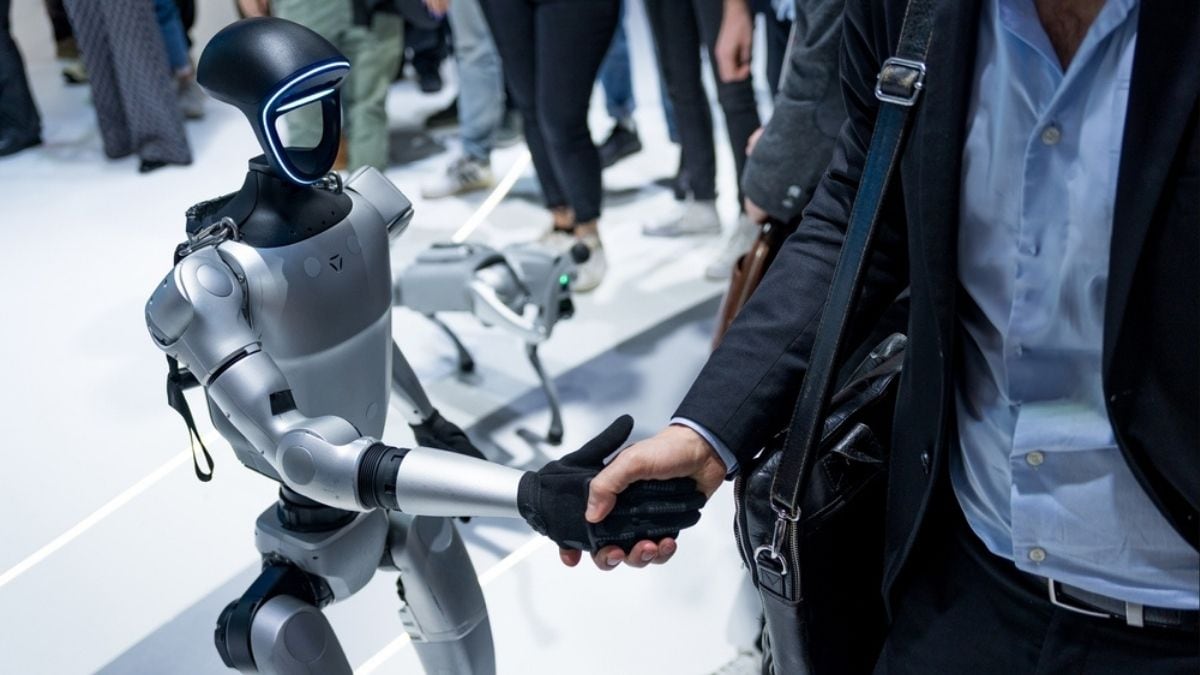
For years, robots largely belonged to controlled lab environments. That is changing. Humanoid robots are now entering warehouses, factory floors, and operational settings built for people. They can sense, decide, and act in real time, and that shift is beginning to influence how we think about education.
This marks a turning point for technical training. The conversation is no longer about whether students understand artificial intelligence or robotics in theory. It is about whether they can work with these systems in real conditions.
In India, this shift carries particular weight. Every year, a large number of engineering graduates enter a workforce that is changing faster than most curricula. Traditional models of technical education, strong in theory and discipline-specific depth, have served us well. But robotics does not operate within silos. It brings together machine learning, hardware systems, sensing, and control, all at once.
This gap between knowledge and application has been recognised at a policy level. NITI Aayog’s National Strategy for Artificial Intelligence highlights the need for future-ready talent pipelines. In practice, that means preparing students not just to understand technology, but to work with it when conditions are unpredictable.
What this looks like on the ground is fairly clear. A student may understand computer vision models in principle but struggle when those models encounter poor lighting or noisy data. Or they may write strong AI code, yet not fully grasp the hardware constraints that determine whether a system can function outside a controlled environment.
This is where the role of humanoid robotics in classrooms becomes important. When students begin working with industrial-grade robotic systems during their undergraduate years, the nature of learning changes. The classroom stops being purely instructional. It becomes a space where systems are tested, fail, and improve.
Concepts move out of textbooks and into execution. Students start to see how different technologies interact and how small variables can affect outcomes.
This kind of environment demands a different approach. Students begin to think in terms of deployment rather than just design. They work through constraints that cannot be simulated easily and learn to troubleshoot across both software and hardware layers. It is not always predictable, and that is precisely the point.
As robotics expands across sectors, manufacturing, logistics, healthcare, and infrastructure, the industry will increasingly look for engineers who are comfortable in such environments. Not just specialists, but professionals who understand how systems behave when deployed in real-world settings.
The urgency of this shift will only increase. As the IndiaAI Mission scales the country’s AI capabilities, the need for engineers who can bridge theory and application will grow.
More broadly, collaborations between academia and industry are beginning to reshape how technical education is delivered. They bring real-world scenarios into classrooms and reduce the distance between learning and application.
For India, the opportunity goes beyond adoption. If the country aims to play a serious role in advanced robotics and embodied AI under Make in India, it will need to build its own capability to design, deploy, and scale such systems. That requires a workforce trained differently.
Humanoid robots in classrooms are one part of that transition. They are not just technological additions. They signal a shift in how workforce readiness is defined.
In the emerging robotics economy, the most valuable graduates may not be those who understand technology in theory. They will be the ones who have already worked with these systems in real-world conditions and understand what it takes to make them function.
The author is founder and pro-chancellor at Shoolini University, which has started work on humanoids.
The opinions expressed in this article are those of the author and do not purport to reflect the opinions or views of THE WEEK.
