



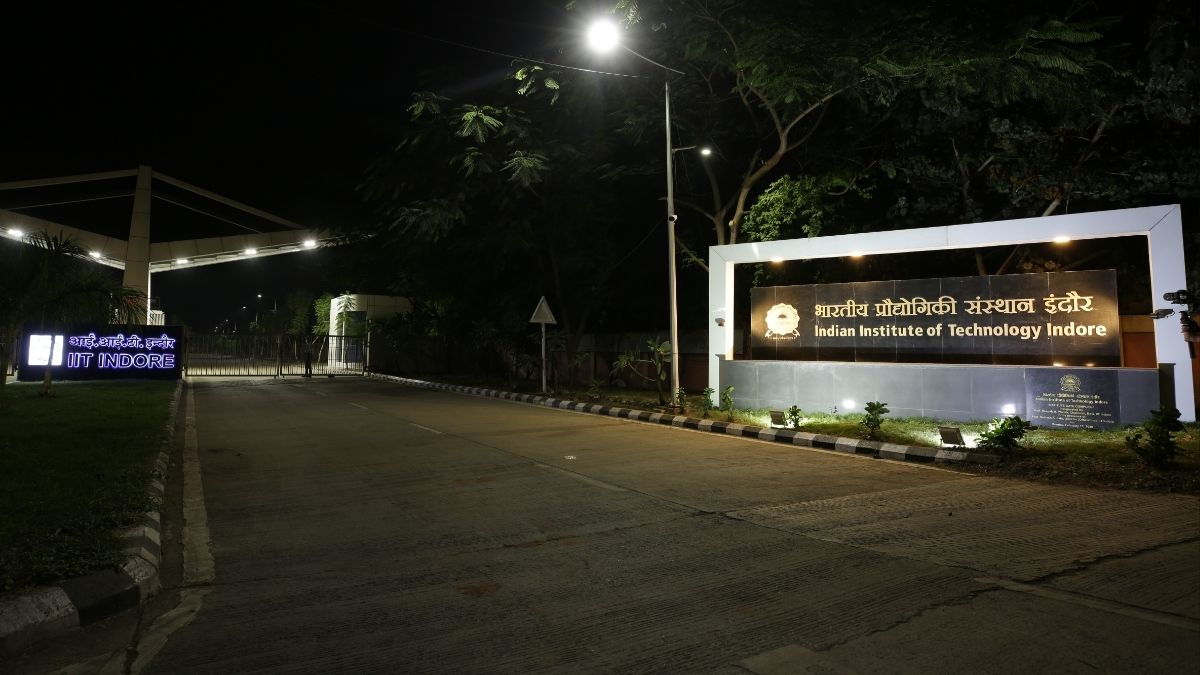
In laboratories that resemble workshops more than classrooms, a quiet shift is underway in India’s engineering education. Students are no longer waiting until their final year to build something meaningful. They are designing, prototyping, testing, failing, refining and in many cases, filing patents while still in their second or third year. At the centre of this transformation is a growing maker ecosystem anchored by the Indian Institute of Technology Indore and the Maker Bhavan Foundation, where curiosity is treated not as a prelude to learning but as its engine.
In a physics lab buzzing with whirring tabletop machines and animated debate, a group of first-year engineering students huddle around a deceptively simple challenge: design a device that allows an egg to fall from the sixth floor without breaking. The exercise is not about spectacle. It is about thinking about how to work within constraints, test assumptions, iterate failures, and arrive at a solution that holds up in the real world.
This is the spirit driving a subtle but consequential transformation at IIT Indore, where hands-on tinkering has moved from the margins to the centre of engineering education. In collaboration with Maker Bhavan Foundation, the institute is reimagining how students, especially those from Tier-2 and Tier-3 cities, engage with science, technology, and innovation.
“Students can make the best use of their vision and thought processes when learning is experiential,” IIT Indore Director Suhas Joshi tells THE WEEK. The institute’s maker spaces, he explains, are intentionally open and flexible. Students stitch their own aprons, design simple mechanical tools, and experiment with materials in ways that blur the line between classroom theory and workshop practice.
“Expose them early,” Joshi says. “Let them express their approach to solving a problem. Engineering is about solving problems in constrained environments, with limited resources and clear boundaries.”
The impact is visible. “Earlier, students wouldn’t even come to the lab,” a supervisor remarks with a smile. “Now they don’t want to leave.”
At the heart of this movement lies Maker Bhavan Foundation’s broader ambition to democratise innovation across Indian higher education. Founder Hemant Kanakia started the initiative with a simple but ambitious goal to collaborate with 1,000 colleges across the country and establish tinkering labs that encourage hands-on problem-solving.
“If you develop the habit of looking around and asking questions, innovation follows naturally,” Hemant says. Maker Bhava.n works with institutions to identify thematic problem areas ranging from sustainability and safety to healthcare and challenges students to build solutions with tangible applications.
Its six-week innovation programmes are intensive. Students must ideate, prototype, test, and present within tight timelines. The emphasis, Hemant notes, is firmly on process rather than product. “You can become an entrepreneur,” he tells students. “But first, you must learn how to think like an engineer.”
One of the most daunting hurdles for student innovators is the patenting process, often perceived as expensive, opaque, and inaccessible. IIT Indore and Maker Bhavan are actively trying to dismantle that fear.
“Patent filing is challenging and costly, yes,” Joshi acknowledges. “And lawyers need to clearly understand your process.” To bridge this gap, Maker Bhavan conducts workshops on intellectual property, guiding students through documentation, claims drafting, and prior-art searches. The foundation also assists with filings, turning what once felt like an elite domain into a learnable skill.
The projects emerging from these maker spaces are grounded in everyday realities. Aqua Loop, developed at IIT Indore, addresses efficient water management, an issue acutely felt across urban and rural India. The system focuses on closed-loop reuse and intelligent monitoring, alerting users to contamination and wastage. The Madhya Pradesh government is already in discussions with the institute to explore pathways for deployment.
Elsewhere, safety-driven innovation is taking shape in similarly grounded ways. Agni Rakshak, developed by Gayatri and Prerna from Trinity College of Engineering, addresses fire-related hazards through a device designed for affordability and ease of use. Fire safety solutions often fail not because technology is lacking, but because they are expensive, complex, or poorly adapted to Indian conditions. Agni Rakshak prioritises manufacturability using locally available components, making adoption in homes, small businesses, and institutions feasible.
The range of innovation is wide. Vayu Setu, an AI-powered autonomous delivery drone, explores last-mile delivery solutions for healthcare and emergency contexts, factoring in Indian terrain, regulatory constraints, and logistical challenges. Alongside such high-tech projects are quieter healthcare innovations, assistive devices for mobility, rehabilitation aids, and low-cost diagnostic tools. Many originate from personal encounters, such as an elderly relative struggling with movement, a lack of affordable therapy equipment, or delayed diagnoses due to inaccessible testing.
Students in early semesters are identifying gaps, water wastage, fire safety, healthcare accessibility, logistics inefficiencies and converting them into working prototypes. Students are introduced early to intellectual property fundamentals, prior art searches, novelty claims, and the ethical dimensions of patenting. The message is clear: innovation does not end at the prototype. If an idea has value, it deserves protection.
This has resulted in a growing pipeline of patentable ideas emerging from undergraduate labs. Students who once viewed patents as the preserve of corporations or senior researchers are now filing provisional applications themselves, guided by mentors who demystify the process.
What is unfolding at IIT Indore and through Maker Bhavan Foundation offers a glimpse of what engineering education in India could look like at scale. It is education rooted not in rote learning or delayed application, but in continuous engagement with the real world.
From curiosity to creation, and from creation to protection, these students are learning that innovation is not a moment of inspiration but a disciplined, collaborative process. With the right institutional support, that process can begin far earlier and go much further than traditional models ever allowed.
