



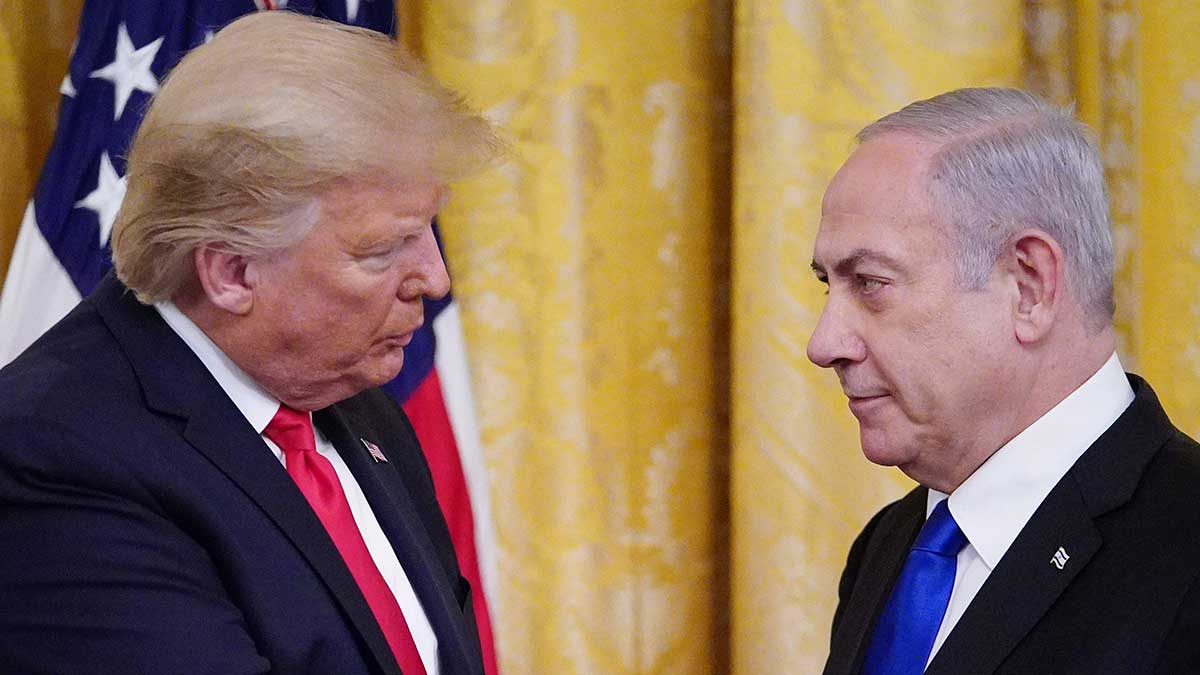
US President Donald Trump spoke with Israeli Prime Minister Benjamin Netanyahu over the phone on Saturday, amid growing speculation that Washington is weighing the possibility of renewed military strikes against Iran.
The conversation came days after Trump convened a meeting at the White House with senior military officials to discuss strategic options for resuming military operations against Tehran, according to a report by The Wall Street Journal.
However, US Secretary of State Marco Rubio said diplomatic engagement with Iran was continuing and stressed that Trump had not made any final decision on launching fresh military action.
“There are multiple talks; talks have actually never stopped. There's been active conversations going both in some cases directly, but often through intermediaries,” Rubio said.
Rubio also emphasised that any potential agreement must protect US national security interests and address the concerns behind the ongoing crisis. He identified Iran's nuclear ambitions and its support for armed groups across the region as key issues requiring attention.
Last week, an Associated Press report said US officials had urged several Middle Eastern countries and regional allies to prepare for the possibility of renewed military action against Iran following the November 3 midterm elections.
Two senior diplomats, speaking to the news agency on condition of anonymity, said Trump had repeatedly indicated that he was considering ordering fresh strikes after the crucial US elections.
Meanwhile, reports in sections of the US media suggest that Washington is also exploring the possibility of reviving peace negotiations with Tehran.
The diplomatic efforts reportedly gained attention after US Vice President JD Vance sent a letter to Mohsen Rezaei, secretary of Iran's Supreme National Security Council and a former commander of the Islamic Revolutionary Guard Corps (IRGC).
According to reports, the letter outlined a possible framework for negotiations rather than presenting specific terms for a peace agreement.
In his first public reaction to the communication, Rezaei described what he called a significant shift in Washington's tone, interpreting it as a sign that Iran had gained the upper hand.
“Their tone has shifted completely, which is a good sign that shows that our people have secured their victory,” Rezaei told Iranian state broadcaster IRIB.
With diplomatic channels reportedly still active and military options under consideration, Washington's next move on Iran remains uncertain.
