



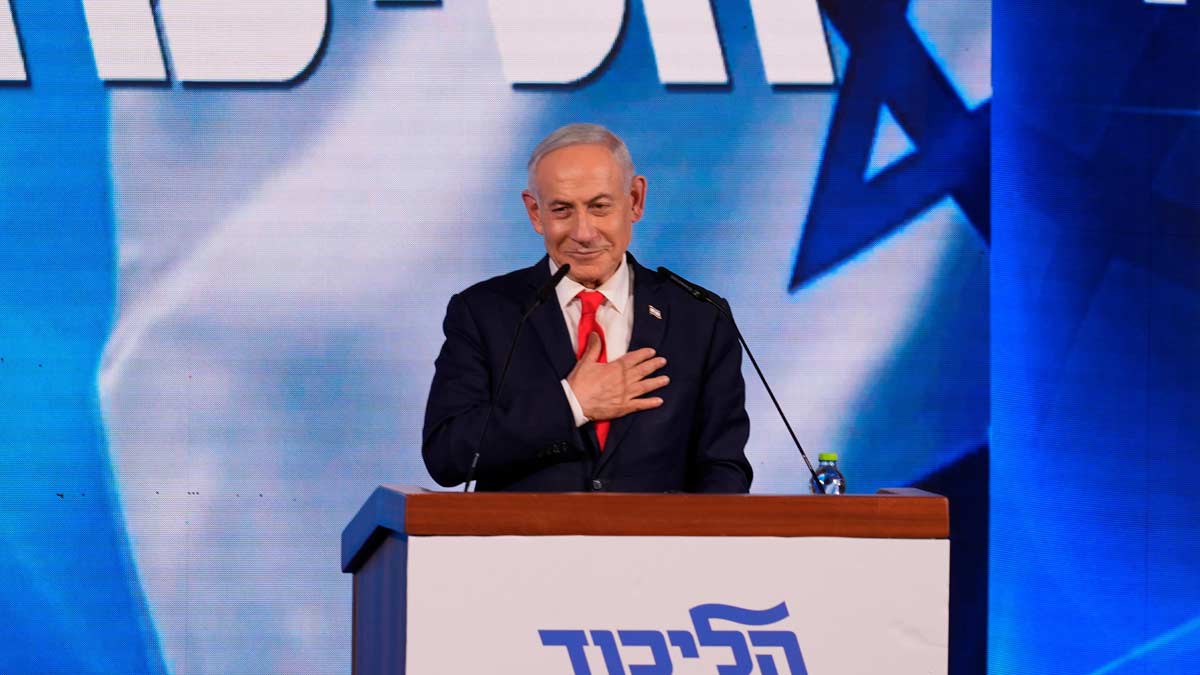
Amid a fractured electoral mandate in Israel, Prime Minister Benjamin Netanyahu’s Likud party has accused Arab parties of widespread voter fraud, bribery and violence at polling stations, calling for an investigation as vote counting continues.
The ruling party alleged that systematic criminal activities had compromised the integrity of the election, accusing Arab parties of attempting to manipulate the results through illegal means.
“The elections in the State of Israel were stolen by Arab parties that support terrorism and the elimination of the Jewish state through serious criminal offences of bribery, threats, violence, forgeries, and the use of prohibited software to mobilise voters,” the party said in a statement shared by Netanyahu.
Likud said it had submitted evidence of the alleged electoral malpractice to the police and the Central Elections Committee.
"The Likud party is transferring to the police, the Shin Bet, and the Central Elections Committee hundreds of testimonies and pieces of evidence regarding election theft in many Arab polling stations—thousands of envelopes with cash and Ra'am slips, threats and violence against polling station members, multiple voting behind the curtain, voting with double identities, discrepancies between the number of envelopes and the number of voters, the use of prohibited mobilisation software, and more," it said.
Netanyahu’s bloc falls short of majority
Netanyahu’s right-wing bloc appeared to be leading as vote counting entered its final stages, but projections by Israel’s three major broadcasters indicated that it remained short of the parliamentary majority required to form a government.
The projections gave Netanyahu’s bloc 53 seats, compared with 48 for the opposition group led by Gadi Eisenkot. Arab parties were projected to secure 19 seats, potentially giving them a decisive role in coalition negotiations.
A majority in Israel’s 120-member Knesset requires at least 61 seats.
The Likud still appears to have emerged as the largest party, putting Netanyahu in the best position to be tasked first with forming a government.
The election, the first since Hamas’s October 2023 attack on Israel, was widely viewed as a referendum on Netanyahu’s leadership and his long tenure in office.
Official results were expected on Thursday or Friday, with coalition negotiations likely to continue for weeks before a new government could be formed. If political leaders fail to secure the necessary support, the country could face another election.
