



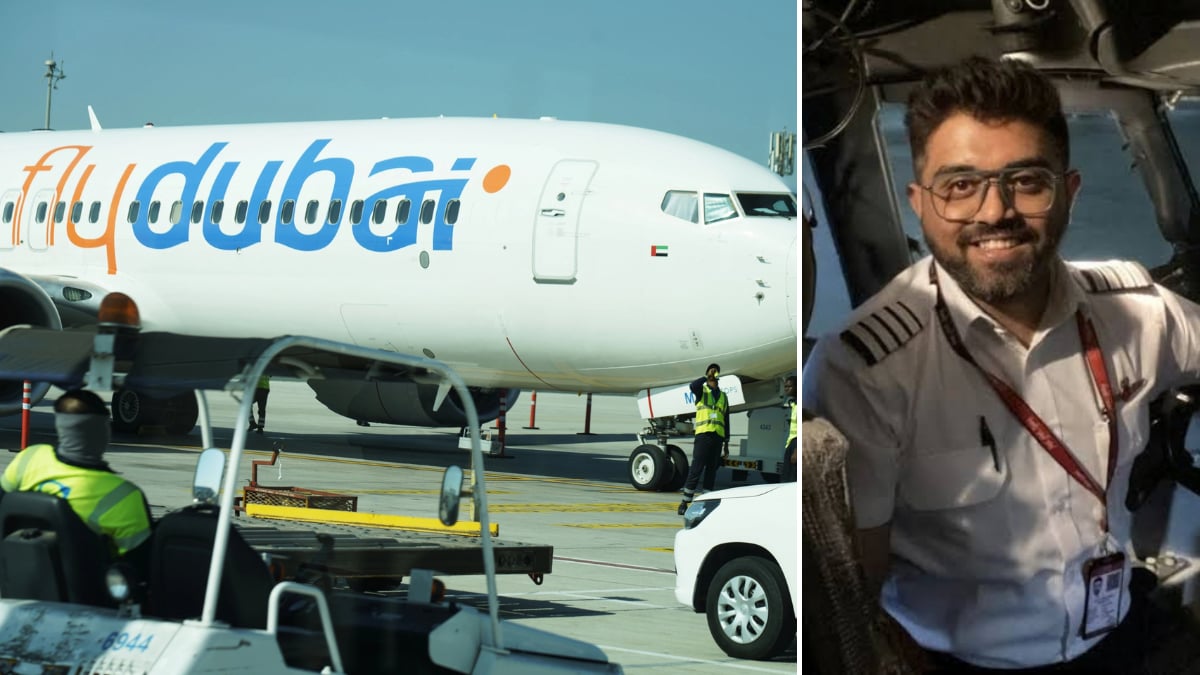
The attack aboard flydubai flight FZ1073 has revived one of aviation’s most unsettling questions: who protects passengers when the threat comes from the people entrusted with flying them?
Modern aviation rests on a compact of trust. Passengers surrender control of their lives to pilots they may never meet. Pilots, in turn, rely on technology, regulation and procedures designed to prevent human error, mechanical failure or misconduct from becoming catastrophe. That compact is most vulnerable when danger comes not from weather, machinery or an intruder, but from within the flight deck itself.
On September 30, 2026, flydubai FZ1073 was travelling from Dubai to Tel Aviv with 172 passengers and crew aboard when it plunged over 17,000 feet in under a minute and diverted to Saudi Arabia. According to official findings and subsequent accounts, First Officer Hamam al-Hammami launched an unprovoked attack on Captain Smit Machchhar using the cockpit crash axe. Severely wounded, Captain Machchhar fought back and managed to unlock the cockpit door. Passengers and crew, aided by a off-duty dentist and two "deadheading" flydubai pilots travelling as passengers, restrained the assailant. The reserve pilots took command of the damaged Boeing 737 MAX 8, landing it safely in Tabuk.
UAE prosecutors confirmed the co-pilot intended to fly the aircraft into the passenger terminal at Tel Aviv’s Ben Gurion airport to cause mass casualties, having used earlier flights to familiarise himself with the route. Law enforcement agencies, alongside international investigators, later uncovered extremist materials and terrorist images on al-Hammami’s social media profiles. The suspect remains in UAE custody facing terrorism charges, while India’s National Investigation Agency registered a case under its Anti-Hijacking and Unlawful Activities Prevention Acts to probe broader conspiracy links.
Machchhar’s extraordinary presence of mind and courage deserve recognition. But can aviation safety depend on courage alone? A commercial aircraft should never have to rely on a wounded captain’s last reserves of strength, passengers rushing into a cockpit or the fortunate presence of reserve pilots to avert disaster. The question is institutional: what safeguards failed and how can they be strengthened before another crew faces the same nightmare?
That question has haunted aviation since Germanwings Flight 9525 crashed in the French Alps on March 24, 2015. The Airbus A320 was flying from Barcelona to Dusseldorf with 144 passengers and six crew members. Investigators concluded that co-pilot Andreas Lubitz deliberately initiated the descent while alone in the cockpit and prevented the captain from re-entering. All 150 people aboard died.
The immediate response included a recommendation that two authorised people remain in the cockpit. It, however, never became a single permanent rule applied identically across jurisdictions. European regulators first issued temporary guidance, then gave airlines greater discretion to adopt the two-person procedure or other safeguards based on risk. Those measures could include psychological assessment, security screening, peer-support systems and attention to workplace risks.
That approach has shifted again: EASA reinstated two authorised people in the cockpit as its preferred operational approach, while allowing operators to use documented, equivalent safeguards. The renewed guidance also stresses training and clear procedures for the additional person.
That evolution matters. Public memory often retains the announcement of a safety rule long after the rule has changed. Aviation procedures, however, must evolve with evidence.
Germanwings exposed a difficult paradox. Cockpit security must prevent unauthorised intrusion, yet the same protective architecture must not leave a crew trapped with an incapacitated or dangerous pilot. Reinforced cockpit doors, strengthened after the September 11 attacks, remain indispensable against hijacking. But when the threat comes from someone already authorised to enter, the barrier can isolate a victim and delay help.
No ‘door policy’ can solve this dilemma alone.
Safety must therefore be layered. Airlines and regulators need rigorous recruitment and continuing vetting, effective information-sharing, confidential channels through which colleagues can raise concerns, credible mental-health support, recurrent crew training and clear procedures for responding when a pilot is incapacitated, violent or otherwise unable to perform safely.
These safeguards must also avoid crude assumptions. Mental illness does not make a person dangerous. Overly punitive screening can make aviation less safe if pilots fear that seeking counselling or treatment will automatically end their careers. A mature safety system must encourage people to seek help while ensuring credible risks are identified and acted upon. Screening is useful, but it cannot compensate for weak judgement, fragmented information or an organisational culture that ignores warning signs.
The same discipline of evidence must shape how we interpret other aviation tragedies.
Air India Flight AI-171, a Boeing 787-8, crashed shortly after departing Ahmedabad on June 12, 2025, killing 241 on board and 19 on the ground. Its preliminary report recorded that the engine fuel-control switches moved from “RUN” to “CUTOFF” shortly after take-off. That is a serious finding. By itself, however, it does not establish why the switches moved or who was responsible.
Subsequent safety assessments by India's Civil Aviation Ministry confirmed that testing found no mechanical abnormality in the fuel-control switches’ locking detents. Examination of the wider thrust-control module and flight data recorders continued, with accident investigation bodies working toward a comprehensive final report to trace the entire mechanical and human operational sequence.
Until investigators establish the chain of events, speculation is not accountability. It is merely noise.
Accident investigations exist to establish what happened, identify contributing factors and prevent recurrence. They are not designed to produce instant villains, premature clean chits or convenient explanations. Manufacturers may provide technical expertise, but public confidence depends on independent scrutiny, transparent findings and a willingness to examine design, maintenance, training, regulation and crew actions wherever the evidence leads.
This principle is crucial because aviation safety is cumulative. Each accident or near-disaster adds knowledge to a global system. No regulator can promise zero risk, but every regulator can be judged by what it does with risks already known. Were warnings recorded? Was information shared? Were recommendations implemented? Were safeguards tested after implementation? Did institutions learn before another accident forced them to?
The FZ1073 inquiry must look beyond the attack itself. It must establish how the co-pilot was selected, what intelligence employers and authorities held, whether concerns had previously been recorded, how that information was assessed and whether flight deck protocols require immediate revision to prevent on-board equipment from being weaponised. Reports regarding the suspect's background and prior flight restrictions require rigorous verification; nationality, religion and speculation cannot substitute for evidence. Aviation security becomes stronger, not weaker, when it is precise.
Captain Machchhar will be remembered for his presence of mind and resolve under extreme pressure. Yet heroism must never become a safety plan. The enduring tribute to the victims of Germanwings, Air India and every preventable aviation disaster is not rhetoric after tragedy. It is a system that learns without scapegoating, protects without creating fresh vulnerabilities and treats every warning as a reason to act.
Passengers should never become unwitting test subjects for lessons learned only after catastrophe. Every warning must be heard; every failure must be confronted; and every safeguard must be tested before another aircraft becomes the lesson.
The author is a Delhi-based aviation enthusiast and the views are personal
