



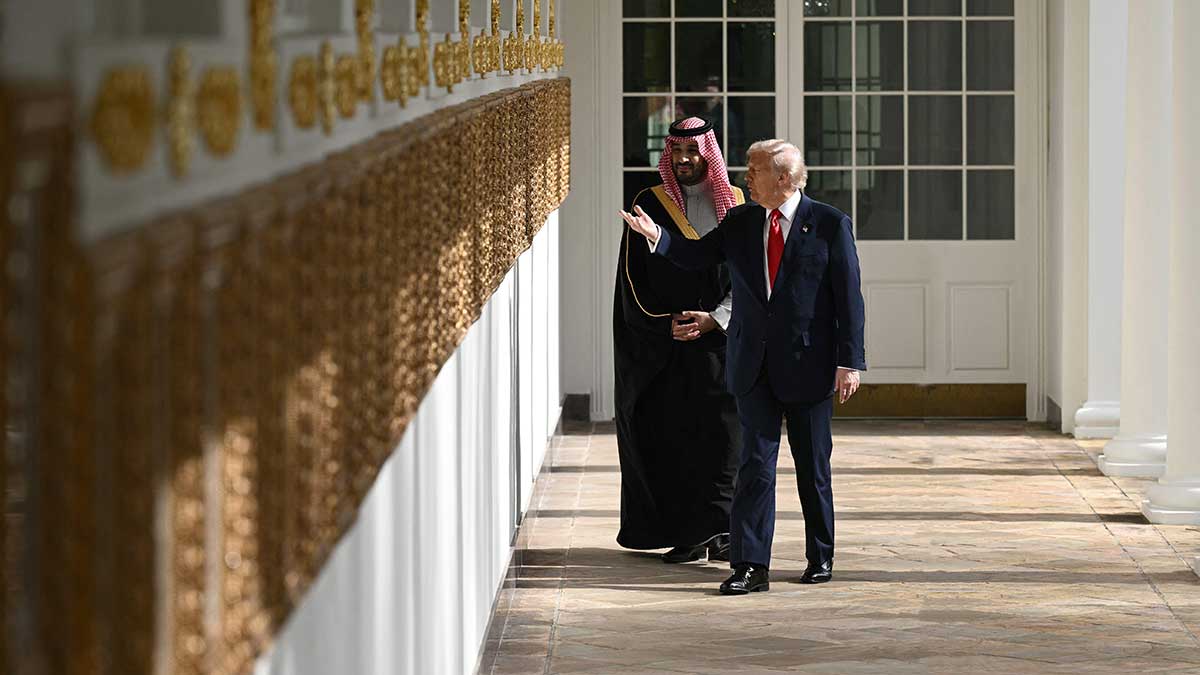
A classified American intelligence assessment shared with Capitol Hill has concluded that Saudi Arabia has not ruled out developing nuclear weapons. Intelligence officials say Crown Prince Mohammed bin Salman has made no formal decision to build a bomb, but the assessment finds that Riyadh is keeping that option open. The report reached Congress along with briefing material from the State Department as part of the review of the US-Saudi Arabia civil nuclear agreement.
While the CIA declined to comment, the State Department insisted that Washington "does not and will not support a Saudi nuclear weapon programme" and voiced confidence in the deal's safeguards. Saudi Energy Minister Prince Abdulaziz bin Salman said the kingdom's nuclear ambitions were purely peaceful and conducted with full transparency. The intelligence finding, however, affirms a long-held suspicion: that Riyadh's pursuit of domestic fuel cycle technology could also be used to secure a deterrent rather than merely generate power.
At the centre of the dispute is a 30-year civil nuclear pact, a "123 Agreement" under Section 123 of the US Atomic Energy Act of 1954, signed in July by Energy Secretary Chris Wright and Prince Abdulaziz. The agreement opens the door for American firms such as Westinghouse Electric to build tens of billions of dollars' worth of nuclear infrastructure, a boost for a struggling domestic industry and a counter to Chinese and Russian inroads in the region. For Washington, it also served the purpose of repairing ties with Riyadh after a period of regional strain.
The terms, however, break with American non-proliferation precedent. The 2009 agreement with the United Arab Emirates, long held up as the "Gold Standard" because Abu Dhabi permanently renounced enrichment and reprocessing, offers no equivalent here. The Saudi deal instead opens a conditional path to domestic enrichment, capped initially below 5 per cent but allowing a rise to 20 per cent after a joint review. That level remains short of weapons-grade, above 90 per cent, but it substantially shortens the breakout time to reach it. More striking still, the pact omits the IAEA's Additional Protocol, which grants inspectors snap access to undeclared sites. Trump had briefly sought to tie the deal to Saudi recognition of Israel, but that condition was dropped, leaving an agreement with distinctly lighter oversight than its predecessor.
Its submission has triggered a 90-session-day congressional review and considerable pushback. Representative Gregory Meeks introduced a Joint Resolution of Disapproval in the House. In the Senate, Ed Markey and Jeff Merkley led a group of Democrats warning Secretary of State Marco Rubio that the administration was loosening restrictions to accommodate Riyadh. Merkley argued that a genuinely civilian programme would readily accept snap inspections and forgo enrichment altogether.
Critics have also flagged potential conflicts of interest: Jared Kushner received a $2 billion investment from the Saudi sovereign wealth fund after leaving government, and Westinghouse's ownership overlaps with interests tied to Commerce Secretary Howard Lutnick's family. Twenty non-proliferation experts, including former IAEA chief Hans Blix, have separately warned Congress that the absence of snap inspections would make covert weapons work at undeclared sites nearly impossible to detect. Blocking the agreement remains difficult regardless: overturning a 123 Agreement requires a resolution able to survive a presidential veto, meaning two-thirds majorities in both chambers.
The regional stakes extend well beyond the bilateral dispute. Granting Riyadh enrichment capability without robust safeguards threatens the fragile non-proliferation order across the Middle East. MbS has said repeatedly that an Iranian bomb would prompt an immediate Saudi one. Equipping the kingdom with the technical building blocks of a full fuel cycle brings that threshold closer. Riyadh's new mutual defence pact with nuclear-armed Pakistan, whose defence minister has suggested Islamabad's arsenal could be made available if needed, adds another layer to an already anxious calculus, one that has not escaped Israel, wary of any erosion of its own unacknowledged nuclear monopoly. Analysts warn that substituting convenient bilateral terms for standard IAEA verification creates an awkward precedent, one that Moscow and Beijing may cite when courting their own allies.
The Saudi question also influences the war with Iran. Despite heavy damage from joint American and Israeli strikes, Iran's enriched uranium stockpiles appear largely intact, leaving negotiation rather than force as the only durable path forward. A Saudi arrangement that permits enrichment without intrusive inspection hands Tehran a ready comparison, and Iranian negotiators are unlikely to settle for less generous terms in any future settlement. Markey's warning is not off the mark: advancing the Saudi deal mid-war risks convincing Tehran to take forward its nuclear programme, nudging the region closer to a dangerous nuclear arms race.
