



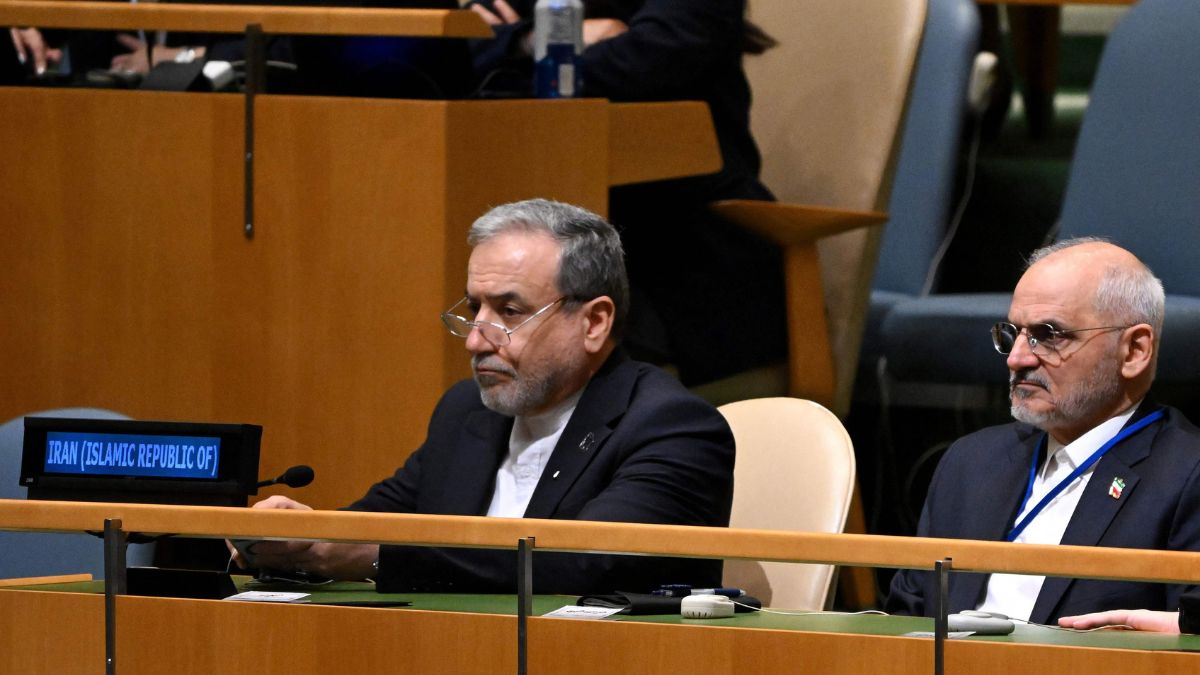
On the sidelines of the United Nations General Assembly in New York, Iran's Foreign Minister Abbas Araghchi formally presented Qatari, Egyptian and Pakistani mediators with a seven-day road map for the United States. The proposal repackages the core commitments of the 14-point Islamabad Memorandum of Understanding signed in June, which unravelled soon after. But Araghchi’s new plan offers a timetable: a sequence of steps to be completed within a week rather than negotiated endlessly.
Under the plan, hostilities across every regional front, including Lebanon, would cease immediately. Washington would simultaneously lift its naval blockade on Iranian ports, grant waivers on oil sanctions and unfreeze at least $12 billion in Iranian assets held abroad. On the seventh day, Tehran would reopen the Strait of Hormuz to commercial shipping through a proposed joint Iranian-Omani transit route that permits Iranian inspections. Formal talks on Iran's civilian nuclear programme would begin immediately after.
The arithmetic cuts both ways. For Tehran, it promises swift relief from a blockade and embargo that have driven hyperinflation, currency collapse and shortages of food and medicine. For Washington and the wider global economy, it offers an exit from a seven-month conflict, restored traffic through a chokepoint handling roughly a fifth of global oil shipments, and an immediate start to non-proliferation talks. But the plan asks Washington to grant major economic relief before any nuclear concession, and Iran's insistence on inspecting vessels transiting Hormuz collides directly with demands from an 80-nation coalition for unrestricted passage. Hardliners in Tehran, meanwhile, remain hostile to negotiation of any kind under pressure.
Washington's response has split along public and private lines. In his own UN address, Donald Trump called for Iran's "complete economic isolation", ruled out lifting the blockade before Tehran shows "sufficient goodwill", and threatened the regime with "annihilation" should talks fail. However, away from the limelight, envoys Steve Witkoff and Jared Kushner sat through a three-hour mediated session with Araghchi that both sides called constructive. White House officials confirmed the Qatari-brokered talks were producing something positive, while insisting no deal would be rushed. The stated position, that Trump remains committed to blocking an Iranian bomb while curbing Tehran's regional proxies, has not moved.
Iran's President Masoud Pezeshkian struck a similar balance of defiance and openness at the General Assembly. Iran, he said, would never "bend the knee" to coercion or sanctions. He accused Washington of terrorism, citing the assassination of Supreme Leader Ayatollah Ali Khamenei at the war's outset and displaying photographs of Khamenei alongside children killed in American missile strikes. He pointed to the asymmetry in how Israel's military actions draw no sanctions while Iran is isolated for far less. Yet he closed the door only partway, repeating Tehran's readiness for "dialogue and diplomacy" provided it proceeds on equal footing, without the "language of force", and reaffirming Iran's right to a peaceful nuclear programme.
Iranian diplomats were busy at work in Manhattan beyond the UN stage. Araghchi kept up mediated contact with American representatives throughout his stay, while Pezeshkian held an unusual press briefing for international journalists at the Millennium Hilton. There he denied any Iranian plot to assassinate Trump or his family, and offered a rare glimpse into the succession at the top: seven-hour meetings with the new Supreme Leader, Mojtaba Khamenei, whom he described as recovered from February's airstrike injuries and actively directing war strategy. He characterised the sanctions regime as a "silent murderous campaign" against ordinary Iranians. Regional diplomacy moved in parallel, with Egypt's Abdel Fattah El Sisi and CIA Director John Ratcliffe discussing Iranian-Arab reconciliation.
Both sides have reason to move fast. Araghchi and Pezeshkian want an agreement before the US midterms in November, and polling showing 69 per cent disapproval of Trump's handling of the war gives Tehran leverage: rising pump prices are a political liability the White House would rather not carry into election season. The seven-day clock appears designed with exactly that calendar in mind.
