



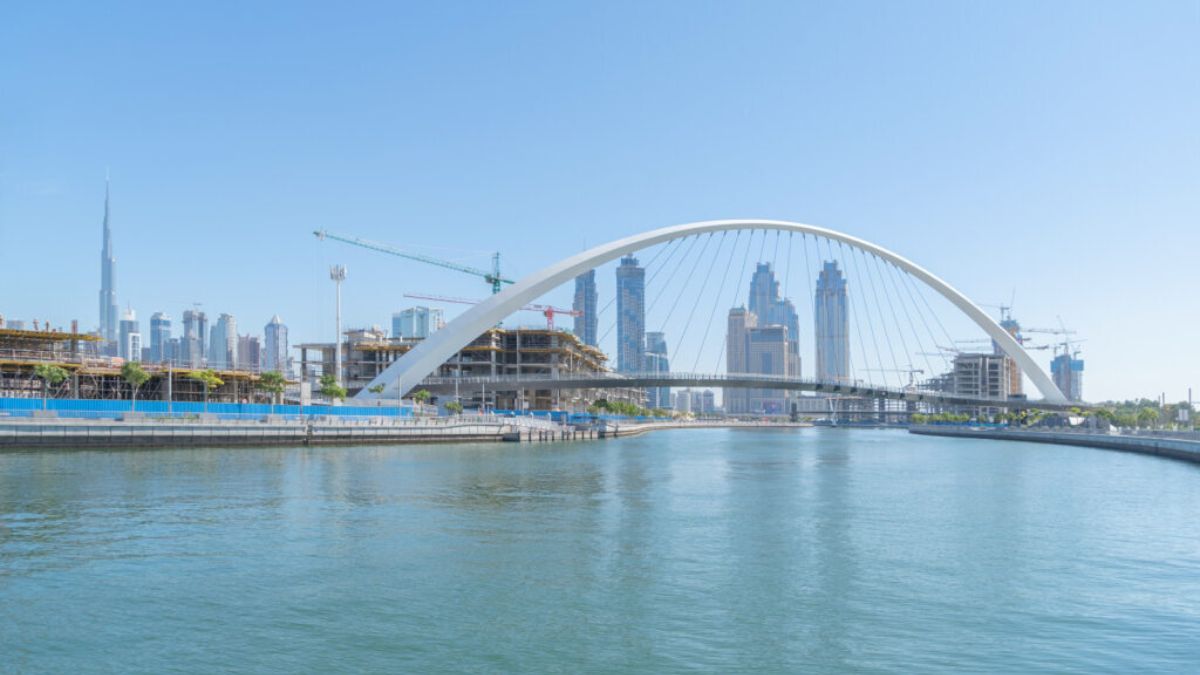
In 2025, Dubai once again ranked number one in attracting more new headquarters-related foreign investment projects than any other city in the world. It achieved this for the fourth consecutive year, with total greenfield FDI projects reaching 1,253, up 10.5% from 2024. The numbers not only underline the emirate’s strong foreign investment performance but also reflect the confidence organisations place in Dubai’s business ecosystem. So, which factors constitute this comprehensive business environment that are prompting global companies to choose the city as their regional headquarters?
Connectivity as a strategic advantage
Regional headquarters serve as a base for a company's further expansion. With its extensive connectivity to several key regions, including the Middle East, Africa and South Asia, Dubai is well- suited to this role. It acts as a central point from which a company coordinates operations across several markets, bringing together functions such as leadership, finance, strategy, sales and client management. For companies whose regional operations also involve trade, distribution, or supply-chain management, Dubai's transport and logistics infrastructure, including Dubai International Airport, Jebel Ali Port, and DP World's logistics network, enables them to coordinate regional operations from a single base. In terms of internal mobility, Dubai is well-connected through its integrated public transport network, linking major business districts with residential areas and other key areas in the city, making commercial locations more practical for companies and their workforce.
Real estate-driven competitive edge
How smoothly operations can run, employee experience, amenities, and rental rates, among other factors, are important considerations when a company sets up or expands its office. Real estate quality and its location also influence the image a company presents to its stakeholders. Dubai's commercial real estate gives global occupiers an edge across all these parameters. With Grade-A office space available in varied formats and in sought-after locations, Dubai gives global occupiers flexibility to establish regional headquarters that align with their requirements and corporate image. That is why, despite geopolitical fluctuations, vacancy rates in the region have fallen, and rents have climbed, indicating steady demand for quality office space. JLL reported that Dubai's office vacancy rate fell to 6.1% from 7.7% a year earlier, while Grade A rents rose 26.2% and prime rents increased 13.6% in Q2 2026. Rental contract registrations also increased 24.6% year over year. Flexible office spaces in Dubai are also lowering entry barriers for occupiers and offering shorter lease commitments without compromising on facilities, encouraging more companies worldwide to consider Dubai for regional expansion. Another factor attracting global firms to Dubai is the presence of sector-specific corporate clusters. For example, Dubai Internet City serves the technology sector, Dubai Media City the media and communications industry, DIFC financial services and fintech, and JAFZA trade, manufacturing and logistics. These clusters enable companies to access an established talent pool and help meet their business-related requirements within the same ecosystem. In addition, the city’s thriving residential market, combined with dependable healthcare and education, helps companies retain the international workforce needed to operate their regional headquarters.
Policy support for corporate expansion
Dubai, through its business-friendly measures, offers ease of establishment and operational flexibility to global companies. These include access to free zones with 100% foreign ownership, streamlined setup procedures, benefits from the UAE's corporate tax framework, and long-term residency options, for example, the Golden Visa. The D33 Economic Agenda adds to Dubai's appeal among global businesses. A long-term policy framework, it aims to attract foreign investment and develop new economic sectors. Collectively, these policies are creating more opportunities for global companies to establish and grow their regional operations in Dubai.

Separately, the Dubai International Chamber attracted 373 companies to the emirate, including 64 multinational corporations and 309 SMEs. These numbers highlight a growing concentration of businesses in the emirate and a widening base of commercial occupiers for Dubai's office market. Simultaneously, Dubai's property pipeline, estimated at more than US$272.3 billion in new real estate projects that could be launched over the next five years, is expected to provide global occupiers with room to grow alongside the city's expanding business ecosystem. Given these trends, Dubai is likely to remain a preferred destination for global occupiers looking to establish regional headquarters.
The author is an entrepreneur, business builder, and founder of UAE-based Sterling Ark Holdings.
