



Saudi Arabia is confronting a difficult choice over Yemen's Houthi rebels, caught between the cost of renewed war and the risks of appeasement. A truce that had held, however precariously, for four years is now unravelling, and the kingdom is trying to keep a heavily armed adversary on its southern border in check without either triggering a full conflict or strengthening the opponent's hand.
Outright war with the Houthis carries real costs for Saudi Arabia's economy and domestic standing, not least for Vision 2030, an ambitious plan that depends on projecting regional stability to attract foreign capital. The kingdom's finances are already stretched, having recorded a budget deficit of $33.5 billion in the first quarter of this year, driven largely by higher military spending.
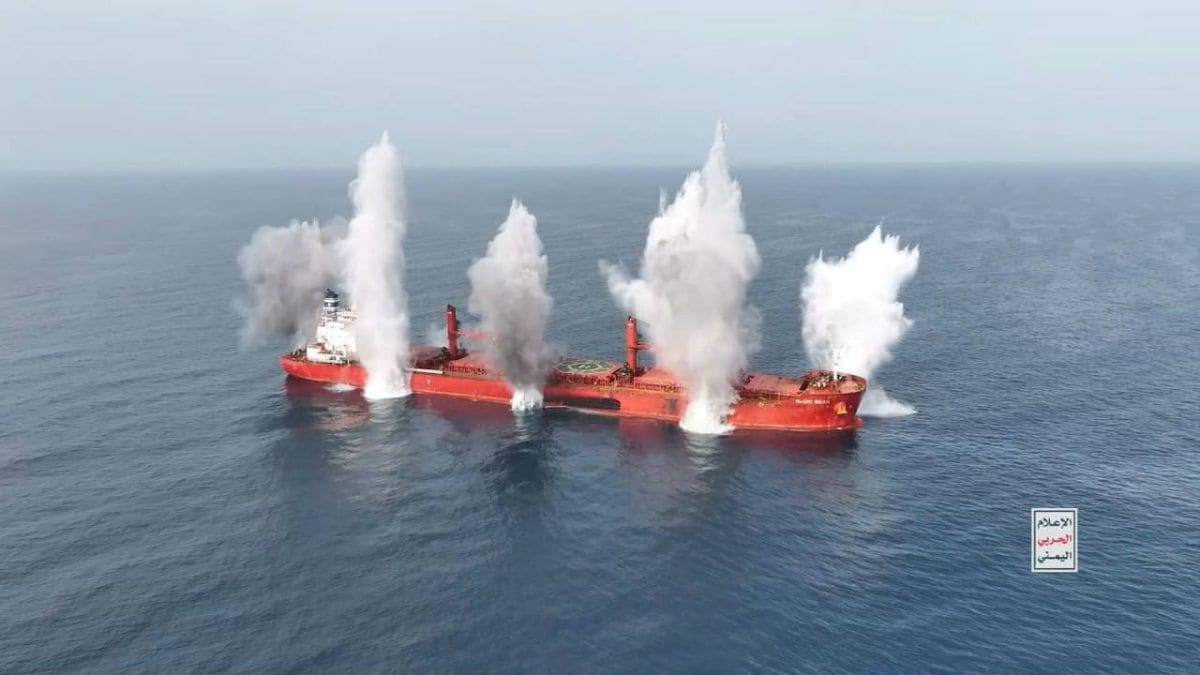
The Houthis have demonstrated they know where to apply pressure. With the Iran war having forced closure of the Strait of Hormuz, Saudi Arabia has come to rely on its East-West Petroline to move crude around the Gulf to the Red Sea port of Yanbu. That route is now under threat. Acting on Iranian instructions to escalate in case Washington strikes Iranian targets, the Houthis have declared a naval blockade of Saudi Arabia in the Red Sea, and have fired drones and missiles at the Aramco refinery in Jazan, port infrastructure in Yanbu, and the city of Mocha. Intelligence assessments warn further that Iranian-backed Iraqi militias and Houthi forces could coordinate strikes on Saudi civilian and energy sites.
Appeasement offers no easier way out. Facing a financial crisis that has left public sector salaries unpaid for years, the Houthis are pressing for wage payments, an end to blockades and international recognition. Yet any significant concession from Riyadh, such as lifting restrictions on Yemeni airspace and ports, risks handing the group greater political and military strength. Unrestricted access to sites such as Sanaa airport would make it easier for Iran to keep the Houthis armed. In blockading the Red Sea, the group is also advancing a wider Iranian objective, that of squeezing the global economy, pushing oil past $100 a barrel and increasing pressure on Washington, turning what was once a bilateral dispute with Riyadh into a broader instrument of leverage.
Riyadh's response has been deterrence without full commitment. The truce began to break down on July 13, when Saudi-backed Yemeni government forces struck Sanaa airport to prevent an Iranian aircraft from landing. As the Houthis retaliated with blockades and refinery attacks, Saudi Arabia answered with airstrikes on Houthi military positions in Hodeidah, taking care to present them as measured rather than the opening of a wider war. To limit its own exposure, Riyadh has left ground fighting to allied proxies, principally the internationally recognised Yemeni government and the Homeland Shield Forces. The consequence has been another bout of civil war: the Houthis have launched heavy missile and drone strikes on government positions in Hadramout and Marib, killing nearly 60 soldiers in recent days. Analysts regard this cross-border escalation as marking the end of the long-standing "neither peace nor war" balance, with a large ground battle for the oil and gas fields of Marib now appearing likely.
Aware of the limits of its own military reach, and wary of how far American support can be relied upon, Saudi Arabia is building alternatives. It is assembling a new maritime coalition to protect the Red Sea and, days before the Jazan refinery strike, signed a mutual defence pact with Pakistan and Turkey, a clear hedge against overreliance on Washington. European governments, meanwhile, are considering extending Operation Aspides to include minesweeping around the Bab al-Mandeb Strait.
Neither escalation nor accommodation offers Riyadh a clean resolution. For the moment, Saudi Arabia and the Yemeni government are prioritising containment, but the room for restraint is narrowing by the week. If the Houthis succeed in strangling the Yanbu pipeline, Riyadh may see diplomacy as little more than the slow management of its own decline.
