



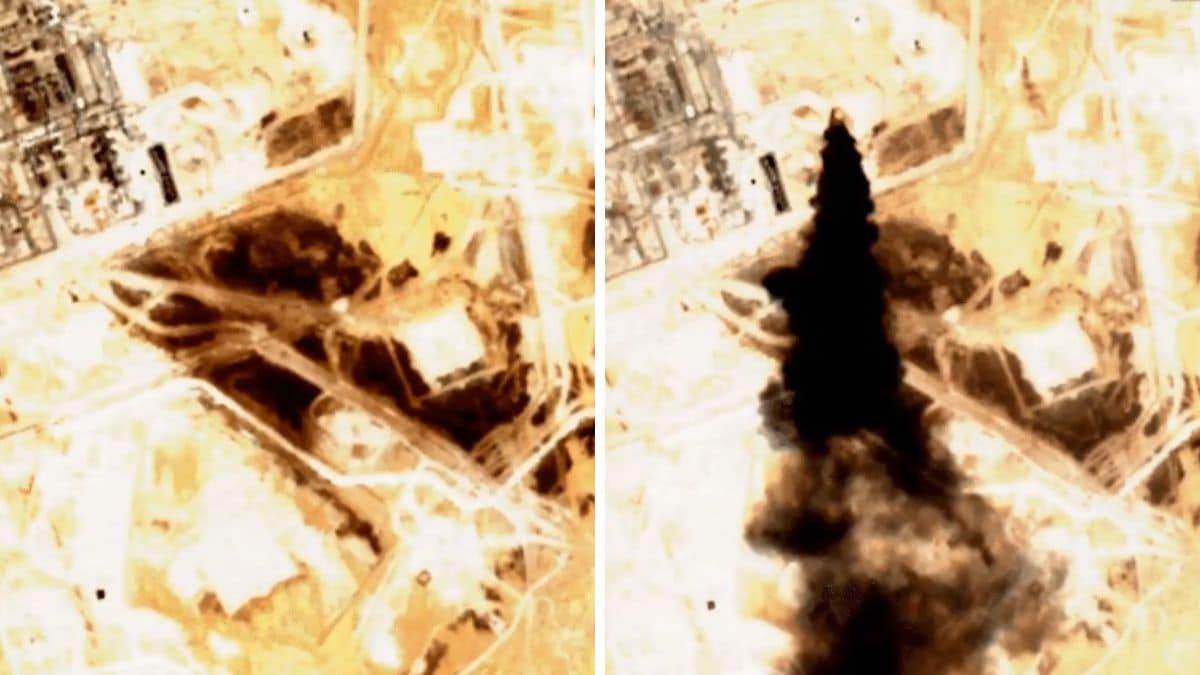
An alleged Iranian drone attack has resulted in widespread blaze at Saudi Arabia's Abqaiq refinery, which is the world's biggest oil processing plant. It processes around 5 to 7 per cent of global oil supply.
The Abqaiq processing facility is a key component of Saudi Arabia's East-West pipeline. The pipeline carries oil across the desert kingdom from the Abqaiq refinery to the Red Sea coastal city of Yanbu. Oil tankers from Yanby head either south to the Arabian Sea or north to the Suez Canal.
With the on-and-off blockade on Strait of Hormuz amid the US-Iran conflict, it was the East-West pipeline that helped Saudi Arabia bypass the shipping restrictions and reduce the shock on world economy.
Saudi Arabia built this pipeline in the 1980s amid concerns about Tehran possibly disrupting shipping through Strait of Hormuz during the Iran-Iraq war.
Riyadh has blamed Tehran-backed proxy groups based in Iraq for the drone strike. It said it reserves the right to respond to the attack.
The UAE has also adopted a similar strategy by sending more oil to Fujairah port on coast of the Gulf of Oman, which is 145 km south of Hormuz.
The Saudi and Emirati pipelines together had a spare capacity of about 3.5 million to 5.5 million barrels per day before the war began, according to the US Energy Information Agency.
Besides these two, at least seven major pipeline projects are being discussed as possibilities, in the planning stage or under construction across the Gulf.
