



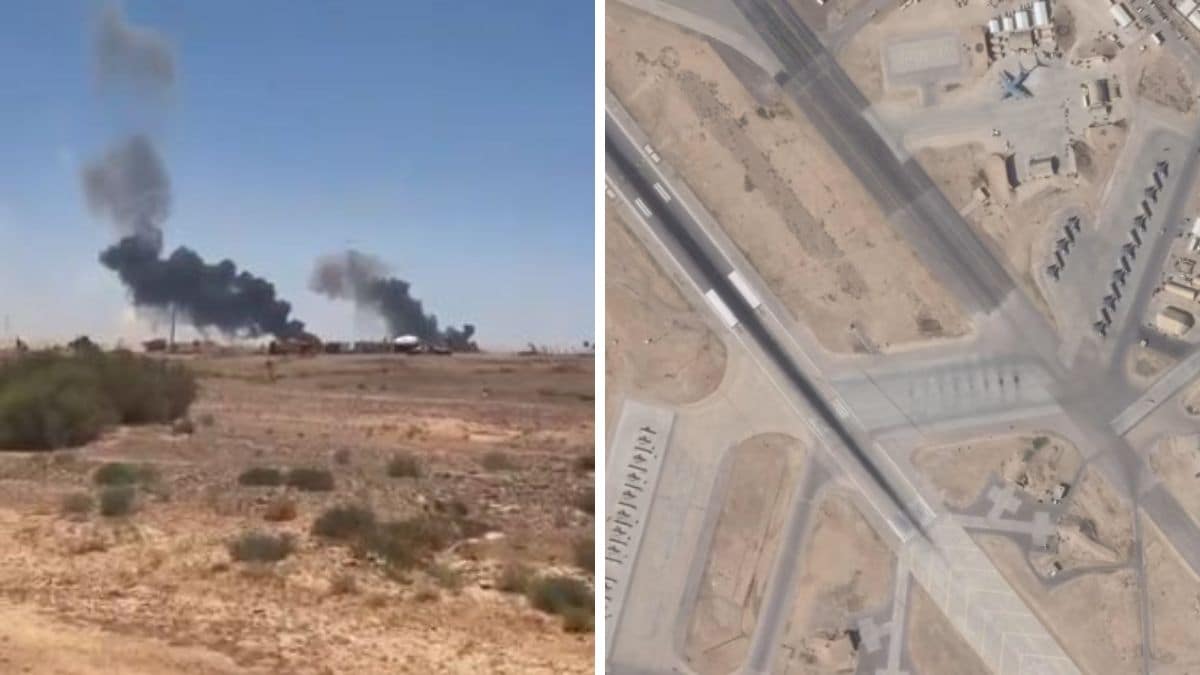
Two American service members are dead, and a third is missing after an Iranian drone and ballistic missile attack on Muwaffaq Salti Air Base in Azraq, Jordan, on July 17. The strike was the fourth against US forces in Jordan in the last five days, following earlier attacks on a residential facility at King Faisal Air Base and a site housing Blackhawk helicopters, both of which left dozens of American personnel wounded and caused significant equipment damage.
The deaths mark the first American combat losses to Iranian fire since March, bringing total US military deaths in the nearly five-month conflict to 16. They also confirm what officials on both sides had avoided stating outright: the memorandum of understanding signed in mid-June, intended to hold for 60 days while negotiators addressed Iran's nuclear programme and the reopening of the Strait of Hormuz in exchange for sanctions relief, has collapsed.
Jordan's growing exposure is itself notable. The Pentagon had relocated troops there from Bahrain, Qatar and the UAE in search of greater security, making the latest attacks particularly alarming for military planners who had regarded the kingdom as a comparatively safe rear position.
The dispute that broke the ceasefire centred on the Strait of Hormuz, the waterway that previously carried a fifth of global energy exports. Under the June agreement, the strait was to reopen, but Iran demanded the right to manage traffic through it and charge vessels a service fee. When commercial ships instead used an alternative route protected by the US Navy, Iran struck a cargo vessel on June 25. Washington responded with strikes on Iranian coastal radar and missile sites, and from that point both countries moved rapidly past the limits each had previously observed.
American strikes have since extended well beyond military targets, hitting Iranian power stations, bridges and a maritime surveillance tower in the south of the country, a widening that follows Trump's earlier threat to annihilate Iran's "whole civilisation." Iran, in turn, has broadened its own targeting to include US allies hosting American bases, striking a water desalination plant in Kuwait and hitting targets in Bahrain and Qatar as well.
A central concern within the US military is the economic imbalance underlying the conflict. Iran is drawing on a large stockpile of low-cost drones and missiles to exhaust American air defences, a deliberate strategy of attrition. Each Patriot interceptor fired to bring down a comparatively cheap Iranian drone depletes a supply that takes years to replace and that the United States cannot currently produce at matching speed, and officials note Iranian forces are growing more effective at exploiting American defences as a result.
The renewed conflict carries substantial political risk for the Trump administration, with the midterm elections less than four months away. Trump is taking a major risk in allowing the war to resume, given its unpopularity with voters already contending with higher fuel and living costs. Part of the difficulty, according to those familiar with internal deliberations, stems from a shortage of regional expertise at senior levels: experienced Iran specialists were reportedly, leaving decisions to a narrower circle of loyalists with a weaker grasp of Iranian thinking. Vice President JD Vance is said to have regarded the June ceasefire chiefly as an opportunity to replenish US strategic oil reserves and strengthen Washington's position before hostilities resumed.
Tehran's resolve, meanwhile, shows no sign of softening. The assassination of Supreme Leader Ayatollah Ali Khamenei at the outset of the war, followed by a week-long funeral procession, appears to have consolidated domestic support rather than weakened it, and has reinforced the standing of the Islamic Revolutionary Guard Corps, which increasingly believes it has public backing to escalate further. Recent remarks attributed to Mojtaba Khamenei suggest Iran's key decision-makers now see limited value in returning to a diplomatic settlement with Washington, leaving Trump's occasional gestures toward negotiation with no willing counterpart.
Meanwhile, the collapse of diplomacy and continued military pressure could persuade Tehran that a nuclear deterrent is the only reliable safeguard against future American or Israeli campaigns. With trust between the two sides largely exhausted, mediators losing influence, and the informal boundaries that had limited the conflict now eroding, officials increasingly describe a war that could extend for years, with some raising the possibility that it may ultimately require a US ground invasion.
