



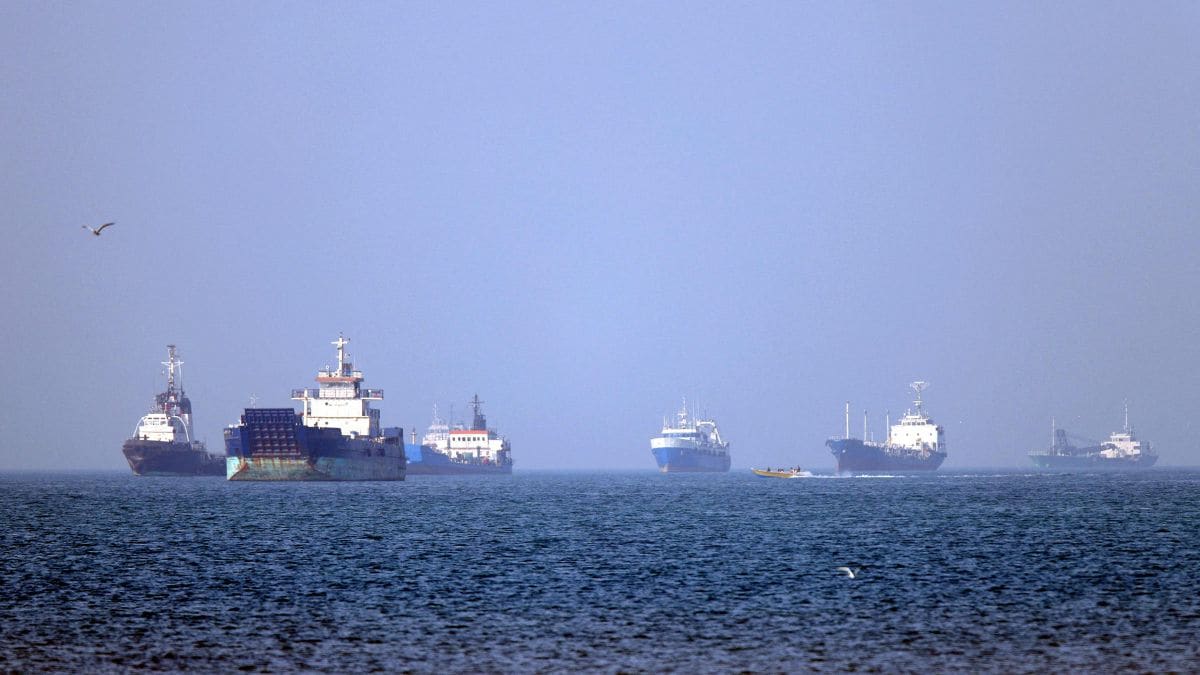
The United States launched a series of military strikes on Iran after three oil tankers were hit by projectiles in the Strait of Hormuz, pushing the already fragile ceasefire to the brink of collapse. In a parallel move, Washington revoked a general licence that had allowed Tehran to sell crude oil and petrochemical products on international markets.
The fresh strikes came as Iran held the funeral procession of its late Supreme Leader, Ayatollah Ali Khamenei, in the holy city of Qom.
"Iran's demonstrated aggression was unwarranted, dangerous, and a clear violation of the ceasefire," the US Central Command (CENTCOM) said in a post on X.
According to Reuters, citing US officials, the strikes targeted Iranian air defence systems, coastal surveillance installations, surface-to-air missile batteries, anti-ship cruise missiles, and drone launch sites.
Explosions were reported at Iran's main oil export hub on Kharg Island, as well as on Qeshm Island and in the southern port cities of Sirik and Bandar Abbas early on Wednesday. Kharg Island is strategically significant, with nearly 90 per cent of Iran's crude oil exports passing through the facility.
Iranian media reported that several people were injured in the attacks, though no fatalities have been confirmed.
Meanwhile, the US withdrew a key sanctions waiver that had permitted Iran to export crude oil, petroleum, and petrochemical products until August 21.
"As President Trump and the administration have repeatedly affirmed, the memorandum in effect with Iran is entirely performance-based. Iran will only reap benefits if they exhibit good behavior," a US official was quoted as saying by The Times of Israel.
Global oil prices climbed more than 3 per cent following the US announcement, reflecting concerns over potential disruptions to energy supplies from the region.
Iran's Ministry of Foreign Affairs strongly condemned both the military strikes and the revocation of the licence, calling the US actions a "clear violation" of Article 10 of the Islamabad Memorandum of Understanding (MoU) signed on June 18.
In a statement issued early Wednesday, the ministry said Iran "will take any measure it deems necessary" to safeguard its national interests and security, raising fears of further escalation in an already volatile region.
