



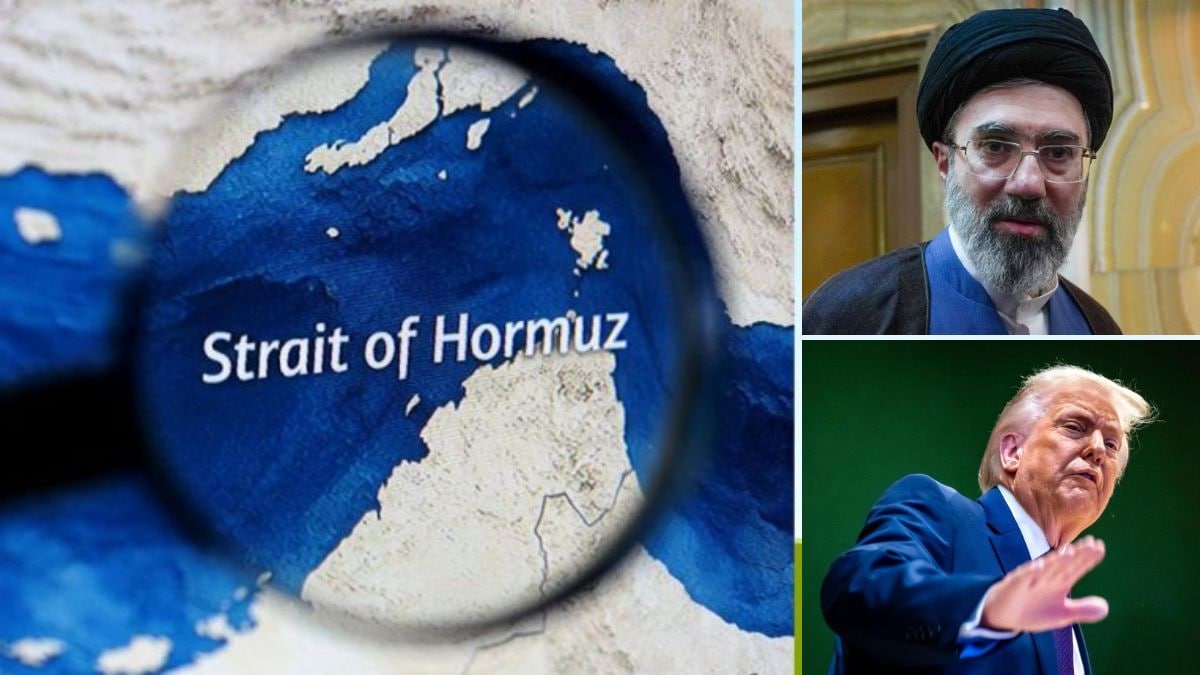
The latest exchange of fire between Iran and the US has stoked fears that months of hard-won peace efforts could fall apart, dragging the region back into a wider conflict. The flare-up was triggered by the downing of a US AH-64 Apache helicopter over the Strait of Hormuz. The helicopter had been operating as part of American efforts to enforce a blockade on Iranian crude oil shipments and intercept Iranian drones in the region. US officials say the aircraft went down after colliding with an Iranian drone. Investigators are still working to determine whether the incident was accidental or deliberate.
Iran's government eventually settled on the explanation that the collision was an accident. The country's deputy foreign minister insisted that Iranian forces had not intentionally targeted the helicopter. However, not everyone in Tehran followed that line. Ebrahim Rezaei, spokesperson for the Iranian parliament's national security and foreign policy commission, openly celebrated the incident. He praised whoever was responsible for bringing down the aircraft and described it as another blow against the United States.
Rezaei also used the episode to attack Washington, questioning how American officials could quickly blame Iran for the helicopter crash while failing to determine responsibility for an attack on a school in Minab that killed 156 people, including 120 children. Despite the dramatic circumstances, both American aviators survived. They spent nearly two hours in the water before being rescued by a 24-foot unmanned drone boat known as the Corsair, marking the first such sea rescue in US military history.
The helicopter's destruction prompted a swift American response. President Donald Trump authorised what US Central Command described as "proportional" self-defence strikes against Iranian military targets. American precision attacks focused on radar installations, air defence systems and ground control facilities near the Persian Gulf. Among the locations targeted were sites in Sirik County's Bamani district, Jask and Qeshm Island.
Iran responded with a large-scale barrage of missiles and drones. Iranian officials claimed that 21 targets were struck, including the headquarters of the US Fifth Fleet in Bahrain, Ali Al Salem Air Base in Kuwait and military facilities in Jordan. Tehran asserted that around 70 per cent of its targets in Bahrain and Jordan were successfully hit, including facilities linked to F-35 fighter aircraft and American command centres.
American officials disputed those claims, insisting that nearly all incoming missiles and drones were intercepted by US and allied air defence systems. Jordan reported shooting down five missiles, while Bahrain and Kuwait also announced successful interceptions. Iranian authorities, meanwhile, said that US strikes had damaged a telecommunications tower and two water tanks inside Iran.
The exchange of fire has cast serious doubt over the future of negotiations between Washington and Tehran. Iranian foreign ministry spokesperson Esmaeil Baghaei said the country's leadership was reviewing whether talks should continue, arguing that diplomacy requires at least a minimum degree of stability. He accused the United States of undermining negotiations through contradictory messages, shifting positions and repeated violations of the ceasefire.
Baghaei also blamed Israel for worsening regional tensions through its ongoing military operations against Hezbollah in southern Lebanon. Recent strikes there have reportedly killed nearly 20 people and forced many civilians from their homes.
Despite the intensity of the confrontation, analysts noted that Iran's official messaging suggested determination rather than a desire for full-scale war. The Trump administration has conveyed a similar message. Trump himself downplayed the helicopter incident, saying it "wasn't a big deal". Iranian officials interpreted his initial reluctance to authorise retaliation as evidence that he remains keen to secure a diplomatic breakthrough.
The US president continues to insist that a "very, very good, strong, powerful deal" could be reached within days. He has argued that a prolonged conflict would lead to heavy casualties and potentially keep the Strait of Hormuz closed for months, causing severe economic disruption.
For now, both countries appear to be pursuing a delicate balancing act. While continuing to exchange military blows, Washington and Tehran are also trying to preserve a pathway back to diplomacy. Whether that path remains open after the latest confrontation remains uncertain.
