



US President Donald Trump may have decided to extend the ceasefire with Iran indefinitely, but the latter is taking the announcement with more than a pinch of salt.
Trump’s move came just hours before a two-week ceasefire, initially set to expire on April 8, was due to end. He announced that the decision was taken to give Iran's divided leadership more time to develop a united plan to end the ongoing seven-week conflict, and also at the request of Pakistan, which is acting as a mediator.
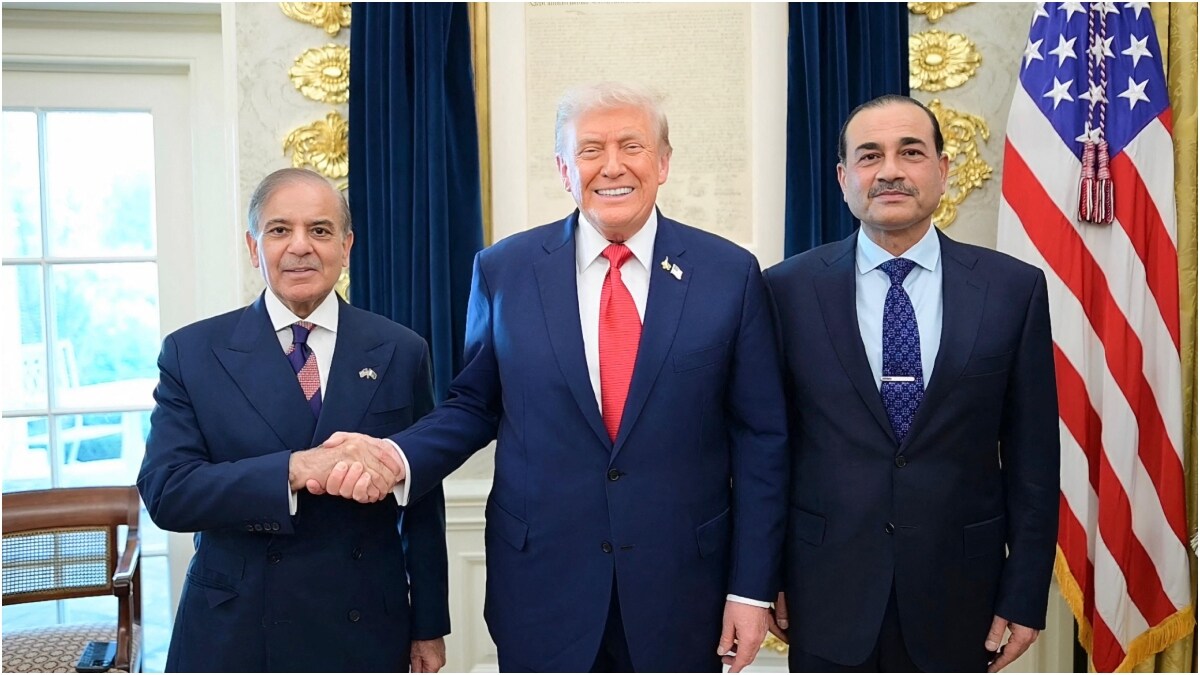
In a statement released on Tuesday, the US president said, "Based on the fact that the Government of Iran is seriously fractured, not unexpectedly so and, upon the request of Field Marshal Asim Munir, and Prime Minister Shehbaz Sharif, of Pakistan, we have been asked to hold our Attack on the Country of Iran until such time as their leaders and representatives can come up with a unified proposal."
However, Trump emphasised that the US will hold off on attacking Iran only until its leadership presents a cohesive proposal for negotiations. He also confirmed that the economic blockade on Iran's ports will remain in place.
The extension effectively postpones a planned visit by a US delegation, led by Vice President J.D. Vance, to Islamabad for peace talks with Iranian representatives. Vance, along with US special envoys Steve Witkoff and Jared Kushner, were scheduled to travel to Islamabad on Tuesday. The White House confirmed that the delegation's "trip to Pakistan will not be happening today (Tuesday)".
Witkoff and Kushner were initially set to depart Miami for Islamabad on Tuesday morning. Instead, they were asked to attend "additional meetings" at the White House. Vice President Vance, who was also slated to travel to Pakistan, participated in these discussions in Washington.
This decision follows days of intensive diplomatic efforts involving officials in Washington, Islamabad, and Tehran, all working towards a draft proposal that could be acceptable to all parties. It is a notable shift in Trump's approach. Earlier on Tuesday, he had indicated that if a deal wasn't reached by Wednesday, military action would be considered. "I expect to be bombing, because that is a better attitude to go in with." He had also mentioned that the military was "raring to go".
There had been no official statements from senior Iranian officials yet following President Trump's recent announcement. However, initial reactions from Tehran indicated the top officials were sceptic about the announcement.
According to the Tasnim News Agency, which is linked to the Islamic Revolutionary Guards Corps, Iran has not requested an extension of any ceasefire. The agency also reiterated threats to forcefully break the US blockade.
Interestingly, an adviser to Iran's chief negotiator and Parliament Speaker, Mohammad Bagher Ghalibaf, suggested that Trump's announcement held little significance and might be a strategic manoeuvre.
President Trump's public statements regarding the conflict, too, have been sending mixed signals. Just two weeks ago, he issued a strong warning against Iran, saying, "a whole civilization will die tonight". At other times, he has conveyed his desire to de-escalate the violence and ease market fluctuations.
Pakistan's PM Sharif, meanwhile, thanked Trump for extending the ceasefire with Iran. He conveyed his hope that both sides would be able to "conclude a comprehensive peace deal" to resolve the conflict.
