



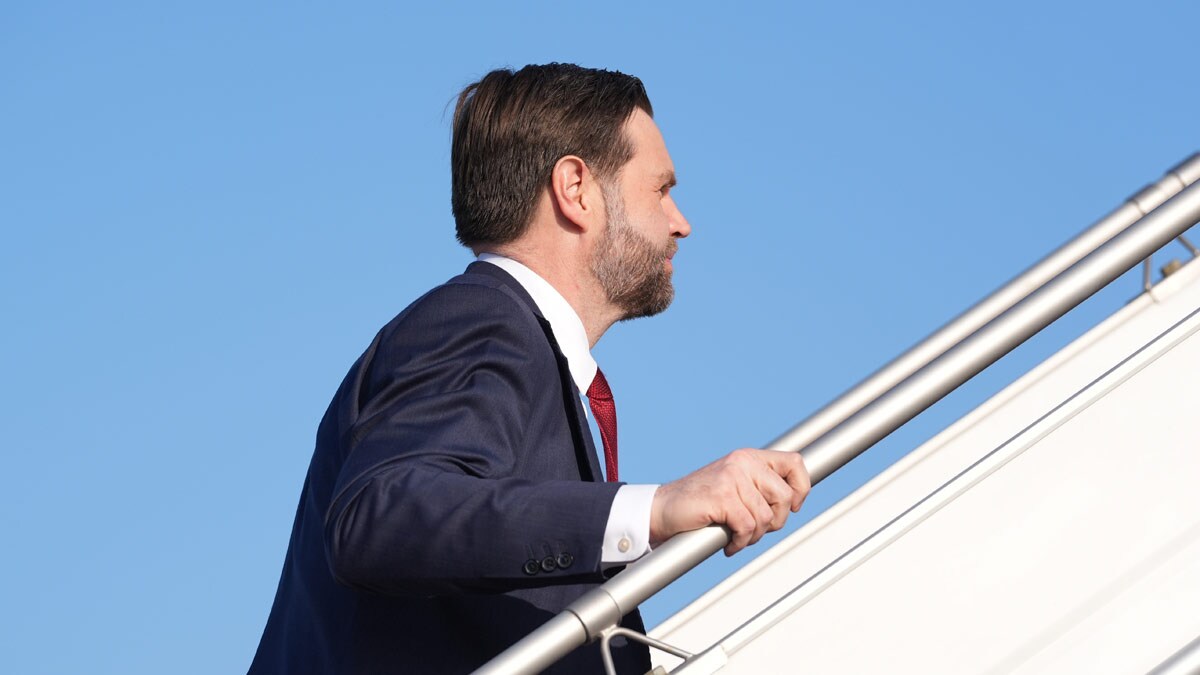
US Vice President J.D. Vance and other American negotiators left Islamabad on Sunday morning after marathon talks with Iranian officials failed to reach an agreement to end the six-week-long war in the Middle East.
Vance said the negotiations stalled primarily over Iran’s nuclear programme.
"The bad news is that we have not reached an agreement, and I think that's bad news for Iran much more than it's bad news for the United States of America," Vance said at a press briefing.
"We go back to the United States having not come to an agreement. We've made very clear what our red lines are."
The failure of the talks casts a shadow over the fragile two-week ceasefire between the US and Iran. Uncertainty remains over oil supplies through the Strait of Hormuz, as Tehran has not committed to reopening the critical shipping route.
The conflict has already sent global oil prices soaring, driven inflation in multiple countries, and resulted in thousands of deaths.
Vance did not outline the United States’ next steps, even as Washington continued its military buildup during the ceasefire. Earlier this week, President Donald Trump issued a stark warning, saying that “a whole civilisation will die tonight,” just an hour before extending the deadline for Iran to reach a deal.
Vance told CNN that the United States seeks a clear, binding commitment that Iran will neither pursue nuclear weapons nor acquire the tools to quickly develop them.
Experts, however, believe Iran is in no hurry to make concessions. Former State Department Middle East negotiator Aaron David Miller told CNN that Iranians hold more cards than the Americans after the marathon talks in Pakistan.
“It seems to me they still have the highly enriched uranium. They’ve demonstrated they’ve weaponized geography, they control and now manage the Strait of Hormuz. The regime has survived,” he said.
In a post-talks statement, the Iranian government struck a cautious yet optimistic tone, saying negotiations will continue despite remaining differences.
Iran is reportedly demanding control of the Strait of Hormuz, payment of war reparations, and a broader regional ceasefire, including in Lebanon. Tehran also seeks the right to collect transit fees in the strategic waterway.
The Islamabad talks marked the first direct US-Iran engagement in more than a decade and the highest-level discussions since the 1979 Islamic Revolution.
