



With US President Donald Trump hinting that the US plans to continue with its military campaign in Iran, speculations are rife that a ground invasion couldn’t be far away. Though there is no official confirmation, reports indicate that the Pentagon is preparing for a ground invasion that could last several weeks.
However, any attempt to put US boots on the ground will be met with stiff resistance from the Islamic Republic of Iran, especially if the US plans to send special forces to remove the Uranium buried deep in its nuclear sites.
One of the major hindrances that the US special forces will face is Iran’s geography. The most sensitive nuclear sites in Iran are located over 600 miles from the US staging sites or the sea. While the distance is a huge logistical challenge, the terrain would also make the task difficult. The biggest defence will be the Zagros Mountains – stretching about 1,000 miles across western Iran with very high peaks.
If the forces manage to navigate the mountains, they would still encounter the collapsed tunnels, damaged in last year’s US bombing. The special forces would have to find a way through the debris and hundreds of hurdles to reach the uranium stockpile.
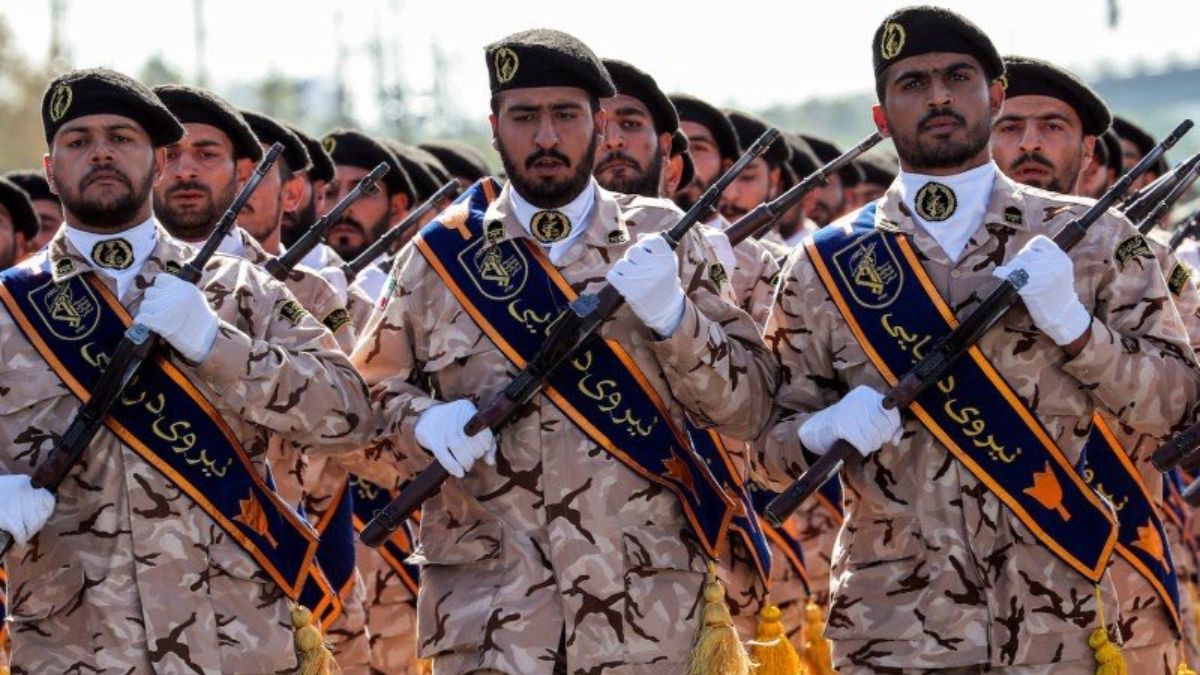
But that’s not all. Iran has employed a complex defence system consisting of eight separate layers to deal with the US threat. The Iranian military is in close coordination with the Islamic Revolutionary Guard Corps (IRGC), according to Tehran’s Fars News Agency.
The special forces and elite forces constitute the first and strongest line of defence against advanced threats, and include prominent units such as the IRGC special naval forces and naval commandos. These units specialise in repelling air strikes and are stationed on islands, coasts, and sensitive areas.
In the second and third tiers, the air assault brigades, mountain and mechanised divisions are positioned, supported by heavy armour and direct air cover from fighter jets and helicopters. This provides them with a rapid offensive capability and the ability to manoeuvre in depth or flexibly defend, depending on the course of the battle.
In the fourth tier, defence focuses on protecting cities and central urban areas through special elite police units belonging to the internal security forces, which operate against any infiltration into cities and to combat unrest.
In addition, Iran has 31 regional units that do not operate under a hierarchical command structure, which allows for independent tactical decisions to be made on the ground. At later levels, the Imam Hussein militia and the Imam Ali brigades stand out, units with extensive combat experience, equipped with heavy equipment to secure the defense lines. At the seventh level are Basij veterans with field experience, and at the eighth level comes the popular mobilisation, which organises a large number of volunteers in the threatened border areas, which currently number about a million people, according to Iranian media.
