



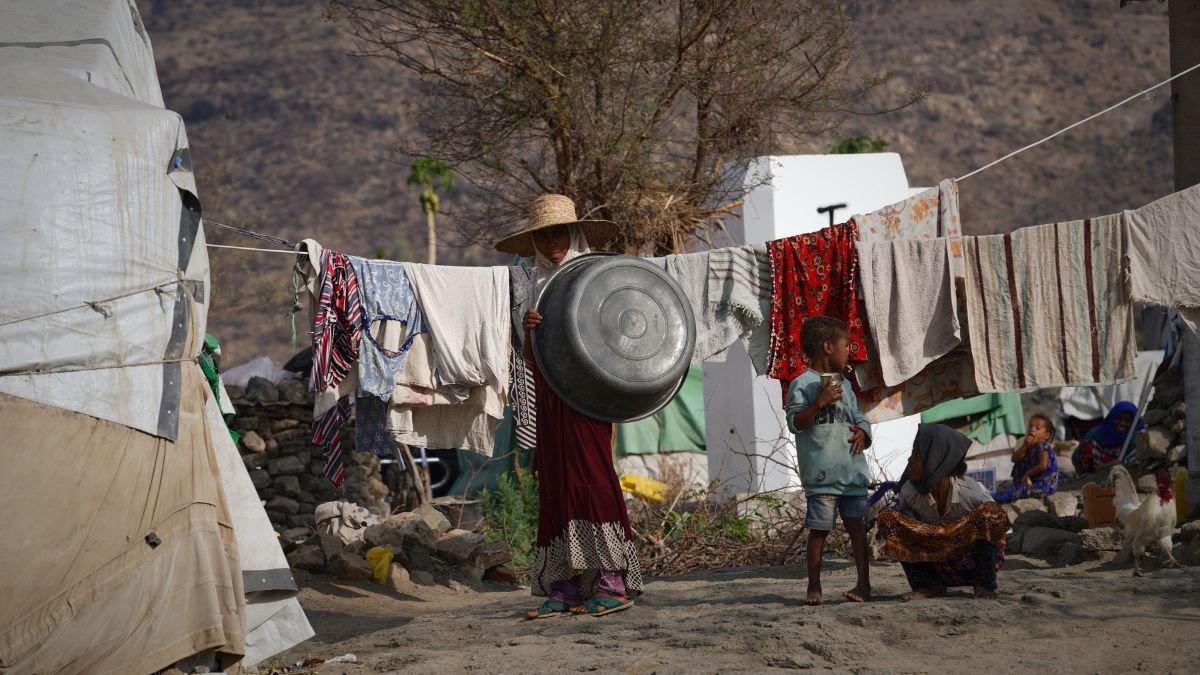
The humanitarian situation in Yemen is described as the world’s most severe manufactured catastrophe, reaching a critical point in 2026. Simultaneously, the ongoing conflict has gone through various phases, from active warfare to fragile truces. However, the suffering of the civilian population has not just stagnated but has worsened structurally. The crisis has been disconnected from its severity and visibility in the global consciousness. Today, international media is largely or solely focused on military confrontations between the US, Israel, and Iran, sidelining issues related to Yemen. Recently released documents by international organisations reveal the deteriorating conditions of the Yemeni population.
Yemen’s worsening situation in 2026 is mainly caused by the convergence of economic collapse, climate-related disasters, and the systematic dismantling of the humanitarian aid system. Unlike previous years, where the war was the primary driver of humanitarian conditions, with civilian casualties mainly due to constant airstrikes, in 2026, the mortality rate is directly linked to institutional decay.
The economy remains the key factor. With the new Rial in the south and the old Rial in the north, along with competing central banks, the country faces significant internal trade barriers. This has created a food security crisis across all governorates, worsened by regional instability, rising global food prices, and limited household incomes, which restrict families' ability to access basic food.
According to a recent Food and Agriculture Organisation (FAO) Market and Trade Bulletin published last month, more than 1.8 crore people, or half of the Yemeni population, are in severe distress and are expected to remain in serious distress; of them, 58 lakh require emergency levels of hunger. Although the recent central bank measures in government-controlled areas temporarily strengthened the currency and eased food prices, the currency remains fragile. Under the Sana’a-Based Authorities (SBA), the situation is especially concerning due to declining rainfall, localised conflict, and other issues.
Furthermore, according to recent IOM Rapid Displacement Tracking (RDT) data, between 8 and 14 March 2026, 14 households (84 individuals) were displaced at least once. This brings the total number of newly displaced households recorded since 1 January to 780, involving 4,680 individuals. Additionally, food insecurity remains the primary reason these individuals decide to move to a new destination in hopes of improving their quality of life.
Moreover, health plays a vital role in displacement. A weakening national economy and inadequate health infrastructure increase citizens' suffering. Cholera continues to be a persistent health issue and a long-term endemic threat due to poor water and sanitation conditions. The UN Office of the Coordination of Humanitarian Affairs (OCHA) reported that, between March 2024 and December 2025, there were 3,39,371 suspected cholera/acute watery diarrhoea cases and 1,120 related deaths across 23 governorates. Additionally, the national attack rate rose to 1 per cent, meaning that one in 100 people was affected during this period.
Geographically, these incidents were reported nationwide, affecting 135 districts. Likewise, nearly 65 per cent of such cases occurred in cities such as Aden, Al-Bayda’a, Al-Hudaydah, and Ta’izz, and 70 per cent of reported deaths occurred in Aden, Al-Bayda’a, Al-Hudaydah, Ibb, and Ta’izz. Additionally, about 76 lakh people, including more than 30 lakh IDPs, are living in areas affected by ongoing transmission.
However, to address existing challenges and protect the lives of Yemenis, international organisations, including the UN and other humanitarian groups, continue their assistance. To combat food insecurity, the UN, with support from other countries, provides aid to meet basic needs. Conversely, to fight cholera, UNICEF and WHO enhanced surveillance and coordination by offering healthcare services, including rapid diagnostic tests, IV fluids, oral rehydration salts, and water chlorination supplies.
All said, international funding is crucial to meeting these goals. Yemen is in urgent need of active humanitarian assistance, with 1.8 crore people in the state. Globally, 24.76 crore people need assistance, whose needs are rarely met due to severe funding cuts to these organisations. Over the last 10 years, 2025 recorded the lowest funding, at US$596.1 million, or 24 per cent of the total requirement, 33 per cent lower than the previous year. Between 2016 and 2022, funding accounted for more than 50 per cent of total requirements, peaking at 87 per cent in 2019.
These numbers reveal a story about global realities and the risk of donor fatigue by emphasising the priorities of international actors. The recent escalation between Iran and Israel worsens the already dire humanitarian conditions for refugees and IDPs, further strained by a funding cut. While countries tend to spend more on missiles and drones, millions of Yemenis are falling victim to hunger and disease. Ultimately, the lack of international aid increases the risk of Yemen becoming a permanent zone of suffering.
The author is a doctoral candidate at the Centre for West Asian Studies, Jawaharlal Nehru University, New Delhi.
