



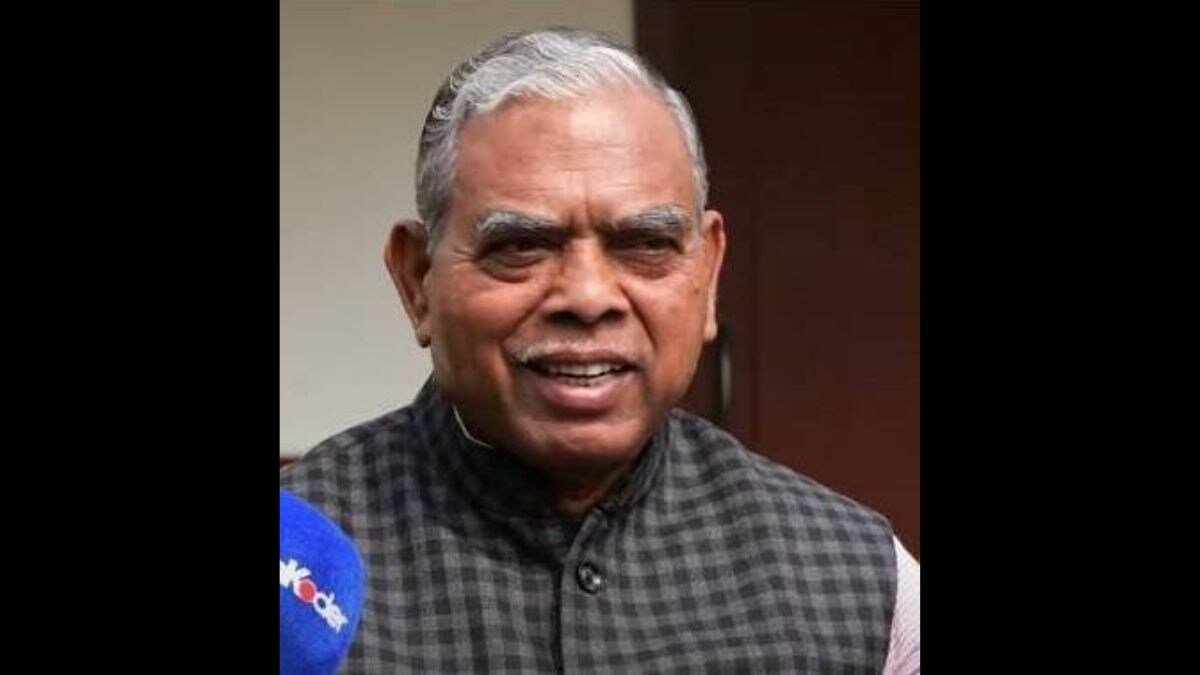
A section of senior Congress leaders, after the formation of the Pradesh Congress Committee (PCC) in Jharkhand, have accused the state unit leadership of marginalising leaders who have been in the party for decades, while giving posts to those who have not held any position earlier, assigning multiple posts to some leaders, and concentrating positions within certain families, both of which go against the resolution passed at the Udaipur Chintan Shivir.
However, leaders on the other side argue that this is the time to give more space to younger faces and build a new crop of leaders for the future. Senior leaders who spoke to THE WEEK, however, said that older leaders who have held key positions in the state now appear to have been sidelined.
A leader said, “For example, the political affairs committee is usually made up of senior leaders with deep political acumen and organisational understanding, but two former presidents, Rajesh Thakur and Sukhdev Bhagat (also a Lok Sabha MP), are placed at number 26 and 33 respectively in the list of members, which in internal politics is a telling sign.”
Several leaders are holding multiple posts, and positions have been distributed in large numbers without proportional representation, according to leaders. For instance, in 24 districts of Jharkhand, a total of 43 General Secretaries have been appointed, out of which around 35 per cent (15 members) are from just one district, Ranchi. Minority leaders also claim that there is not a single representative from the minority community among them.
Similarly, more than 30 per cent of Vice Presidents are from Ranchi as six out of 16 are from the district.
Some leaders believe that certain families have been given more importance by the leadership led by in-charge K. Raju and president Keshav Mahto Kamlesh and another leader close to the leadership, Abhilash Sahu, who has been a key networking kingpin for the leadership.
Families have been given prominence: Irfan Ansari is a minister, and his sister Shabana Khatun, who has not held any party position earlier, has been directly appointed as a state General Secretary. Furqan Ansari is also part of the political affairs committee, along with Irfan Ansari.
Banna Gupta, a former minister, saw his wife Sudha Gupta contest for Mayoral elections and won. Both have now been given positions in the political affairs committee.
Junior leaders have also been accommodated. Arun Sahu, who has been appointed to the political affairs committee, joined the party just a year before the elections without holding any prior position and contested for the first time recently in assembly elections.
Although the appointment of new leaders, including those from political families, is not surprising, given that there can be different criteria for selecting candidates, what stands out for a section of party leaders is the manner in which a large number of established and performing leaders have been pushed aside by the new leadership.
While some attribute the party’s appointments and disproportionate representation in the PCC to a money game accusing the state unit leadership of corruption, others believe the party is trying to build its future.
