



Satellite images from the United Arab Emirates (UAE)’s Al-Dhafra air base show the structural damage and burn marks on several aircraft shelters. According to unconfirmed reports, the Iranian attack may have cost the UAE its SAAB GlobalEye multi-role airborne early warning & control (AEW&C) aircraft.
The Al-Dhafra hosts not only UAE aircraft, but also those of France and the US.
Although the exact date of the attack is unclear, the satellite images reveal extensive damage to the hangars. Specifically, three workshops, believed to house the SAAB GlobalEye early warning aircraft, were damaged. Currently, the UAE has only five such aircraft in total. If the plane was actually inside at the time of the explosion, it would be considered an irreparable loss. The value of each Global-A plane is estimated at about $460 million, bringing the total damage to this fleet alone to $1.38 billion.
However, the images show hangars burning from the inside, which could indicate the equipment inside could be burning too. That said, there is no official confirmation from the UAE government on whether or not the aircraft was damaged. Analysts also note that satellite imagery alone cannot confirm whether aircraft were inside the structures at the time of the strike.
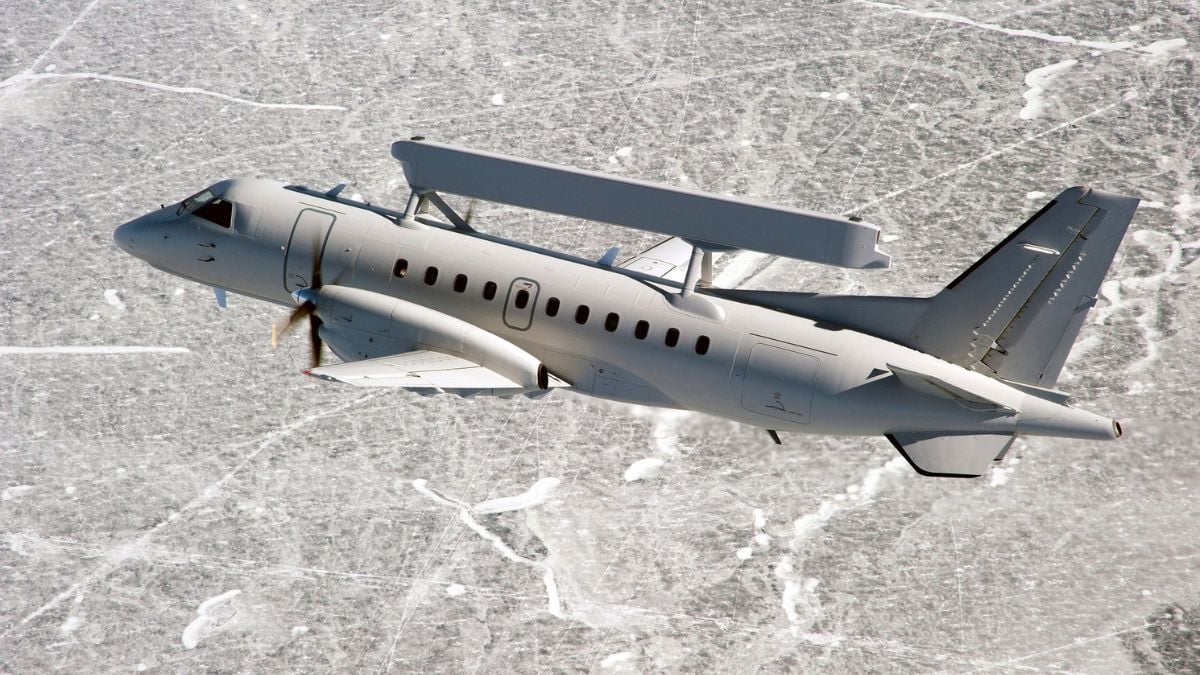
GlobalEye is an airborne early warning and control (AEW&C) system developed by Swedish firm SAAB. It is capable of offering air, maritime and ground surveillance on a single platform. Built on the fuselage of Bombardier Global 6000 commercial aircraft, the highlight of the aircraft is the huge Erieye ER radar "strip" mounted along the back of the aircraft.
The Erieye ER radar is capable of detecting targets at distances of up to 450 km. This system not only tracks conventional fighter jets, but can also detect difficult-to-find targets such as stealth aircraft, cruise missiles, and micro-drones.
With a continuous flight time of over 11 hours, the Global Eye is considered a "mobile command centre", allowing the defence forces to monitor all developments in airspace and maritime areas remotely. Due to its superior combat capabilities, many countries, such as France and the United Arab Emirates, have signed contracts to purchase this aircraft to replace their old systems.
Some observers also claim that the shelters could also be housing U.S. surveillance drones, including the MQ-4C Triton maritime surveillance drone and the MQ-9 Reaper remotely piloted aircraft.
Iran could have possibly used the kamikaze drones, such as the Shahed-136, to damage the air base.
