



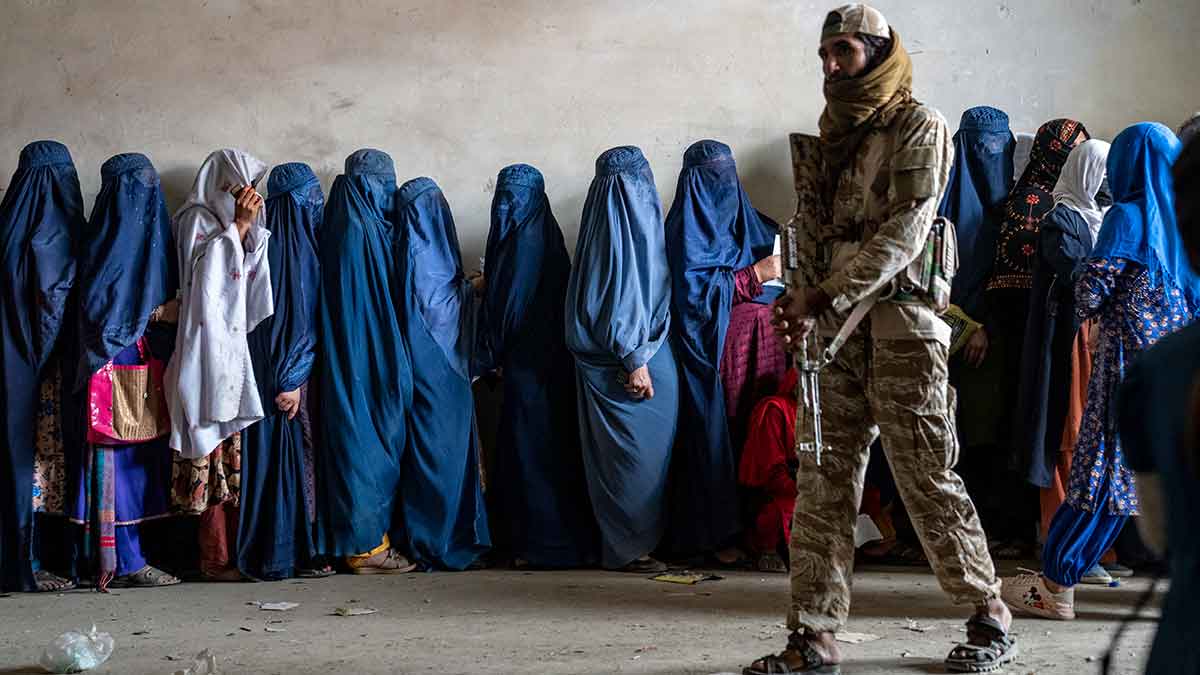
A new set of controversial laws regulating marriages, divorce and child marriage has been introduced by the Taliban regime in Afghanistan. According to the new family law, the silence of a "virgin girl" can be treated as consent to marriage.
The 31-article regulation, titled "Principles of Separation Between Spouses", was approved by Taliban supreme leader Hibatullah Akhundzada, according to Afghan outlet Amu TV.
The document outlines rules covering child marriage, missing husbands, forced separation, apostasy, accusations of adultery and other religious and legal matters.
What the new Taliban rules say
Under the new regulations, the Taliban has granted fathers and grandfathers sole authority over child marriages. The rules also stipulate that marriages involving underage girls can only be annulled post-puberty with the explicit approval of a Taliban court.
Another provision stipulates that the silence of a virgin can be construed as consent for marriage, whereas silence from a boy or a previously married woman is not automatically interpreted as agreement.
According to Article 5 of the regulation, if relatives other than a child's father or grandfather arrange the marriage of a minor, the marriage can still be considered legally valid if the spouse is deemed socially compatible and the dowry is appropriate.
Another provision says that marriages involving a "non-compatible" spouse or an unfair dowry would not be considered valid.
Several human rights groups have documented cases in which infants were promised in marriage to settle debts or secure financial support.
According to reports, nearly one-third of the Afghan girls are married before the age of 18.
