



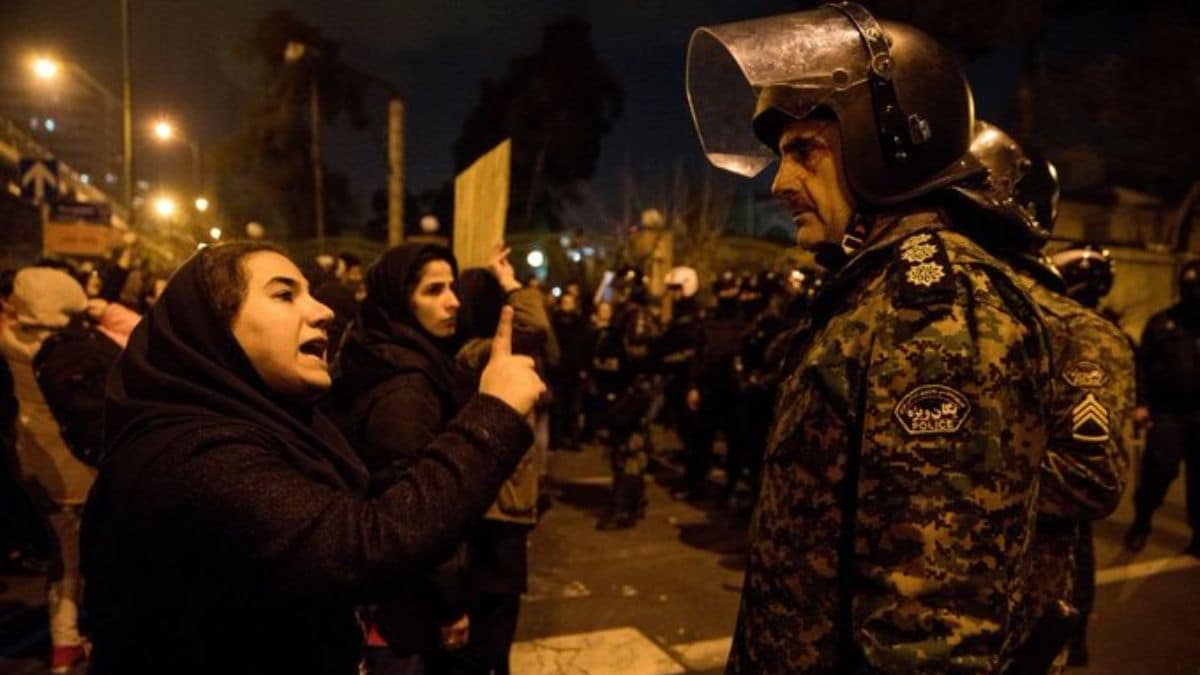
About 36,500 Iranians were reportedly killed by security forces during the crackdown on the nationwide January 8-9 protests, according to a new report.
The number would make the Iranian protests the deadliest two day protests massacre in history reported Iran International.
The number was confirmed by the news network after reviewing new classified documents, field reports, and accounts from medical staff, witnesses, and victims’ families.
On January 13, the network's editorial board had reported at least 12,000 deaths caused by the crackdowns in the country.
The new information, the network said, “provides a clearer picture of the killing pattern and the scale of a crime that can now be described as the largest and bloodiest massacre of civilians during street protests, over a two-day period, in history.”
The information obtained was provided by the IRGC intelligence organization to the Supreme National Security Council.
In a report presented to the Iranian parliament’s National Security and Foreign Policy Committee on January 21, the number of the killings were upto at least 27,500.
Instrituitions recived different figures from security bodies showing what appeared to be deliberate concelament and interntional disorder in the registration and transfer of bodies. There also seems to have been pressure on the families and quiet burial of victims, making it difficult even for security agencies themselves to know the accurate death toll.
A consolidation of figures received from provincial security councils by Tuesday, January 20, showed the death toll had exceeded 30,000.
Estimates say that more than 2,500 were killed in Rasht, at least 1,800 in Mashhad, more than 2,000 in Isfahan, Najafabad, and Khorasgan, at least 3,000 in Karaj, Shahriar, and Andisheh, 700 in Kermanshah, and 400 in Gorgan. There were no clear figures for Tehran. But images obtained show that the number could be in the thousands.
Based on information obtained from hospital sources and eyewitneses the number of deaths in several of the major cities was described as shocking.
Some of the findings include:
Images of individuals who were killed while undergoing medical treatment. Doctors and nurses who spoke to the the network said that “finishing shots were fired at “wounded patients.”
Some reports said that security forces went to homes and drew people to the door before opening fire and killing them.
The killings were carried out with the agreement and cooperation of state institutions and on the orders of the highest authorities of the Islamic Republic. Supreme leader Ali Khamenei, on January 9, used phrases such as “al-nasr bil-ru‘b” (victory through terror) and “fight them until there is no sedition” in briefings and discussions among senior IRGC commanders
Bereaved families were forced also reportedly asked to pay large sums described as “bullet fees” in exchange for receiving the bodies of their loved ones. In some cases, those killed were presented as members of the Basij militia, despite families’ objections.
Reports received by Iran International also indicate that proxy forces from Iraq and Syria were also used in the crackdown.
