



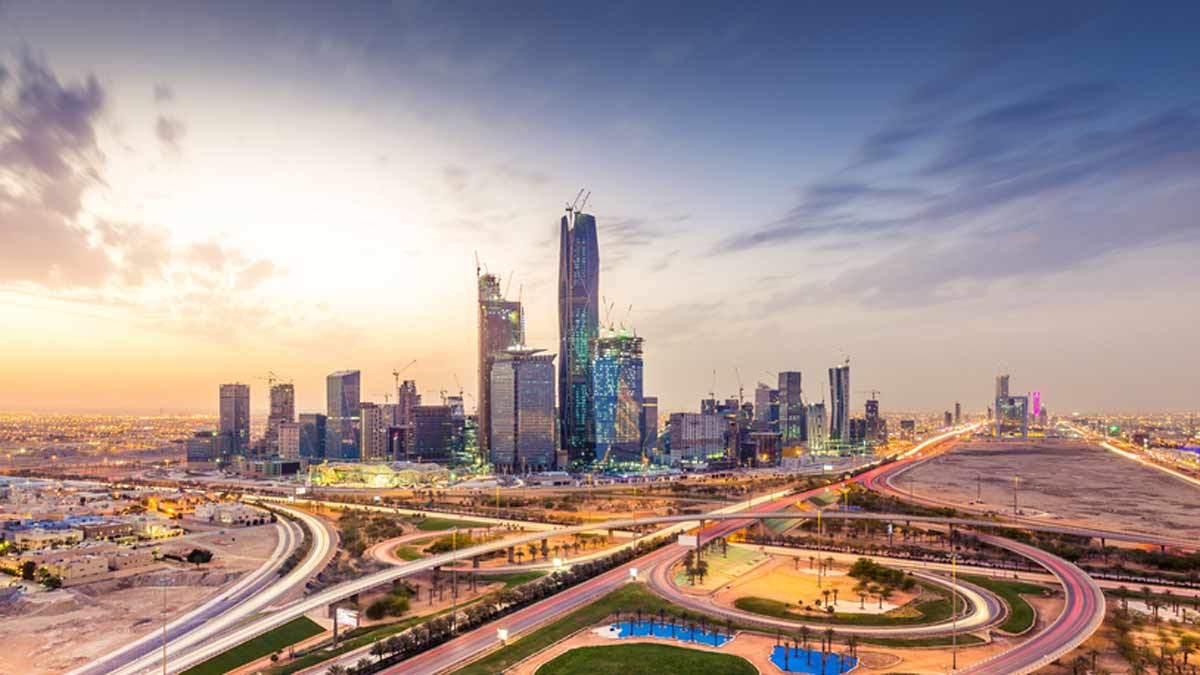
Saudi Arabia’s Vision 2030 programme was launched in 2016 and is about to complete the second phase of its strategic plan in 2025. The first phase, which focused on building the foundations for the Kingdom's economic transformation, was completed in 2020 with sweeping societal reforms, the launch of Vision Realisation Programmes (VRPs) and institutional capacity building.
In the second phase, between 2021 and 2025, the focus shifted to strengthening various economic sectors, including mining, transportation, tourism, entertainment, and sports, while sustaining the momentum of societal transformation and economic growth. The third and final phase, set to begin in 2026, will focus on stabilising and sustaining the achievements gained during the first two phases and laying the foundation for a brighter future across every sector.
An assessment of the achievements and challenges as Vision 2030 approaches its tenth anniversary and prepares to enter its final and decisive phase underscores the extraordinary transformation the Kingdom has achieved during these ten years. However, some challenges remain regarding creating a national will to sustain momentum and build on its foundations towards a brighter future. According to Vision 2030, the third phase will address these challenges by expanding economic opportunities, with a key emphasis on education and human resource development.
One of the key components of Vision 2030 was the VRPs, which focused on the financial sector, human capability, health sector transformation, pilgrim experience, quality of life, national transformation, public investment fund, housing, national industry, logistics, and privatisation. The plan for these sectoral transformations coincided with rapid societal opening and reforms during the first phase. Although the openings for women and enhanced education opportunities were visible, the economic components of Vision 2030 remained mostly obscure during the first phase, with much of the discussion revolving around mega-development projects. COVID-19 and its impact on the petroleum sector further clouded the assessment of the economic reforms during the first phase until 2021.
In the second phase, beginning in 2021, national strategies were unveiled, emphasising the development of specific regions and sectors. The idea was to build on the achievements of VRPs and learn from the shortcomings. Among the sectors prioritized were mining and mineral industries, investments, transport and logistics, fintech, gaming and esports, industrial development, labour market, and real estate. Additionally, there were two regional strategic development programmes, including those for the Red Sea and Asir regions. Additionally, the national strategies focused on biotechnology and transforming the public administration to improve governance.
While the world continues to debate whether the mega transformation plan of Saudi Arabia with focus on projects, such as NEOM including The Line—a linear sustainable city, Oxagon—a floating port city and Trojena—a mountain tourism destination, is too ambitious to be achieved, it is the everyday aspects of the economic and social life where the real transformation can be witnessed. For example, the National Transformation Programme and the Societal Transformation Programme, launched in the early stages of Vision 2030, have made a remarkable impact on people's lives. The strategies created educational and employment opportunities, especially in the private sector, and reduced restrictions on women and public conduct to make the Saudi market attractive to domestic and international investors.
Hence, the contribution of the private sector to capital formation, in terms of its share of GDP, has increased steadily from 18 per cent to 26 per cent between 2016 and 2024. In terms of total private sector contribution to the GDP, it reached 47 per cent in 2024, in line with the target of 65 per cent by 2030. Similarly, notable progress was made in the non-oil sector, with 2024 witnessing 3.9 per cent real GDP growth in the non-oil sector and 4.3 per cent growth in non-oil economic activities. Since 2016, the non-oil sector has witnessed notable expansion, with increased private sector investments and exports surging by 70 per cent and 113 per cent, respectively.
The labour sector has also performed well, with the unemployment rate decreasing from 12.3 per cent in 2016 to 7 per cent in 2017. Notably, the female participation rate in the workforce has nearly doubled, from 19 per cent to 36 per cent, between 2016 and 2024. Similarly, the number of women pursuing higher education in STEM disciplines and securing national scholarships to acquire specialised degrees in international universities has significantly increased. The expansion of Saudi universities, in terms of numbers and scope, has been notable, besides a continued emphasis on improving the quality of education at all levels.
The focus of the third phase of Vision 2030, which will begin in 2026, will be on "expanding opportunity across every sector, and sustaining the impact well beyond 2030.” With notable achievements during the first two phases, expectations for continued progress toward greater social and economic transformations during the third phase have increased. Given the political will and financial heft, it would be easier for the Kingdom to sustain the growth momentum and enhance economic opportunities.
The challenge would create the ground for a stable and sustainable economic diversification. This is mainly linked to the Kingdom's continued reliance on the petroleum sector for economic sustenance. Undoubtedly, the non-oil sector is steadily growing, but its success has been largely due to the continued support of the public sector and the government's focus. For the non-oil sector to transform and stand on its own, it would require greater private sector domestic and international investments, sustained growth in the manufacturing and service sectors, and continued momentum in tourism, logistics, sports, and entertainment sectors that have grown rapidly but face the risk of stagnation without government support.
A greater or more complex challenge pertains to sustainability in terms of the environmental impact of the rapid economic transformation. This becomes more pronounced in light of the debates on global warming, climate change, and decarbonisation, which are likely to accelerate in the coming years with increased calls for reducing reliance on fossil fuels. Saudi Arabia has begun to focus on the green and renewable energy sector, as well as biodiversity revival and restoration, and this is likely to be a key area of focus during the third phase of Vision 2030.
Thus, Vision 2030 is a blueprint for social and economic transformation that reflects the vision of King Salman and Crown Prince Mohammed towards a future that fulfils the aspirations of the Kingdom's youth. It focuses on societal transformation and economic diversification, prioritizing developmental issues over regressive and dogmatic ideas. In the ten years since its launch in 2016, Vision 2030 has achieved remarkable success in reaching the milestones set for different sectors of the economy. As it enters the third and final phase, the expectations from the mega developmental programme have increased, and so have the risks and challenges in maintaining momentum and sustaining the transformation towards a post-oil economy. Besides, environmental vulnerability and suitability have emerged as key components of the future challenge. As the Kingdom continues to chart its course towards a brighter future, its success or failure will profoundly impact the Gulf and the Middle East region.
The author is an Associate Professor at the Centre for West Asian Studies, JNU, New Delhi.
