



India’s maritime recycling sector commands nearly 35 per cent of the global ship recycling market. The country also derives its primary commercial credibility from voluntary green certification under the Hong Kong Convention (HKC).
These high environmental standards and certified circular supply chains position India as a responsible world leader, according to experts in the sector. Yet, the nation needs to plug any gaps so that it stays on top.
Prasad Sawant, Founder and CEO of Buoyancy, affirmed India’s dominant standing, stating, “India holds nearly 35 per cent of the global ship recycling market, making us the undisputed world leader.”
Sawant explained that direct re-rolling of ship steel plates “saves 16 per cent in energy consumption and reduces carbon emissions by 58 per cent compared to manufacturing virgin steel from iron ore”.
But having this certification advantage is not enough to go against regional competitors. That requires bridging scrap price gaps through regulatory steel standards.
Dr Anand Hiremath, CEO of the Sustainable Ship and Offshore Recycling Programme, stressed that without strict green mandates, price dictates owner choices.
“A global shipowner who is not bound by strict green recycling mandates will naturally choose the higher cash offer,” Dr Hiremath stated, while advocating for formal Bureau of Indian Standards (BIS) re-rolled steel accreditation to elevate scrap valuations.
Here is where Rohit Agarwal, Director and COO of Bansal Shipbreakers, underscored the broader decarbonisation impact in the sector: “Producing steel from recycled ship plates consumes substantially less energy and generates far fewer greenhouse gas emissions compared to manufacturing virgin steel from iron ore.”
And all of this carried the human element—the worker. The experts agreed that worker welfare reforms have matured alongside yard upgrades.
Vidyadhar Vasudeo Rane, General Secretary of the Alang Sosiya Ship Recycling and General Workers Association, explained, “Workers are no longer disposable day-labourers; they are certified industrial professionals.”
Pallavi Mansingh, National Project Coordinator at the ILO, added to this, stressing that “while compliance creates the initial push, a genuine safety culture is taking root on the ground”.
Waste management in India's green credibility
A major pillar of India's green credibility is its downstream hazardous waste infrastructure.
Dr Hiremath noted that “over 96 per cent of a ship’s total mass is recycled or reused,” supported by Treatment, Storage, and Disposal Facilities (TSDF) operating under verified Inventory of Hazardous Materials (IHM) protocols.
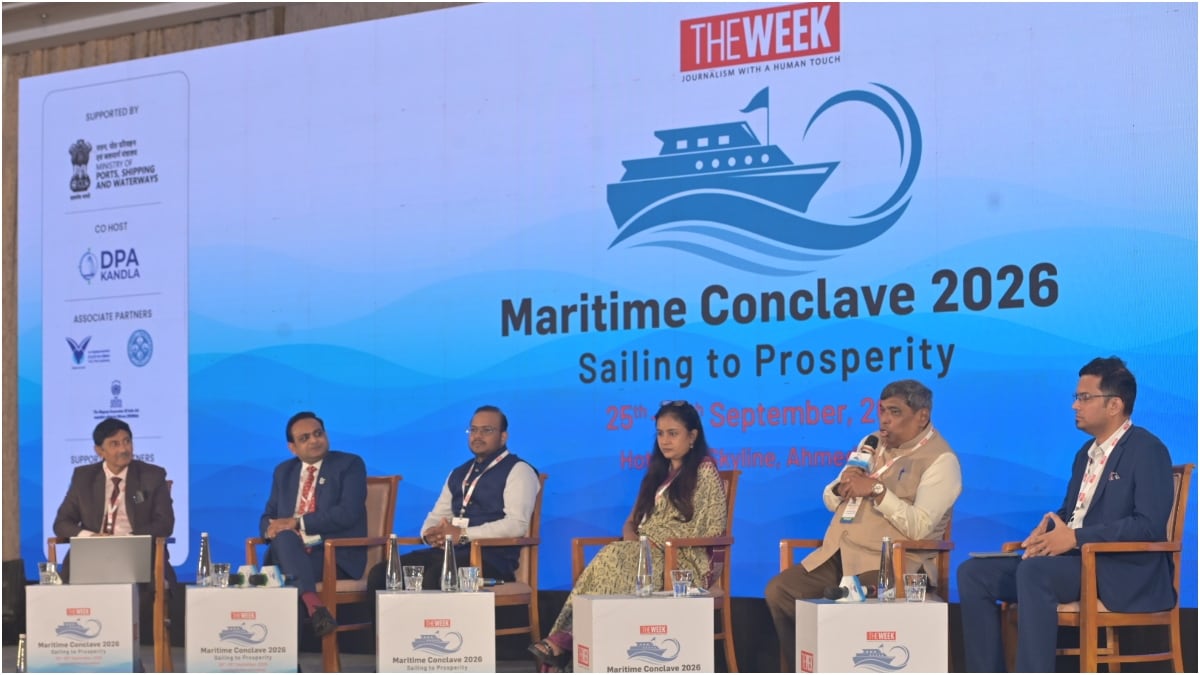
Moderating the session—which opened the second day of THE WEEK Maritime Conclave 2026 in Ahmedabad, co-hosted by Deendayal Port Authority—Tushar Pradhan, CEO of the Indian Maritime Centre, concluded the discussion: “India must transition from being merely a high-volume recycling destination to becoming the global benchmark for responsible, sustainable ship recycling.”
