



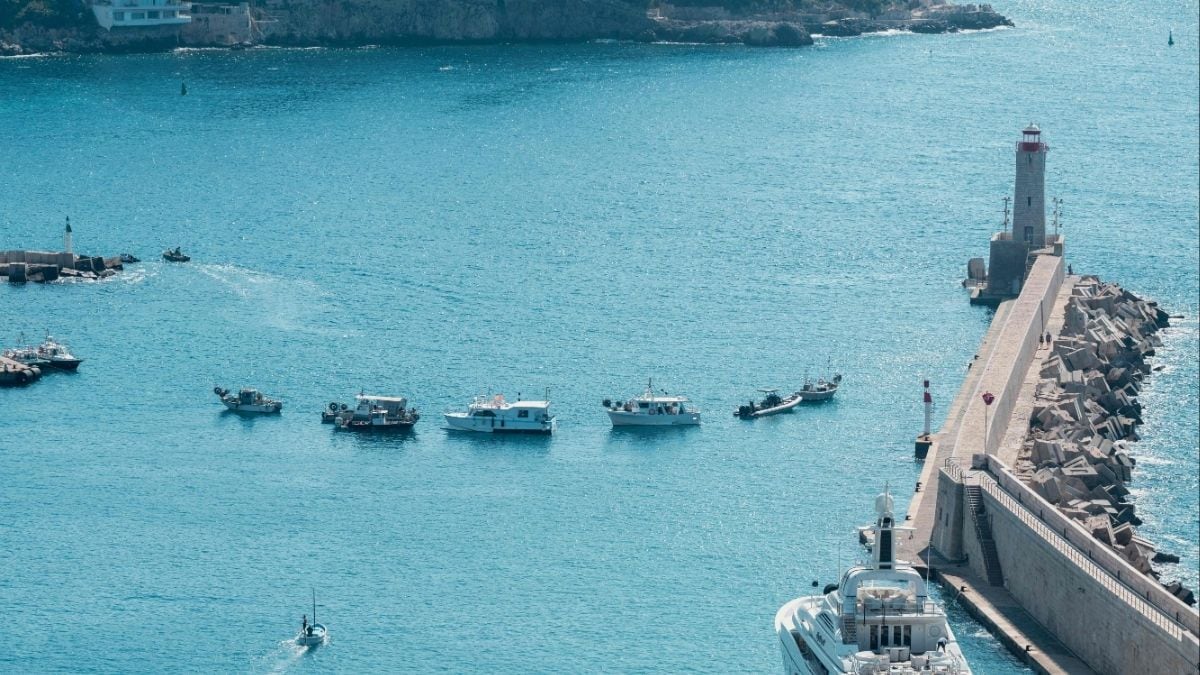
While India is championing Sagarmala and Maritime India initiatives, back in the Mediterranean Sea—often considered the bowl of European maritime activity—trouble is bubbling to the surface.
The French Mediterranean coast is currently witnessing a major disruption as fishermen block access to key southern ports—including Sète and Nice—over soaring marine fuel prices.
These ports are not just landing docks for France; they are critical blue economy infrastructure for the globe. Marine experts say that such a blockade across southern French maritime hubs plugs coastal freight transfers, disrupting major commercial shipping routes, all the while paralysing local maritime logistics.
And it all began with surging diesel costs, driving up bunkering costs. According to local fishermen, operating a vessel has become financially unviable, in turn threatening coastal food security and port infrastructure stability.
And this adds pressure to Prime Minister Sébastien Lecornu’s government, too, especially when they are in the process of finalising the 2027 budget that many term "deficit-taming".
The blockade has pressured the government to extend its emergency fuel subsidies through the end of the year for the fishing, agriculture, and construction sectors.
But this fiscal relief is a deadly blow for Paris, already reeling from the bond market selloff that pushed French borrowing rates to their highest level since 2008.
On one hand, President Emmanuel Macron is convening an emergency meeting of party chiefs to discuss Middle East energy market fallout, which inadvertently raised diesel prices that led to this debacle.
And on the other hand, maritime operators in the Mediterranean are on the front lines of a global fuel shock.
French Finance Minister Roland Lescure has also already conceded that rising energy costs will force France to miss its fiscal deficit targets this year. And this will be fuel for political adversaries like Marine Le Pen, who have threatened to vote down the proposed budget.
While many countries push for maritime security, this blockade is a stark reminder of "double-blow" maritime vulnerability. First, the military maritime blockade of Hormuz led to energy inflation. Then, the prices led to a blockade by local fishermen that now threatens to capsize local fisheries, and even the national fiscal stability of France.
