


 Add as a preferred source on Google

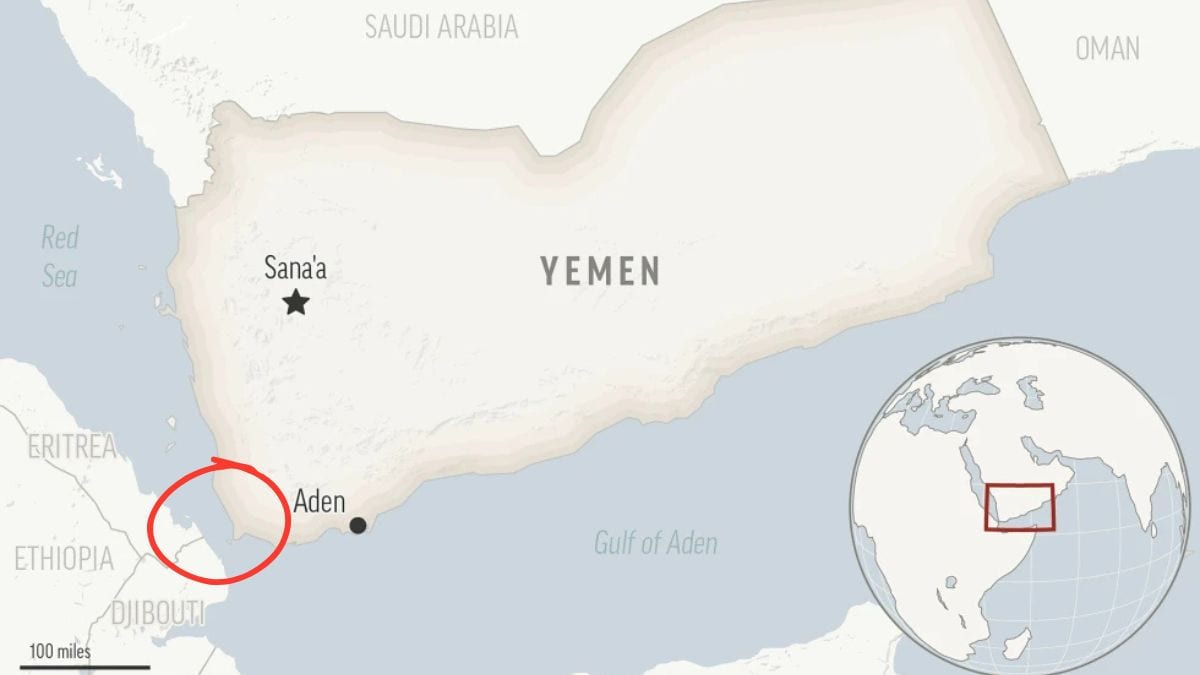
What does it say about a war when the side supposedly losing it keeps winning the ground that matters? On Sunday, Yemen’s government-aligned Southern Armed Forces announced that they were pulling back from Dhubab airport and the Bab el-Mandeb area to concentrate on defending Aden, Reuters reported. That ends, for now, a six-week counteroffensive by the Saudi-backed side to retake a coast the Houthis seized in September.
Reuters adds a line worth pausing on. Houthi gains, and their attacks on Saudi Arabia and Red Sea shipping in recent months, have strengthened Iran’s hand in the wider conflict the US and Israel launched in February. Iran’s allies elsewhere have taken a beating. Here is one that has not.
Losing the capitals, keeping the coast
The usual argument about Iran’s network asks whether it has been beaten or is recovering. I think both questions miss the point. By most accounts, Hezbollah has been badly hurt, Hamas has taken heavy punishment, and Syria no longer gives Tehran the corridor it once did. Yet in Yemen, a movement that began as a mountain insurgency now holds the coast beside a strait the world’s shipping depends on.
A network is not a pyramid. Cut off one limb, and the others do not collapse. They act on their own account, and sometimes better for it.
Anyone who has moved a convoy through mountains knows the drill. You do not only guard the road. You put pickets on the heights above it, because whoever holds the heights decides whether the road can be used at all. The Houthis do not have to close Bab el-Mandeb. By holding the coast beside it, they hold the heights. A threat is often enough: a tanker takes the long way round, an insurer raises its price, a captain waits for a better week.
Why it lands on India first
When the Strait of Hormuz was choked during the US-Iran war, Saudi crude kept reaching Indian refineries by another road, the East-West pipeline to Yanbu on the Red Sea and then south through Bab el-Mandeb. It was India’s backup. It now runs past a coast the Houthis control. ICRA and the National Maritime Foundation, as The Week reported, put about 35 per cent of India’s foreign trade on the wider Suez and Red Sea corridor. Hormuz itself is not back to normal either. Outlook reported continuing restrictions on commercial shipping there at the end of October and fresh attacks on ships on 3 and 4 November, even as diplomacy goes on.
India has already paid something for this. On August 4, the Indian-flagged MSV Faize Noore Oliya sank off Hodeidah after being hit by a projectile. All 14 crew, 13 of them Indian, were rescued. On August 9 and 10, INS Trishul and INS Aditya escorted two crude tankers through waters near the strait. And earlier this month, India brought home 19 seafarers who had been stranded in Hodeidah and Sanaa for two weeks.
Each of those was a competent response. Each also came after the event. Escort, rescue, evacuate: that is how a navy and a foreign ministry behave when they arrive at a crisis, not when they have planned for one.
The partners cannot be the plan
Reuters calls the government’s retreat a major setback for the Saudi-backed campaign. Its offensive last month retook Dhubab and other key positions around the strait but failed to drive the Houthis out of the area or to retake the coastal city of al-Mocha, and the fighting around Taiz undermined it further. The ground has been fought over for weeks by forces with Saudi backing behind them, and they could not hold it. That is worth knowing before anyone in Delhi assumes the Gulf will secure the lane on India’s behalf.
There is a second wrinkle. On October 5, Saudi Arabia, Turkiye and Pakistan agreed to put their August defence pact into practice after Houthi attacks on the Kingdom, including rapid deployment of agreed forces to Saudi Arabia. What has actually arrived, I cannot tell from here, and I would not guess. But the security of the Kingdom’s Red Sea side may now involve Pakistani and Turkish forces, in waters India’s trade passes through. India’s ties with Riyadh are good and worth keeping. They are not a substitute for India’s own plan.
What I would plan before the next headline
Treat the approaches to the strait as a standing theatre, not an emergency. Indian warships have kept a stronger presence in the Arabian Sea and the Gulf of Aden since the Red Sea crisis began, and that is right. The next step is predictability: escort arrangements that shipping lines and crews can count on, and clear rules on which ships qualify.
Build access before anyone needs it. Replenishment, medical evacuation and a shared picture of who is where are things you agree on with friends in calm weather. Oman, the UAE and Saudi Arabia are the obvious places to look. The Hodeidah episode took two weeks to resolve. A standing plan for Indian crews caught in conflict ports might have shortened it.
And remember what a navy cannot do. It can escort a tanker. It cannot underwrite the insurance, find a crew, a safe port or reroute the cargo. That takes shipping regulators, the Coast Guard, the intelligence agencies, the port authorities and the companies that own the ships, all working from one plan.
The better question
People keep asking whether Iran has won or lost. For India, that is the wrong question. The better one is what kind of West Asia is forming after so much fighting: one where local actors act on their own account, where Gulf states are rethinking who protects them, where chokepoints have become a way of applying pressure, and where the United States is still indispensable but plainly cannot settle everything. India has interests in every part of it.
India’s old habit of careful balance still works, as far as it goes. It does not go far enough when the sea beside you can be threatened from a coastline nobody in Delhi controls. The aim is not to predict the next crisis. It is to have options ready when it comes.
A war can hurt a country without ever reaching its shores. The next one may reach India’s ships first.
(Colonel M.V. Shashidhar (Retd) is a Defence & Strategic Affairs Expert, Certified Independent Director (IICA), ESG Advocate and Governance Thought Leader.
Contact: 5cg9220rg@gmail.com | +91-7620080437 | linkedin.com/in/mylapore-venkata-shashidhar)
(The opinions expressed in this article are those of the author and do not purport to reflect the opinions or views of THE WEEK.)
