



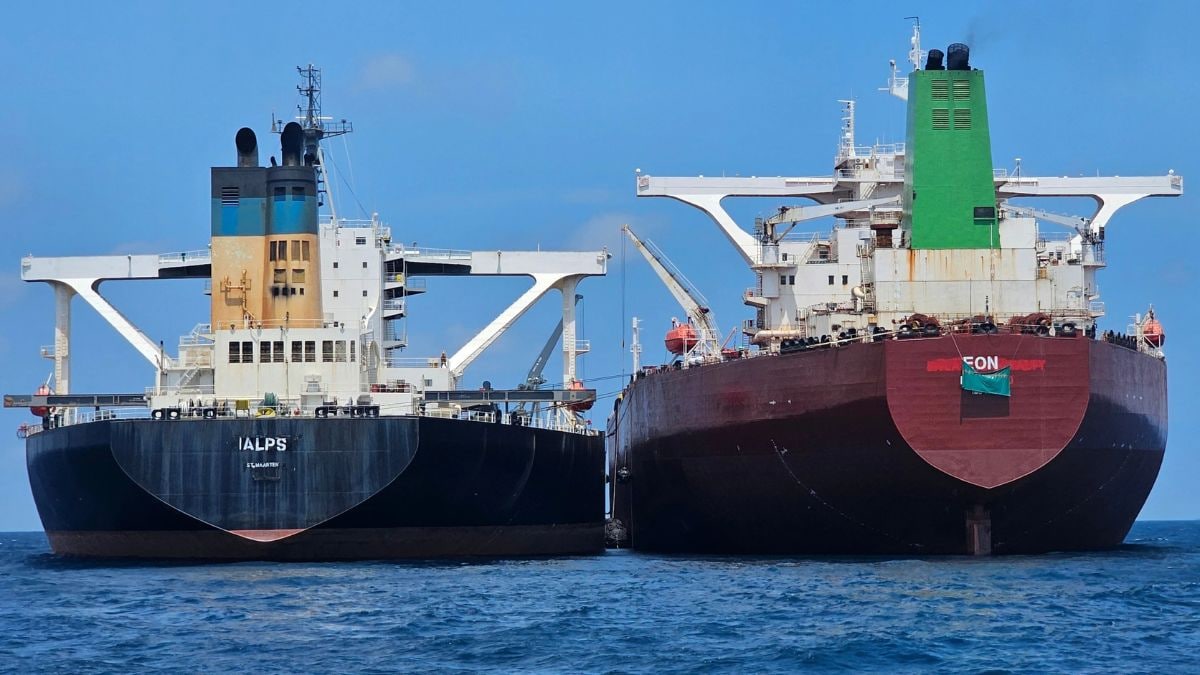
The Malaysia Maritime Enforcement Agency (MMEA) has flagged the longtime ship-to-ship transfers of sanctioned oil by Iran-linked tankers near its waters amid the war in the Gulf, which is well past its third month.
This comes amid reports claiming that the MMEA has long turned a blind eye to the illegal transfers of sanctioned oil in a particular area near Malaysian waters.
The area under focus is called the Eastern Outer Port Limits (EOPL) anchorage, located just 70km off the coast of Johor in the South China Sea, and near the mouth of the Singapore Strait—one of the world's busiest maritime routes.
Rejecting any kind of role in allowing the transfers of sanctioned oil to take place, the MMEA noted that the shadow fleet tankers had been using "jurisdictional gaps" in maritime laws to do so over the course of the war.
In its analysis of satellite imagery, US-based advocacy group United Against Nuclear Iran (UANI) alleged that there had been 42 ship-to-ship transfers of Iranian oil conducted in the EOPL anchorage since the war began on February 28.
However, the MMEA has responded to what the UANI calls Malaysia's "inaction against ... dark fleet actors", claiming that the analysis did not "reflect the operational realities of maritime enforcement conducted by the MMEA".
The maritime agency's Director-General, Mohamad Rosli Abdullah, also told The Associated Press that the illegal transfers were often done outside the country’s territorial waters and in remote areas beyond radar coverage, which made it impossible for it to stop them.
These tensions over Malaysia's alleged free hand for shadow fleet vessel transfers off its waters is, however, not new, and has persisted for years, letting Iran circumvent the sanctions on it, and letting the receiver country (typically China) mask the source of the oil.
However, the illegal transfers have returned to the spotlight amid the war, as reports have made it increasingly clear that the Iran-linked activity at the EOPL has been a major factor behind Tehran's economic resilience amid the war.
Abdullah also reiterated that the MMEA would "continue to strengthen monitoring and enhance strategic cooperation with relevant agencies to ensure that the nation’s maritime domain’s safety and sovereignty are consistently safeguarded".
However, given the UANI's allegations and the possibility of war resuming in the Gulf, the illegal transfers are likely to continue until either the US or Malaysia take maritime action.
