



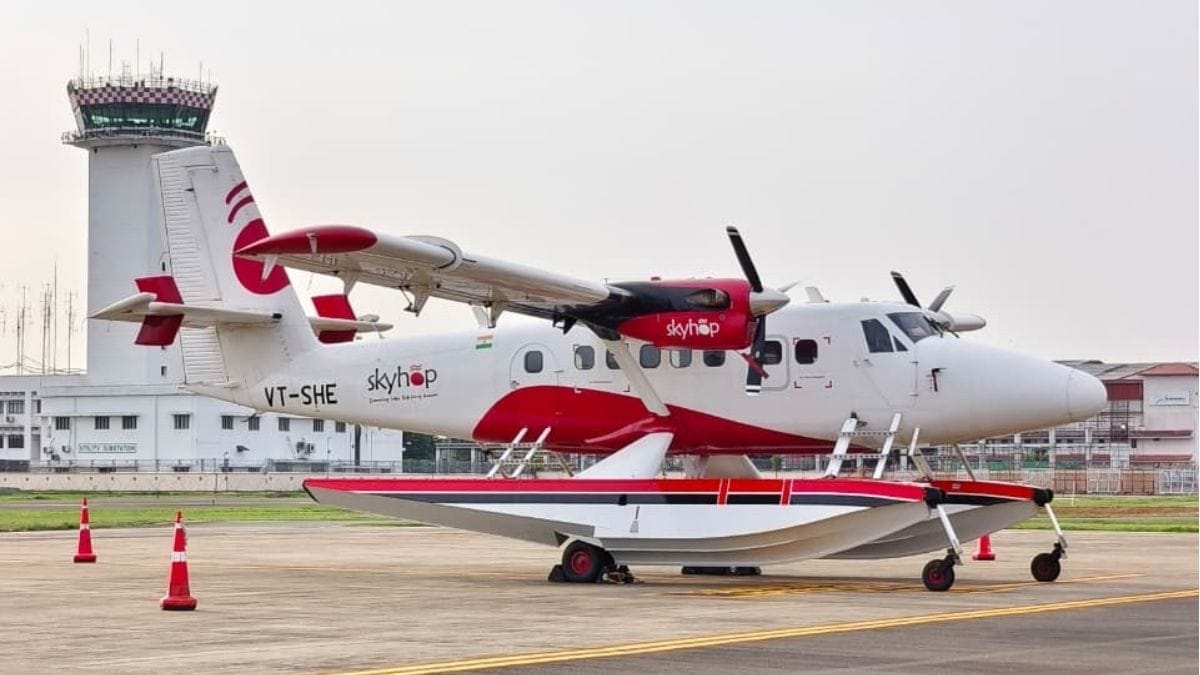
Getting to Lakshadweep has always required either a 10–20 hour sea voyage or a single, heavily-booked flight to Agatti Island, one of only two ways in or out of India's only coral atoll Union Territory. But starting May 13, 2026, weather permitting, 12 trial seaplane flights will take off from Kochi to test the feasibility of a full commercial seaplane service connecting multiple Lakshadweep islands, a milestone that India's aviation sector has chased for decades.
The trials are being facilitated by Cochin International Airport Ltd (CIAL) in association with the DGCA, the UT Administration of Lakshadweep, and the Airports Authority of India. The aircraft involved is a Twin Otter seaplane operated by SkyHop Aviation, India's first DGCA-certified commercial seaplane operator, which received its Air Operator Certificate (AOC) from the DGCA in April 2026.
The trials will cover two route clusters: Kochi–Agatti–Kalpeni–Kavaratti and Kochi–Kadmat–Kiltan–Agatti, covering destinations that have no regular air connectivity today.
Last week, on May 7, 2026, Union Civil Aviation Minister Kinjarapu Ram Mohan Naidu announced at the GIFT City Aviation Summit in Gandhinagar that seaplane operations in Lakshadweep would begin "soon."
If trials succeed and the service is brought under the UDAN regional connectivity scheme, fares could drop as low as ₹2,000–₹4,000, compared to an open-market fare of around ₹12,000 for the Kochi–Lakshadweep sector.
The seaplane, which lands and takes off on water without needing a runway, is uniquely suited for Lakshadweep's geography, a chain of 36 coral islands spread across the Arabian Sea where full-length runways remain impossible on most islands.
If regularised, the service would do more than cut travel time. It would open the islands to medical evacuation, emergency supply and, crucially, a grade of eco-tourism that India has not yet been able to unlock.
Of Lakshadweep's 36 islands, only Agatti has a functioning airport, a narrow, 1,204-metre runway that can only accept small turboprops. Building conventional runways on coral atolls threatens the fragile reef ecosystem and is geologically constrained. A seaplane requires no runway infrastructure whatsoever, using the lagoon itself as its landing surface.
