



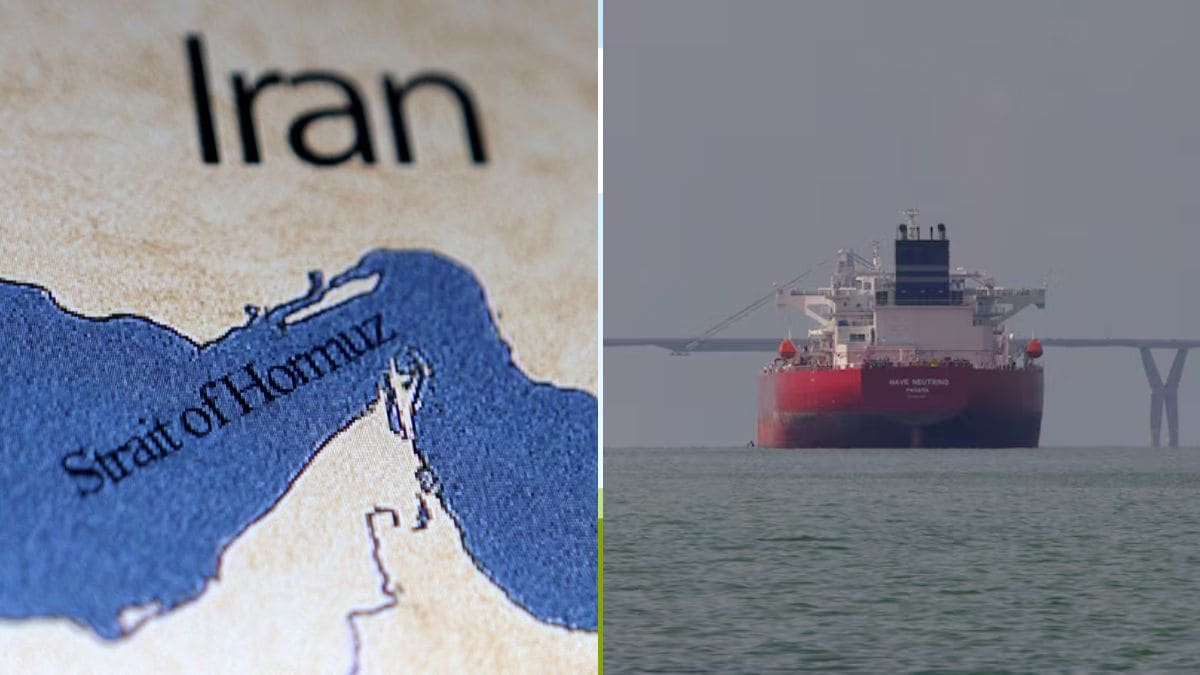
Two supertankers loaded with Iranian crude oil docked at Indian ports over the past few days, becoming the first such vessels to do so since the US-imposed sanctions on Tehran in 2019.
This also comes amid the war in the Gulf, which has crossed 40 days, and has reached a ceasefire that is being strained by US President Donald Trump's imposition of a blockade in the Strait of Hormuz, and Iran's warning of retaliation.
Owing to a spike in oil prices amid the war, the US agreed to a temporary waiver on the sanctions in order to curb the spike, which paved the way for India to purchase oil from Iranian ships that were already at sea.
The first was the very large crude carrier (VLCC) Felicity (IMO: 9183934), owned by the National Iranian Tanker Company (NITC), which anchored at the Sikka Port in Gujarat late on Sunday night.
According to a Bloomberg report, the Iranian-flagged tanker was reportedly laden with 2 million barrels of Tehran's oil sourced from the Kharg Island earlier in March, meant for the refining giant Reliance Industries (RIL).
The second was the Jaya (IMO: 9410387), which AIS trackers showed was moored just off the Paradip Port on Sunday.
The Curacao-flagged tanker was also said to be carrying about 2 million barrels of Iranian crude from the Kharg Island, although its owner could not be traced, indicating that it could likely be a shadow fleet vessel.
However, with the failure of the peace talks and the likelihood of the war in the Gulf escalating over the Hormuz blockade, oil prices again shot up by 7 per cent on Monday—past the $100 mark.
While Trump had claimed that the US side had "agreed" on many points with the Iranian side at the Islamabad talks, he added that the two sides had fundamentally disagreed on a nuclear agreement, which caused the talks to collapse. The Tehran side, on the other hand, claimed that Washington had made excessive demands.
