



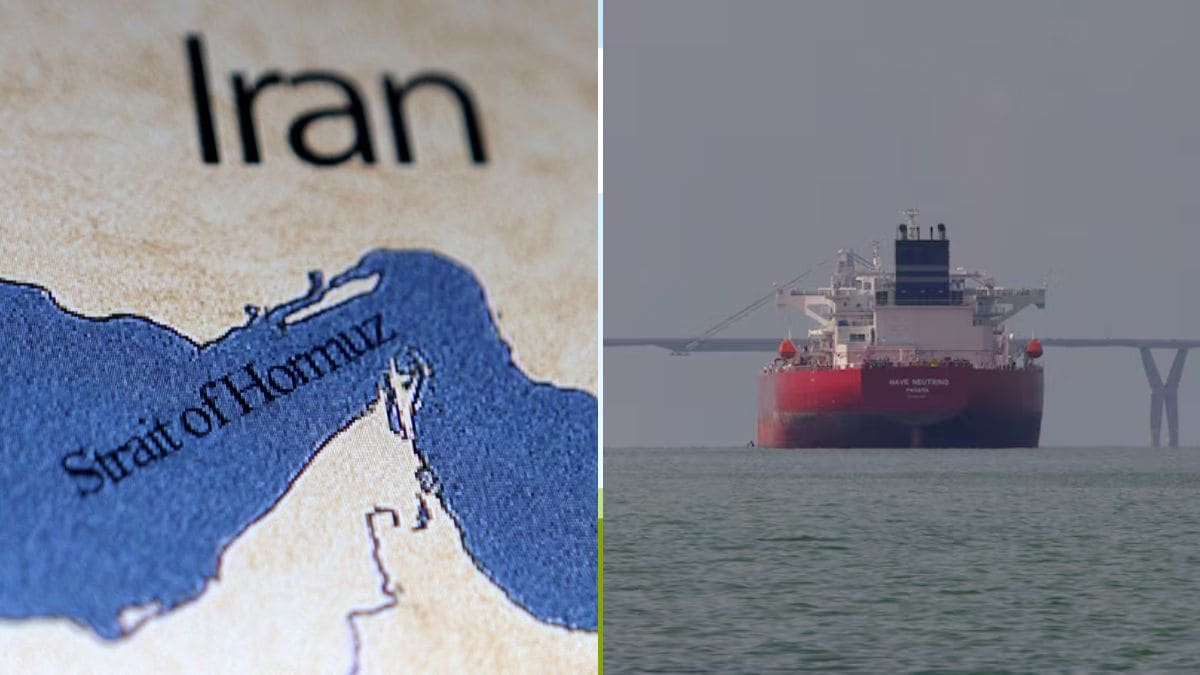
Maritime insurance companies on Saturday told ship owners that certain policies would be cancelled and coverage prices would be increased for vessels travelling in or around the Hormuz Strait and the Gulf of Hormuz.
This issue comes after Iran began its counteroffensive against the US and Israel for attacking it on Saturday, and has been worsened after the death of Tehran’s Supreme Leader Ali Khamenei.
Brokers predict that tensions in the Middle East could lead to coverage prices rising by about 50 per cent in the coming days, a Financial Times report said.
The report added, citing one such broker, that insurance prices for vehicles travelling in and around the Hormuz Strait was typically 0.25 per cent of the vessel’s cost.
This would mean that the insurance cost for a $100 million vessel could shoot up to $375,000 from $200,000.
The report also noted the fact that these changes—which had begun taking place before the markets opened on Monday—reflected a sense of urgency growing among war risk insurers, amid the deteriorating situation in the Middle East.
This strait is a crucial passageway for about a quarter of the world's crude oil, connecting oil producers in the Gulf of Hormuz—such as Saudi Arabia, Iran, and the United Arab Emirates—with the Gulf of Oman and the Arabian Sea.
If Iran were to deny access to oil tankers from the Middle East to China, Europe, the US and other major energy consumers, the disruption would trigger a major spike in oil prices, potentially destabilising the global economy.
Although Tehran has not officially closed the Hormuz Strait, the Iran Revolutionary Guard Corps (IRGC) has issued unofficial Very High Frequency (VHF) warnings to a number of vessels, blocking them from entering the strait.
"No ship is allowed to pass the Strait of Hormuz," one of the radio transmissions said, according to an official from the European Union's naval force (EUNAVFOR) Aspides, as per a Reuters report.
This has already led to various ship owners getting weary about travelling to the Gulf of Hormuz, with the IRGC’s missile strike attempt on US aircraft carrier, the USS Abraham Lincoln, and Washington’s claim that it has sunk nine Iranian warships.
At least three vessels changed course on nearing the unstable region—the Financial Times report added, with more expected to do so in the coming days, as maritime agencies and shipping companies remain on high alert.
