



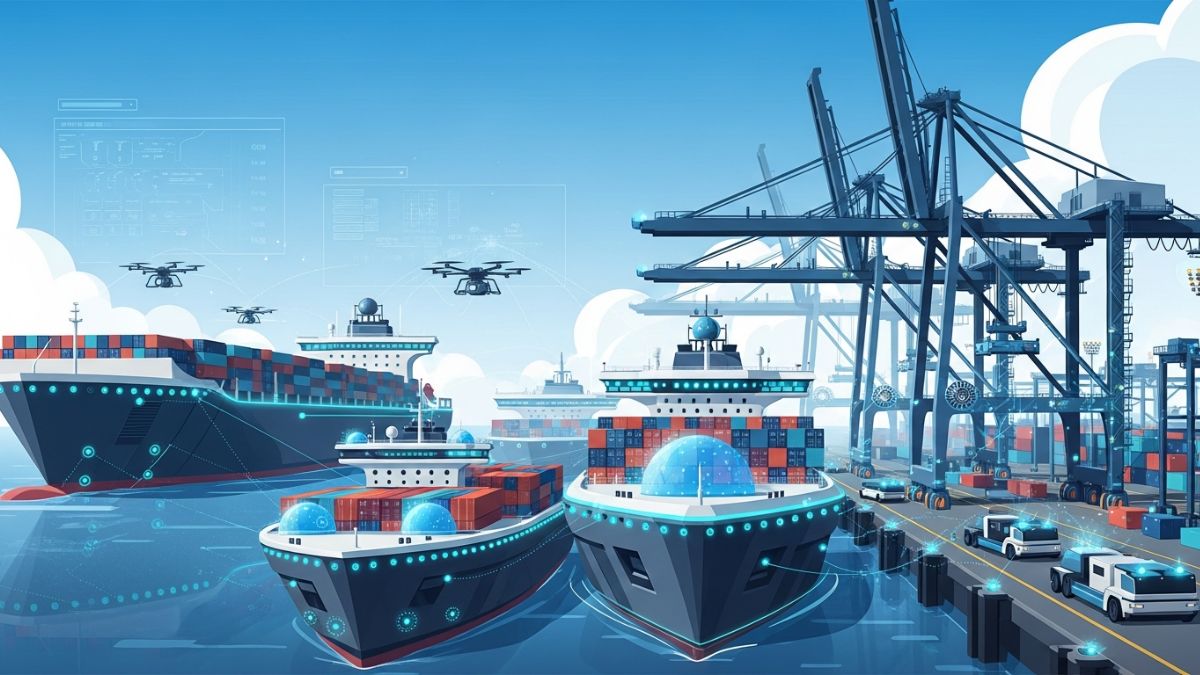
For centuries, the maritime industry was defined by steel, steam, and the sheer physical might of navigating the world's oceans. Today, however, the sector is being redefined not by the size of its vessels, but by the sophistication of its code.
As we move through 2025, the maritime world is experiencing a seismic shift in technology integration, moving rapidly from a traditional, reactive industry to a proactive, digitally connected ecosystem.
The rise of the autonomous vessel
Perhaps the most visible symbol of this new era is the development of Maritime Autonomous Surface Ships (MASS). No longer just a science fiction concept, autonomous shipping is transitioning from experimental pilots to commercial viability. Projects like the Yara Birkeland have paved the way for emission-free, crewless logistics.
The technology is not merely about replacing sailors with robots; it is about enhancing safety and efficiency. Advanced sensor arrays—combining LiDAR, radar, and high-definition cameras—feed data into AI algorithms that can detect obstacles and calculate collision avoidance manoeuvres faster than a human watchkeeper.
While fully ocean-going autonomous vessels are still navigating regulatory hurdles, we are already seeing a hybrid model emerge: "smart" ships that support human crews with automated decision-making, reducing fatigue and human error, which accounts for the vast majority of marine accidents.
Green propulsion and smart efficiency
The integration of technology is inextricably linked to the industry's most pressing challenge: decarbonization. The road to "net zero" is being paved with digital solutions. Modern vessels are increasingly equipped with "smart propulsion" systems.
These systems do not just turn a propeller; they actively monitor sea state, wind direction, and engine load in real-time, automatically adjusting pitch and RPM to maximise fuel efficiency.
Furthermore, digital twins—virtual replicas of physical ships—allow engineers to simulate thousands of operating scenarios to optimise hull designs and retrofits before a single sheet of steel is cut. This data-driven approach is critical as the fleet transitions to expensive alternative fuels like green ammonia, hydrogen, and methanol, where every drop of efficiency counts.
The connected supply chain: Blockchain and IoT
Beyond the ship itself, the invisible infrastructure of maritime trade is being rewritten. The days of paper bills of lading and opaque supply chains are numbered.
Blockchain technology is emerging as the backbone of trust, creating immutable digital ledgers that track cargo from factory to port to shelf. This reduces fraud, eliminates mountains of paperwork, and accelerates customs clearance.
Simultaneously, the Internet of Things (IoT) has given a voice to the cargo itself. Smart containers now broadcast their internal temperature, humidity, and precise location. This level of transparency allows logistics managers to react to disruptions in real-time—redirecting shipments if a port is congested or expediting temperature-sensitive goods if a refrigeration unit fails.
The smart port interface
Ships are only half the equation; the ports they visit are evolving just as rapidly. The "smart port" concept utilises 5G networks to connect cranes, trucks, and terminal operating systems into a unified dance of automation. Automated Guided Vehicles (AGVs) transport containers with mathematical precision, while AI predicts vessel arrival times to the minute, allowing for "just-in-time" arrival. This reduces the time ships spend idling at anchor—cutting emissions and port congestion simultaneously.
The road ahead: Challenges and adaptation
Despite the optimism, the road ahead is not without peril. As ships become floating data centres, cybersecurity has moved from an IT concern to a critical safety issue.
A hacked navigation system or a ransomware attack on a port's operating system can cripple global trade just as effectively as a physical blockade. Robust cyber-resilience frameworks are now as essential as watertight bulkheads.
Furthermore, the "human element" remains the critical variable. The industry faces a massive upskilling challenge. The seafarer of tomorrow needs to be part navigator, part systems administrator. We are not eliminating the human from the loop, but rather moving them from the helm to the control room, requiring a fundamental overhaul of maritime education and training.
The maritime world is no longer changing; it has changed. We are in the midst of a digital revolution that is making shipping safer, greener, and more efficient. The road ahead requires a collaborative effort between regulators, technology providers, and shipowners to harmonise standards and ensure that, as we entrust our oceans to algorithms, we do so with the wisdom to secure and sustain the global supply chain for the future.
The author is MD, Flugelsoft Group of Companies.
The opinions expressed in this article are those of the author and do not purport to reflect the opinions or views of THE WEEK.
