


 Add as a preferred source on Google

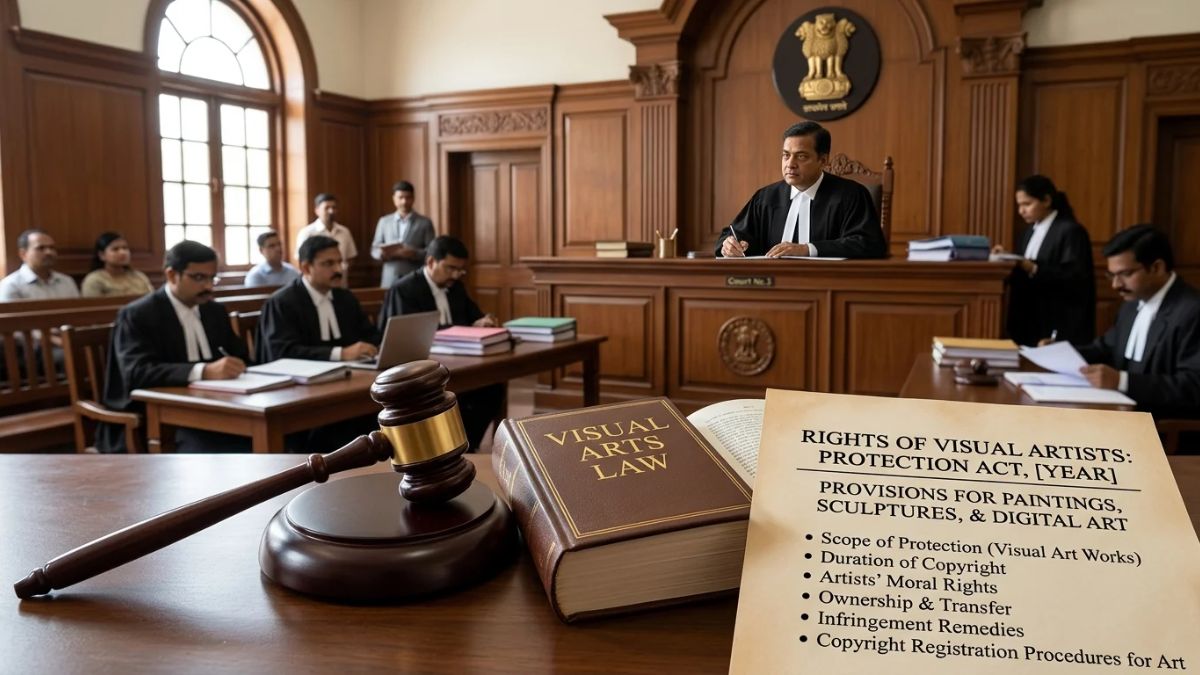
The Indian Copyright Law grants uniform protection to works like literary, artistic, dramatic, and musical works, wherein the author is protected for their lifetime plus 60 years. However, the application of copyright law in each industry is very different from one another. For instance, the significance of copyright law in the music industry has not been matched in the world of visual artists.
Indian Copyright Law saw a defining moment in 2012, wherein the provisions of the Copyright Act were recalibrated to grant economic protection to the stakeholders in a song. The amendment was passed to undo the historic injustice done to the authors of music by the Indian Supreme Court in 1977 (Eastern India Motion Pictures Association v. Indian Performers Rights Society), which forbade authors like music composers and lyricists from collecting royalty whenever a song was commercially exploited.
When works gain equal terms of protection within the Act, the benefits that accrue to stakeholders should remain the same as well. However, this is not true in the case of visual arts. The reasons can be traced to the workings of the art world and the art market. Paintings gather value based on the artists, and like wine, they age well with time; very many celebrated works today are in the public domain and can still garner millions of rupees in the art market. Art from an unknown artist may fail to garner meaningful attention and economic benefit.
The Indian Copyright Act was amended in 1999 to secure the rights of stakeholders in artistic works by inserting Section 53A of the Copyright Act, wherein for any resale above Rs 10,000, the author—if they had been the first owner of the work—is entitled to claim a royalty. The provision is applicable only if the author has retained ownership rights in a work. Most works could be a “work for hire,” wherein a painter paints a commissioned work based on the requirements of their client. The word “royalty” still functions as a taboo word within the art world.
It is pertinent to mention that the contractual dynamics in the art world may not permit the painter to retain the first ownership right in the painting. When a person commissions a work from an artist, they claim ownership over the work. On the other hand, when a person purchases a painting, they purchase only that painting and not the copyright over the work itself. The painter can still retain their rights over the work and can replicate it and create newer works based on it. The provision stands meaningless if the painter does not retain first ownership of the painting. The 2012 amendment understood the lack of bargaining power of musicians and remedied it by allowing them to collect royalties even when their works were synchronized with a movie, whereas their first ownership over their creation remains unrecognized under the law. A similar movement is required to ameliorate the position of visual artists in India.
Further, the Copyright Act, in its wisdom, requires a copyright collection society to collect royalties on behalf of its stakeholders; it is a common practice amongst other forms of work like literary and musical works, where multiple societies already exist. It is pertinent to mention that there is no such collective society in the realm of the art world for paintings. As a result, artists lack collective bargaining power and a voice to represent themselves. It would not be possible for a visual artist to individually collect royalties or command the bargaining power that a collection society does. It would also serve the additional purpose of educating artists about the provisions of copyright law and their rights. Existing societies like the Indian Performers Rights Society and the Indian Singers and Musicians Rights Association have done commendable work educating their stakeholders and society on this front.
In light of the inroads made by Artificial Intelligence into the world of artwork and the massive training undertaken by Generative AI platforms on existing artworks to generate paintings, it is imperative to form a society to meaningfully protect artists and their art, and to ensure artists receive their due when their work is used for AI training. Even as per the working paper on AI and copyright law published by the Department for Promotion of Industry and Internal Trade last year, copyright societies were mandated to collect royalties.
The paper had suggested that Generative AI platforms should be allowed to train on all copyrighted and public domain works available on the internet without prior copyright permission. The paper suggested that once a platform accrues economic benefit, it will be required to pay a royalty to the registered copyright society based on the amount prescribed by a specialized rate-fixing committee. The paper effectively had the effect of diluting the rights of owners and artists. Earlier this year, the Hon’ble Delhi High Court, in the case of ANI v. OpenAI, went a step further than the paper and held that the “training of AI platforms” amounts to private research and is exempted under the Copyright Act.
The Hon’ble Delhi HC limited its discussion to literary works in the aforementioned case, and it was to be considered an exemption only if the AI-generated work would not directly compete with the work on which it was trained. The conversation around AI and copyright so far has concentrated only on music and literary works; there needs to be a nuanced approach for AI and visual arts. An AI-generated painting may not resemble a previous work in total, and under the traditional norms of copyright law, a visual artist stands without any meaningful protection. The ruling given by the Delhi HC could be relevant in the case of visual arts, as the junior work may not directly compete with an existing work in the art market but may render economic harm in the long run.
Dr. Sundar Athreya H is an Assistant Professor at KIIT Law School. Dr. Annamma Samuel is a Professor at SRM Law School, SRMIST, Kattankulathur.
