


 Add as a preferred source on Google

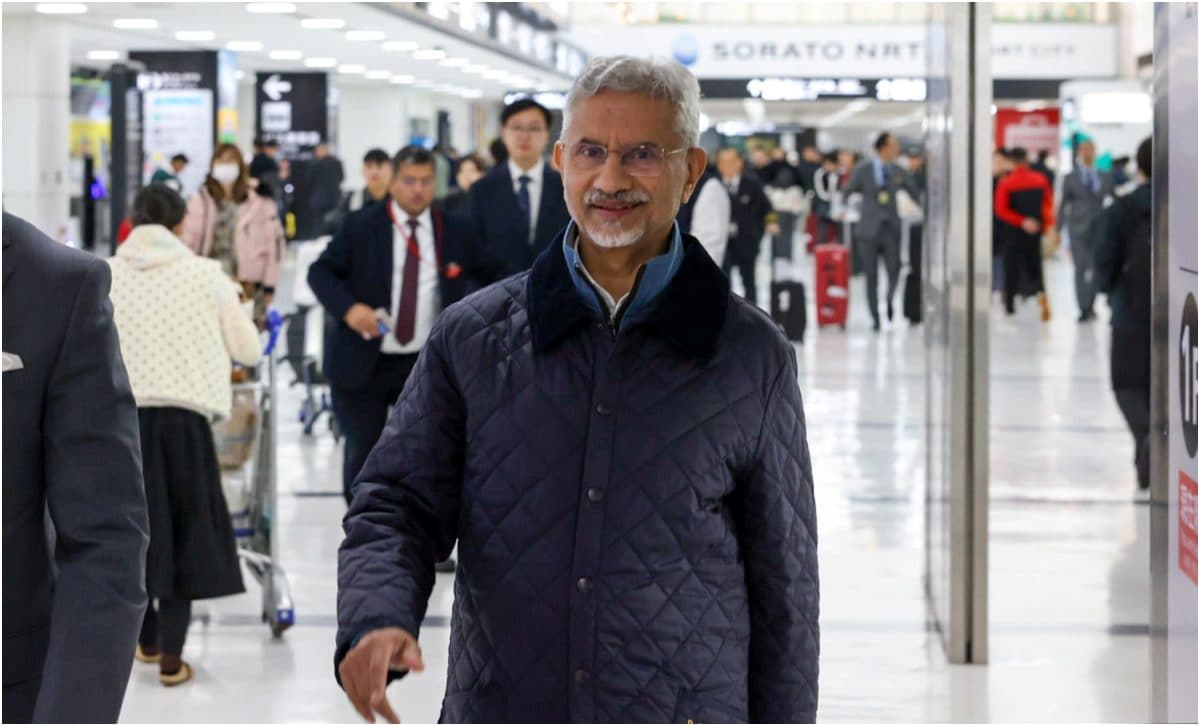
External Affairs Minister S. Jaishankar has called for a change in the way India is perceived globally, highlighting the transformation the country has undergone in the past few years, especially in the fields of infrastructure, manufacturing, human resource development and innovation.
Jaishankar and Defence Minister Rajnath Singh arrived in Tokyo on Wednesday for the fourth edition of the 2+2 ministerial dialogue.
Speaking at the inauguration of Raisina Tokyo 2026 in Japan, Jaishankar urged Japanese businesses and policymakers to update their understanding of India rather than rely on outdated perceptions.
"It is essential to update the picture of India and not be stuck in the past," he said.
Jaishankar outlined several considerations that Japan should take into account while engaging India, beginning with the transformation that has made it easier and more efficient to do business.
This, he said, is particularly visible in infrastructure, including highways, ports, airports, rail and power.
The infrastructure progress has made India an increasingly attractive platform to manufacture for global markets and undertake offshore production. At the same time, India offers the natural advantage of a large domestic market, where Japanese companies have already had some very good experiences, he noted.
Jaishankar also highlighted the improvements in soft infrastructure and human resource development over the last decade.
"Educational institutions have doubled, skilling initiatives have multiplied and a strong culture of innovation and startups has taken root," he said, pointing to progress in sectors such as digital technology, space, drones, health and defence.
The minister said the India-Japan agenda should also look towards the future, with greater scope for closer collaboration in advanced manufacturing, semiconductors, critical minerals, ICT, clean energy and pharmaceuticals.
Noting how widely Indian society has embraced digital practices, he said India's scale, diversity and creativity are particularly relevant when it comes to artificial intelligence.
Jaishankar also emphasised the importance of strengthening security and defence cooperation through self-reliance and trusted partnerships.
"At a time when security and defence are best ensured through self-reliance and trusted partnerships, we also have to develop policies and frameworks that enable us to work more closely with each other," he said.
He called for stronger people-to-people linkages and greater exchanges in education, culture and language.
Reflecting on India-Japan relations, Jaishankar said much had changed over the last three decades, with growing economic interactions and greater political understanding.
He pointed to their participation in the Quad, G4 initiative for United Nations reforms and the East Asia Summit platforms.
"By expanding India-Japan ties, we will not only serve to stabilise and secure the Indo-Pacific but add an important pillar to an increasingly multipolar Asia and a multipolar world," he said.
Jaishankar also identified five defining features of the current global situation. These are: shocks to the international system, weaponisation and chokepoints, extreme competition and greater risk-taking, de-risking and diversification, and trusted partnerships as solutions.
