


 Add as a preferred source on Google

There was a time when being a militant in Kashmir carried not just notoriety but also a sense of glory. In the 1990s and well into the 2000s, militants openly identified themselves with outfits such as the Lashkar-e-Taiba, Jaish-e-Mohammed, and Hizbul Mujahideen. Their allegiance was rarely a secret, and photographs with weapons, declarations of joining a militant group and public displays of associations with these outfits were part of the visible culture of militancy in the Valley. Over the years, figures such as Burhan Wani, who became the poster boy for a new generation of militants and commanders such as Abu Qasim, acquired a public profile that gave them visibility way beyond their immediate areas of operation. In fact, when the news broke that 22-year-old Wani, the poster boy of Hizbul Muhajideen, was killed by security forces in an encounter, the central security forces had alerted the state police that Wani could become a rallying point in the valley to whip up sentiments of youth who would declare him a “martyr”.
The worry was that Wani could be given a stature equal to Jammu and Kashmir Liberation Front founder Maqbool Bhatt and Parliament attack convict Afzal Guru, both of whom were awarded death sentences and executed in the national capital. The difference was that after the 2013 hanging of Afzal Guru, only one person died in the protests that erupted in the state. According to security officials in Jammu and Kashmir, the glory of the gun was slowly beginning to fade, and this was also being reflected in the funerals of slain militants.
In 2020, the JK police began a new practice of allowing funerals of terrorists slain in police action only outside towns and cities to prevent the terror groups from fanning local sentiment. “Many a times, terror groups used to find fresh recruits at funerals of slain militants being held in the neighbourhood and could easily target the young minds,” said a senior security official.
After the new guidelines came into force, such gatherings were held in designated areas on the outskirts and attended by a small group of family members, police officials and a magistrate. It was a tough decision to implement initially, but the outcome was that the Valley did not resonate with gunshots that were traditionally fired at funerals of the militants, and local recruitments started witnessing a decline.
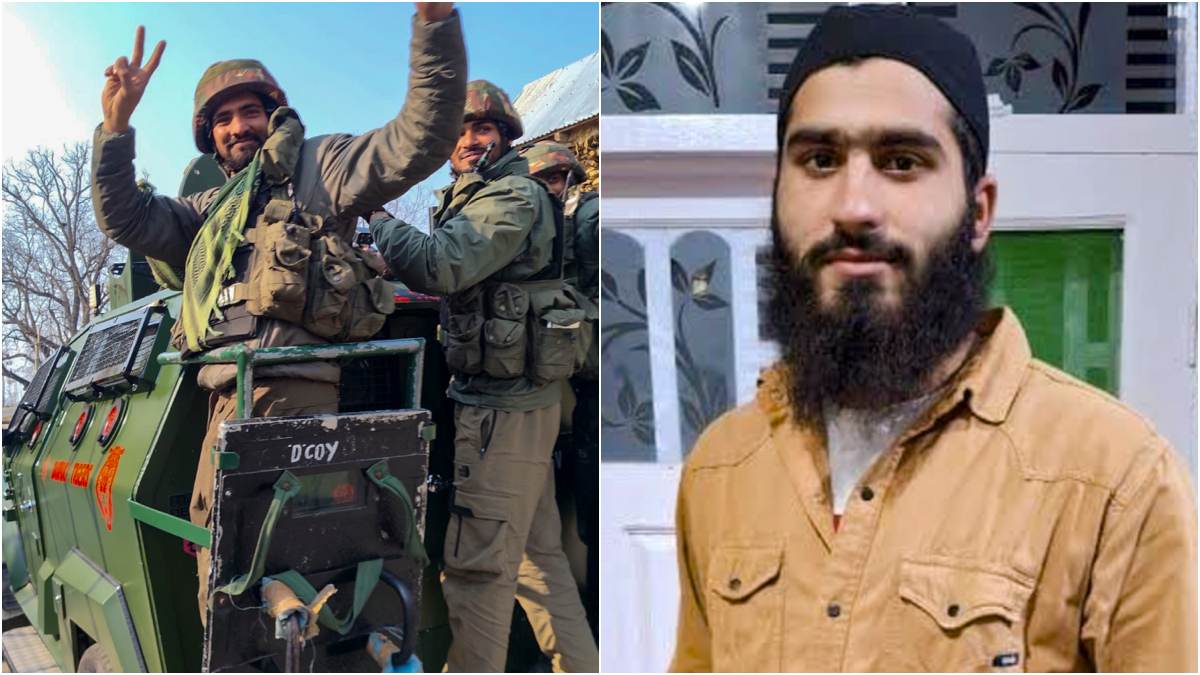
The decline is also reflected in the number of terrorists eliminated in counter-terror operations in recent years. On Wednesday, security forces killed LeT terrorist Mohammed Lateef Bhat in Kulgam district. According to the Union home ministry, he is the last known active terrorist of the LeT in the Valley. Bhat’s killing has taken the total number of terrorists killed in counter-terror operations to 17 so far this year, compared with 32 in 2025 and 67 in 2024.
While Bhat's killing holds the promise of keeping the Valley free from the shadow of local militancy, the threat of foreign terror remains. According to security sources, around 20-25 foreign terrorists might still be active in the valley.
Moreover, the terror patterns have changed, and terrorist groups are increasingly operating through what officials describe as hybrid terrorists—individuals who do not maintain a visible militant identity as full-time recruits, but hold allegiance or affiliation to terror outfits. “They blend into civilian life, and their organisational links and terrorist activities only come to light when there is an incident,” said an intelligence official.
For security agencies, this demonstrates the growing challenge of identifying terrorists, the possible growth of sleeper cell networks and an invisible cross-border link that continues to attract and provide support to foreign terrorists in the valley.
At the same time, there is also a positive change where locals are finding it easier and beneficial to distance themselves from terror groups. Lateef Bhat, therefore, may not get a send-off that Wani did, but for the victims of terror, the fading footprints of militancy have given rise to hope that not just local recruitment, but the public glorification of terrorism may finally be coming to an end.
