



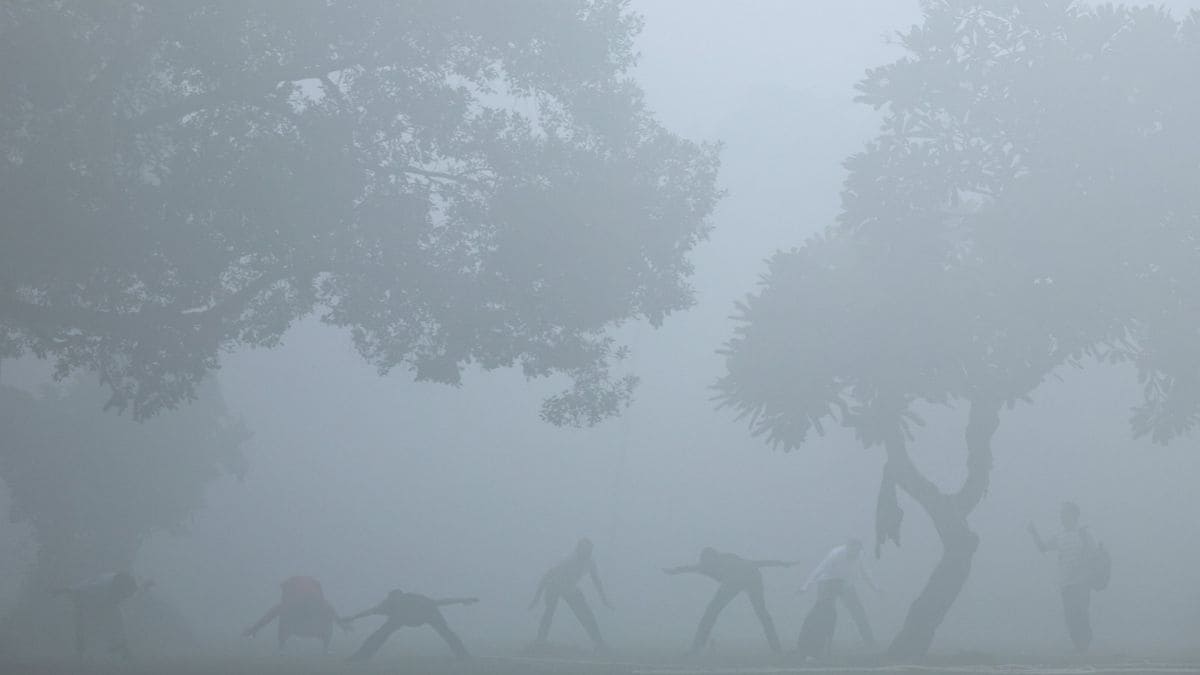
It is not just Delhi anymore. Pollution has now become a pan-Indian phenomenon. Congratulations, rest of India, you seem to have caught up with the national capital region’s dismal track record, and even seem to have outdone it.
Right now, as we speak, the air outside the window right now is a hazy murk of sulfur, carbon monoxide, carbon dioxide and nitrogen oxides, beside other toxic paraphernalia. It is not fit for human breathing.
Boisterous Diwali celebrations have seen Delhi’s air quality index, or AQI, soar from around 364 on the eve of the festival, already poor, to above a mind-boggling 2,000 if you believe some private monitors. Officially, it is ‘just’ on average 376 or so, though many localities have slipped above 400 – note that officially, the AQI measurements by the government are capped at 500 as the peak, so anything above that is officially not tabulated.
Even if you let that pass, it has been perhaps even more shocking that the rest of the country seems to be competing with the national capital region. Cities like Chennai have been the ‘dark horse’ with an AQI of 213, though some localities reported pollution at nearly 300. Mind you, this is a southern coastal town which otherwise maintains a satisfactory AQI of 60 or so.
In fact, right now, live monitors record the world’s top 10 most polluted cities to be all in India. Top 20? It’s still India all the way. And Top 100? At least 93 to 99, depending on when you check, are all from India. Giving us competition is Lahore, though we Indians seem to be thoroughly beating it most of the time. Surely, East or west, India is the best, at least when it comes to pollution.
With air pollution now showing a distinct pan-national footprint, and for most of Northern India, it is not just a Diwali issue, but a problem round the year, with the index perhaps lowering a bit during the warmer months. It is not just a matter of citizen health and well-being, though that should be reason enough, but international perception, which directly translates into anything from business investments to tourist arrivals.
And what are we doing about it? In the national capital region, it is a range of half-hearted measures called GRAP, or Graded Response Action Plan – nothing else. It is anyway, spectacularly ineffective, kicking in only after matters are already out of hand, and ranges from a ban on private construction, which suffers from an impotent implementation, to bans on older vehicles entering the capital city, a discriminatory law whose only contribution has been massive traffic logjams at Delhi borders since it was put into effect. As for restricting crackers? Less said, the better.
It is also curious why government readings of AQI are way below that of what international and private monitoring points report. Is it because if the government acknowledges that AQI is above 400, that means GRAP’s highest grade of actions kick into effect, including stopping all construction and all commercial vehicular traffic and implementing work-from-home. Now, where would that leave our unbridled GDP growth? Health or wealth – that seems to be India’s Hobson’s choice.
