



Did women as well as men take part in ancient migrations into India? A new genetic study of Konkani-speaking communities on the west coast offers clues, finding stronger maternal links to West Eurasia and the Eurasian Steppe among Sarasvata Brahmin groups than in some other Konkani communities.
Published in the journal Heredity, the study found that Konkani communities share deep roots in South Asia, but their maternal ancestry also reflects different waves of migration. The findings add to the evidence that ancient movements into South Asia involved women as well as men, though the study does not establish a direct link between these communities and any particular migration.
The research was led by Kumarasamy Thangaraj of the CSIR-Centre for Cellular and Molecular Biology (CCMB), Hyderabad, and M.S. Mustak of Mangalore University. The other authors are Jaison Sequeira of Mangalore University, the study’s first author; linguist George van Driem of the University of Bern; and Lomous Kumar of the Birbal Sahni Institute of Palaeosciences, Lucknow.
Konkan roots
The Konkan is a narrow stretch of India’s western coast, extending from Daman in the north to the Gangavalli River and Karwar in the south. Around two million people spoke Konkani, with variations across the region, according to the 2011 Census.
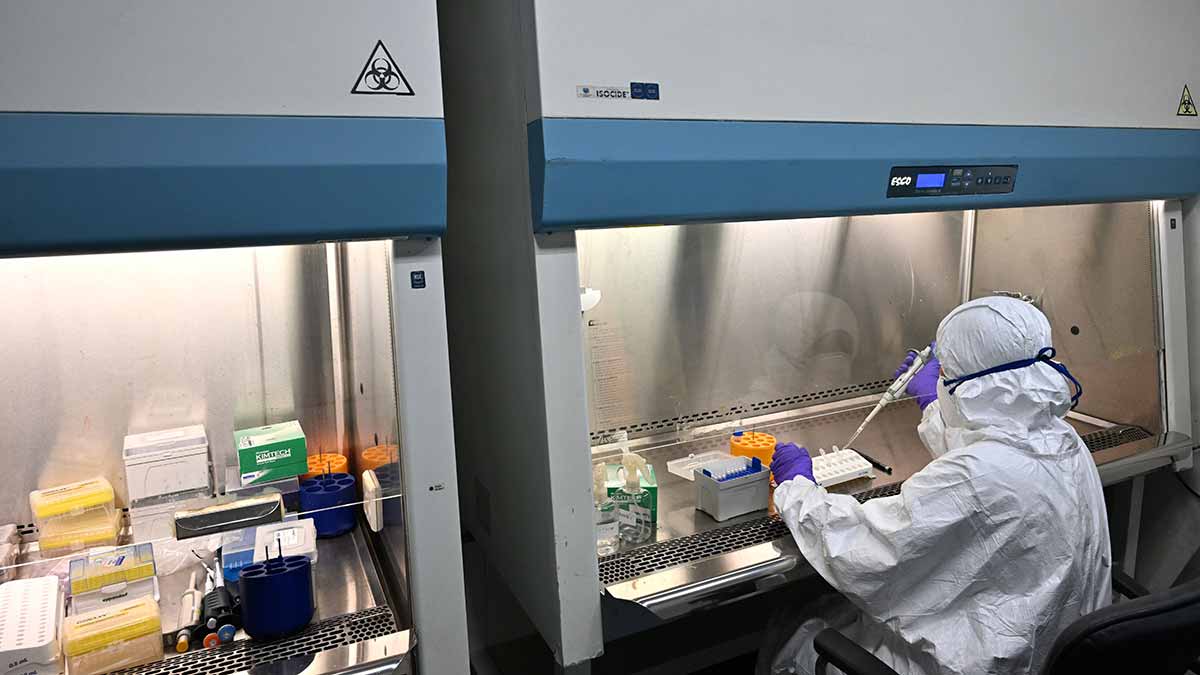
The researchers studied mitochondrial DNA, which children inherit from their mothers. It traces one line of family ancestry, rather than a person’s entire genetic history. The team analysed DNA from 295 people and compared the results with more than 5,000 mitochondrial genomes from published studies, including ancient DNA samples.
A genetic group called M accounted for 58.1 per cent of the Konkani maternal ancestry. Two other groups, R and U, accounted for 13.5 per cent and 12.6 per cent, respectively. These groups are branches of a genetic family tree that helps researchers trace ancestry through mothers.
The study divided the communities into Sarasvata and non-Sarasvata groups. The Sarasvata groups include Gauda, Chitrapur and Rajapur Sarasvata Brahmins, whose traditions link their origins to the banks of the ancient Sarasvati river. The non-Sarasvata groups studied include the Khārvi, Kuḍubi and Roman Catholic communities.
All the groups shared deep South Asian roots, but the Sarasvata groups showed stronger maternal links to West Eurasia and the Steppe, a vast grassland region across parts of Europe and Asia, than some non-Sarasvata groups. The findings are relevant to the debate over ancient migrations associated with the spread of Indo-Aryan languages.
“Our study bridges a crucial gap in our understanding of the peopling of South Asia,” says Thangaraj.
The researchers also found differences in how closely the groups were related to other populations. Gauda Sarasvata Brahmins showed a strong genetic affinity with the Kalash people of Pakistan.
Climate and ancient migrations
Using computer models, the researchers estimated that the major maternal genetic groups M and N expanded around 50,000 to 40,000 years ago, while some other branches became more common between 20,000 and 10,000 years ago. These dates are estimates and may change with further research.
The study suggests that many of the N lineages may have come from a diverse ancestral population, possibly in or near the Near East, around the time of the Last Glacial Maximum, the coldest phase of the last Ice Age, about 26,500 to 19,000 years ago.
“A major proportion of the maternal diversity comes from lineages that originated from a diverse ancient source population, likely in the Near East at around the time of the Last Glacial Maximum,” says Mustak.
During this period, much of the world’s water was trapped in ice, causing sea levels to fall and coastlines to change. The researchers suggest that these changes may have affected coastal routes between the Iranian plateau and western India.
Why communities differ
The study found distinct genetic patterns among some Konkani communities. In the Kharvi group, a maternal genetic branch called M57 accounted for about 57 per cent of the lineages studied. Among the Kuḍubi, M36c accounted for 26.8 per cent and R8a for 12.2 per cent.
These patterns may reflect the growth of communities from a relatively small number of ancestors. When a group descends from a small founding population, certain genetic traits can become common over generations. Marriage within the same community, known as endogamy, may also preserve these patterns by limiting the mixing of family lines.
Gauda Sarasvata Brahmins and Roman Catholics showed greater variety in their maternal lineages than some other groups. However, the findings need to be interpreted in light of the sample sizes and the different types of DNA analysis used.
The researchers stress that mitochondrial DNA represents only one small part of a person’s ancestry. A fuller understanding of Konkani history will require more genetic evidence alongside archaeology, language studies and historical records.
“By examining complete mitochondrial genomes, we uncover the rich ancestry that both unites and distinguishes Konkani communities, shaped by geography, climate, and culture over millennia,” says Sequeira.
