



A few months ago, a viral social media phenomenon changed the political lexicon of the country as the Cockroach Janta Party (CJP) made effective inroads at Jantar Mantar, the designated protest site. It was able to swell and sustain crowds until it achieved its first major success: securing Education Union Minister Dharmendra Pradhan's resignation as its foremost trophy. It continued to remain relevant even during the movement's relatively inactive period.
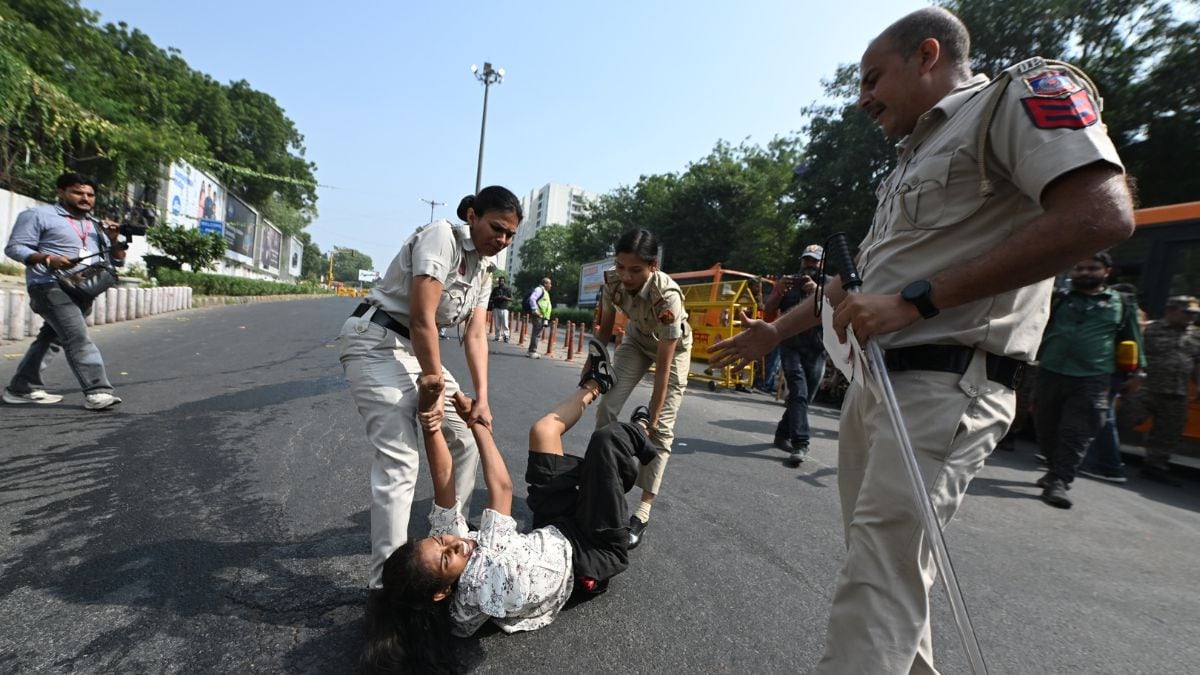
However, this time, the government has kept a close watch on the territoriality of CJP protests and controlled the physical spaces in which dissent takes place. Earlier, the protesters were able to settle at Jantar Mantar and sustain their presence at a particular location. This time, they have been displaced and not allowed to occupy any place where the protests can settle, build a sustained crowd and generate dissent.
In addition to denotifying Jantar Mantar as a protest site, the government has designated three alternative locations: Ramlila Maidan, East Delhi’s CBD Ground, and North Delhi’s Burari. Experts point out that these dispersed, poorly accessible sites lack central transit connectivity, which analysts say could severely curb turnout for future demonstrations.
Along with this, the government has detained leaders who have demonstrated the capacity to mobilise the masses, particularly the youth. Abhijeet Dipke, Ashutosh Ranka and Saurav Das have all been kept away from communicating information or announcing protests. Similarly, Neha Bora, another student leader and national president of AISA, has also been repeatedly kept away from protest sites.
The question is whether the anti-BJP and, more recently, anti-Chief Election Commissioner protests can survive without the very leaders who established CJP as a pressure group. They became a force that prompted the government to shut down more than 50 metro stations, suspend internet services around protest areas and deploy thousands of security personnel to prevent gatherings from taking place at the beginning of the second phase of CJP protests.
The answer, for now, can be seen on the ground. After Friday's Tiranga March in Connaught Place, the protests have not been able to make much of an impact. According to analysts, the protests have been successful in the short and medium term, creating a brand of opposition voices directly calling out alleged irregularities by the government. However, the analysts remain sceptical about the movement's long-term impact.
