



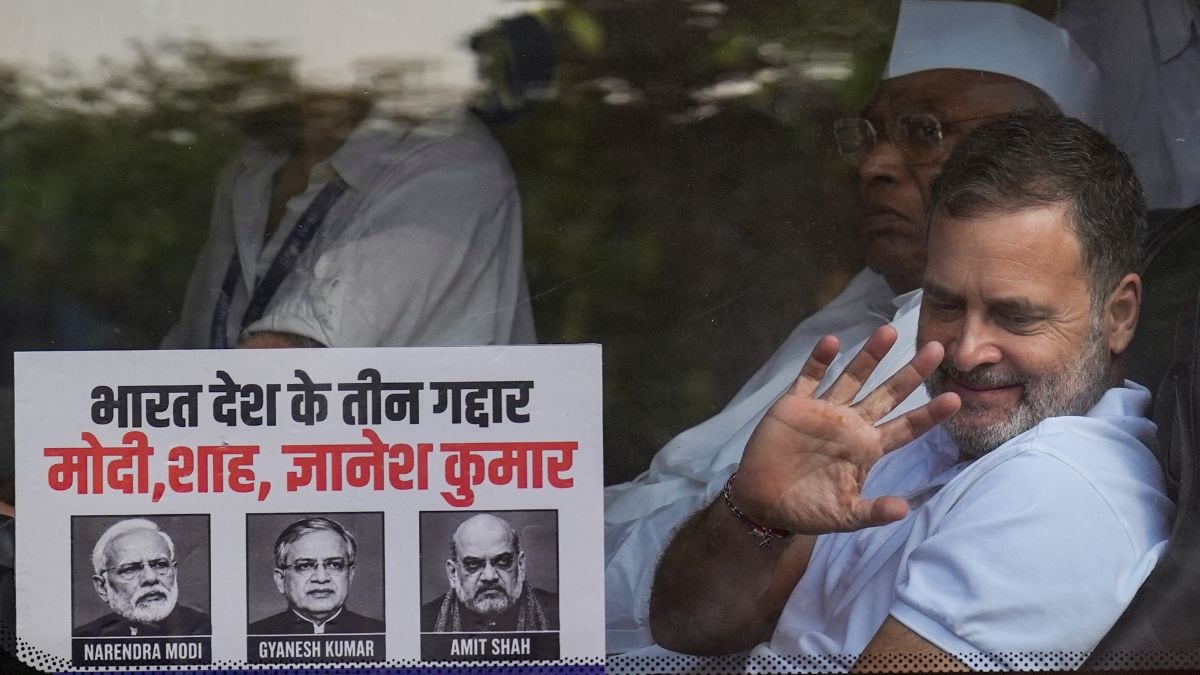
Why is there a major political confrontation between the Opposition and the BJP? Because both sides believe that if they cede their territory now, they will be in terminal decline. If the Chief Election Commissioner resigns, it would lend greater validity to the Opposition’s allegations of “vote theft” by the BJP and put the saffron camp at risk. Party strategists believe that if the Opposition gives up its current momentum, it may fail to regain this level of leverage—ultimately risking its political relevance.
"Eventually it is the Congress which has the nationwide organisation that can sustain its enthusiasm and pressure against the BJP-led government, but if it doesn't, the CJP will and due to the lack of any solid organisational network the whole movement would fizzle out," a Congress leader said.
The Opposition parties have largely relied on investigative reports, the Election Commission’s internal reports and breakdowns of election data to counter the Commission and have sought the resignation of CEC Gyanesh Kumar, alleging malfeasance. However, Opposition leaders have also doubled down on their criticism of the BJP ecosystem, asking why the BJP is responding when the questions are being directed at the Election Commission. They frame this relationship as a nexus between the BJP and the EC, through which, they allege, the saffron camp has been able to win so many elections.
And since people have started coming out on the streets, the Opposition feels this is the best time to build legitimacy by representing the grievances of the masses. However, for the BJP, this is not the same as the CJP’s Jantar Mantar protest, which was led by a youth movement and successfully sought the resignation of Dharmendra Pradhan, the former Union Education Minister. The BJP believes that another step back by the party could completely change the country’s political scenario, empowering the Opposition and consolidating public opinion around the possibility of a political shift.
For the Opposition, particularly the Congress, however, this phase of protests is different. The first protest was led solely by the CJP, and the Opposition simply followed its lead. But this protest has its roots in Rahul Gandhi’s sensitisation programmes, through which he has repeatedly argued that the Election Commission’s alleged bias was responsible for his party’s electoral losses.
At its core, the second wave of protests is built on the groundwork laid by Rahul Gandhi, who is trying to take the movement forward by appealing to the masses to join him in holding the government accountable.
The government, however, has not been allowing people to gather in Delhi. Political observers believe such gatherings could inspire more people to join the protests. Just as the CJP’s first protest became more vocal with each passing day, the same could happen during this second wave. “If that happens, it will create a political narrative, and the party ruling at the Centre will have to bear the brunt of it,” a political analyst said.
The grand old party, which has struggled against the BJP and seen its image eroded by the BJP’s constant campaigning against the party, its legacy and its leaders, sees this as an opportune moment to break free from the constraints it has faced. “Till the Modi-Shah duo says we are tired and we give up, they won’t be able to sleep at night now,” Rahul Gandhi said recently at one of his Chhatron Ki Goonj events.
