



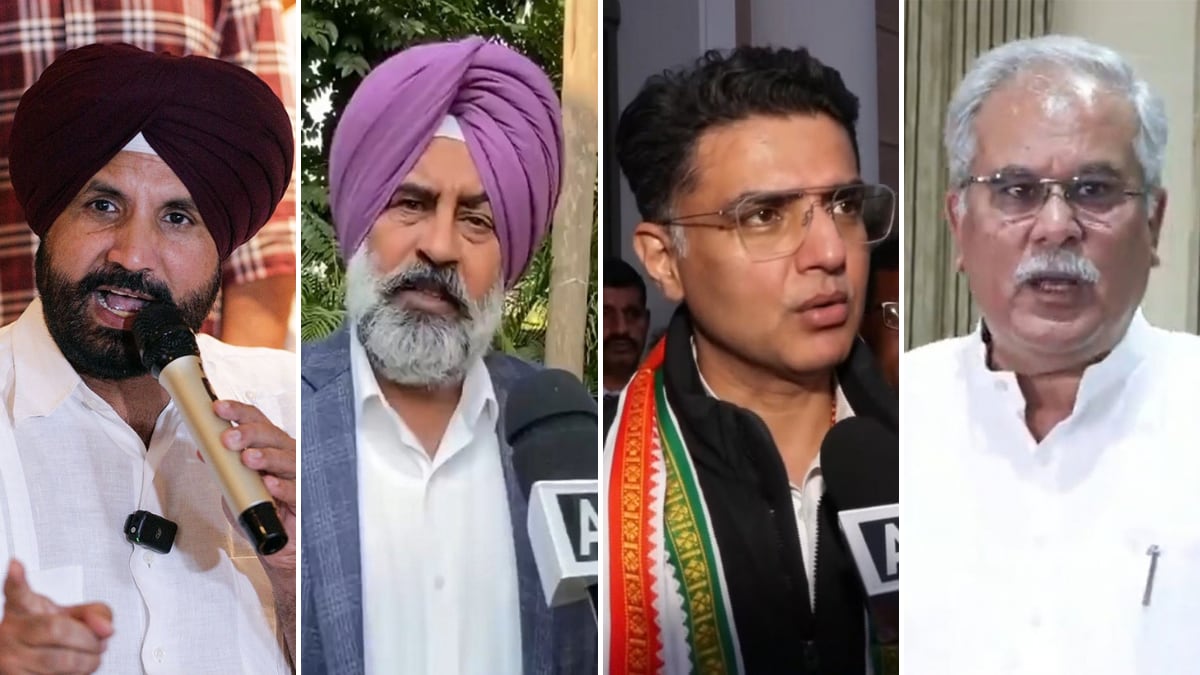
In Punjab, everything seemed set. When Bhupesh Baghel was the Congress general secretary in-charge of the state, he had said that the party would go into the elections with the leaders already in position and without making major changes.
But months later, Baghel himself was replaced by Sachin Pilot, and soon after, state unit president Amarinder Singh Raja Warring was also replaced by Pargat Singh, another Jat leader.
The change has come as the Congress leadership sensed growing divisions within the state unit, which had begun to percolate down to the ranks and could have impacted the party’s expectations in the upcoming Assembly elections in the border state.
After the Congress lost the Punjab Assembly elections in 2022, Warring was given the responsibility of running the state unit. However, according to a section of party leaders, Warring was unable to emerge as a leader who could take along with himself all the groups within the party.
Over time, this intensified and further distanced several leaders from him. Although Warring had—over the past few months—tried to manage the differences and make his functioning more inclusive, that however did not work for him.
According to Warring, soon after receiving a call from the central leadership for a conversation, he himself offered to step down.
Changing the leadership at a time when the party is supposed to begin preparations for the upcoming elections may, however, unsettle its organisational network. A state president builds a team and places leaders in different positions to keep the party functioning smoothly. Replacing the president close to the elections can therefore unsettle the existing hierarchy and ranks.
The new president also has to deal with the old network, which may remain loyal to the predecessor. At the same time, if the new president wants to adjust his own associates into the state unit, it can take time for them to understand their roles and effectively take charge of their responsibilities.
Therefore, the decision to make such a critical change at this stage suggests that the leadership’s assessment was that continuing with Warring could have weakened the party’s position in a state where it would not want to take that risk.
It also points to the deep-rooted factionalism within the party. According to sources, Vijay Inder Singla was initially being considered for the state unit president’s post. However, after Warring’s meeting with Rahul Gandhi, the earlier considerations changed and Pargat Singh was chosen for the post.
The party will now have to rearrange its organisation following the change. Leaders close to Warring say that he had been readying himself for the elections for years and, over the past few months, had started working out strategies to counter the AAP.
With only five months left before the elections, his replacement means the party will now have to adjust to a new leadership structure and strategy at a crucial stage of its preparations.
