



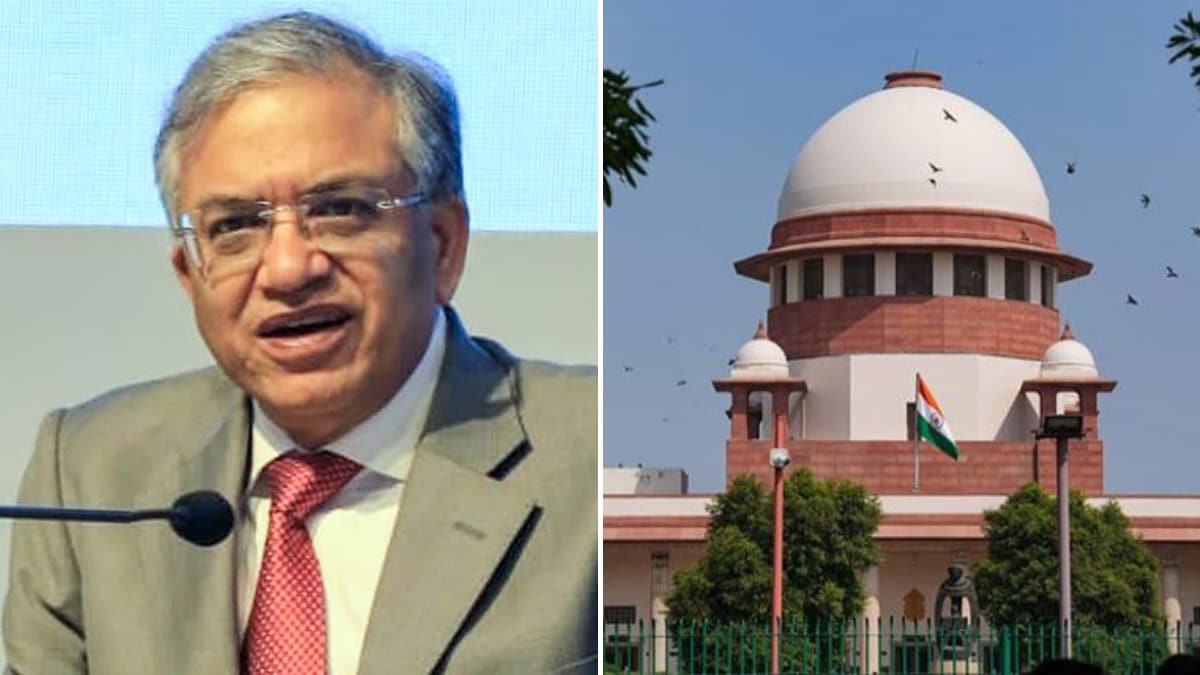
The Supreme Court’s decision to hear a petition challenging Chief Election Commissioner Gyanesh Kumar’s functioning next week could put an important constitutional question under the spotlight: when the Election Commission is a multi-member constitutional body, can responsibility for its decisions be attributed primarily to the CEC?
The question has gained significance after reports that decisions on the Special Intensive Revision (SIR) of electoral rolls and several other matters were taken without the concurrence of the other two Election Commissioners, Sukhbir Singh Sandhu and Vivek Joshi.
A petition before the Supreme Court seeks, among other things, scrutiny of decisions allegedly taken without the concurrence of the full Commission. The Election Commission has disputed the suggestion of unilateral functioning and has maintained that its decisions, including those relating to SIR, were unanimous.
The significance of the Supreme Court proceedings for Kumar lies less in any immediate question of removal and more in whether the Court will examine the limits of the CEC’s individual authority within a multi-member Election Commission. At the heart of the petition is the question whether powers vested by Article 324 in the Commission can be exercised or represented as having been exercised by the CEC without a decision of the Commission in accordance with the law.
Article 324 vests the superintendence, direction and control of elections in the Election Commission, comprising the CEC and, when appointed, other Election Commissioners. The CEC is the chairman of the Commission, but the decision-making framework for a multi-member Commission is collective. Section 18 of the Chief Election Commissioner and Other Election Commissioners Act, 2023 provides that the Commission should, as far as possible, act unanimously and, where there is disagreement, decide by majority.
That distinction could become central to the proceedings.
If the Court finds that the Commission’s decisions were properly taken collectively, questions about individual responsibility would have a different complexion. But if it concludes that the statutory decision-making process was not followed, the Court could examine the legal consequences of such decisions, including whether particular decisions can survive judicial scrutiny.
The Court’s powers, however, have limits. Removal of a sitting CEC is constitutionally protected. Article 324(5) provides that the CEC cannot be removed except in the same manner and on the same grounds as a Supreme Court judge. The provision is intended to protect the independence of the office.
This makes the Supreme Court’s present role potentially more significant as a constitutional check on the exercise of power rather than as a direct route to removal.
There is also a second case pending before the Court concerning the 2023 law governing the appointment of the CEC and Election Commissioners. A September 23 split verdict on whether those challenges should be referred to a Constitution Bench has left the matter before the Chief Justice for further consideration. The challenge includes the replacement of the Chief Justice of India by a Union Cabinet minister in the selection committee.
Taken together, the proceedings could bring the CEC’s office under unusually close judicial scrutiny. The immediate question is not simply whether the Supreme Court can make it tough for Gyanesh Kumar. It is whether the Court will draw a clearer constitutional line between the powers of the chairman and the powers of the Commission and, consequently, between institutional decisions and individual accountability.
