



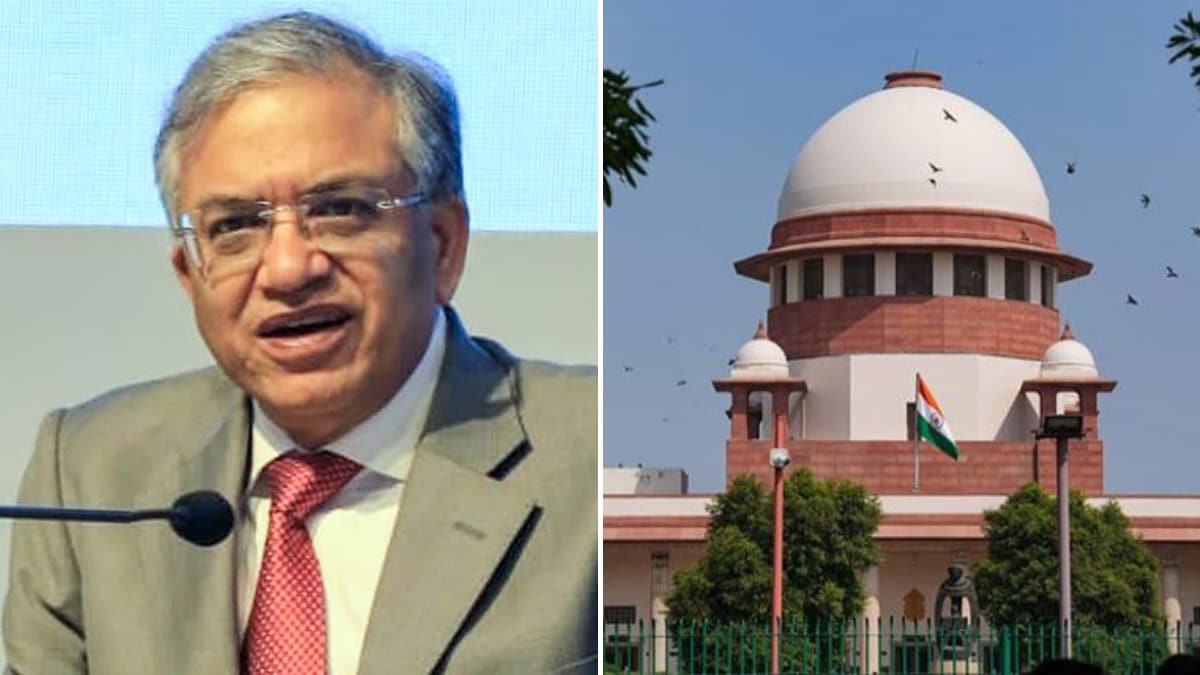
The Election Commission finds itself in yet another controversy after a national daily's report on internal dissent in the top poll body sparked a political storm. Opposition parties have voiced their concerns about the Special Intensive Revision (SIR) rollout and demanded CEC Gyanesh Kumar's resignation.
Election commissioners Sukhbir Singh Sandhu and Vivek Joshi formally objected at least 14 times in 10 months on decisions related to Special Intensive Revision (SIR) of electoral rolls, The Indian Express report said on Wednesday.
While the EC dismissed the commissioners' objections as 'part of the decision-making process', the poll body's entire process has come under scrutiny.
Did the CEC violate the SC judgements?
A petition was filed by a Supreme Court advocate seeking the Attorney General of India's consent to initiate criminal contempt proceedings against Gyanesh Kumar. The petitioner alleged that the CEC violated SC judgements governing the functioning of the ECI.
One of the alleged SC judgment violation is T.N. Seshan v. Union of India.
Petitioner advocate Brajesh Singh said that the judgment requires the EC to function as a multi-member constitutional body and that the CEC is primus inter pares rather than an absolute authority, LiveLaw reported.
In the T.N. Seshan case, the SC held that the CEC could not be projected as being "mightier than the institution" and that decisions of a multi-member EC were decisions of the Commission and not of its Chairman.
Another SC judgment refers to Anoop Baranwal v. Union of India. The cases refers to the constitutional framework concerning the EC and emphasised the importance of independent EC for ensuring free and fair elections.
It notes that the ECI is described as an institution entrusted with the task of conducting elections in a fair, impartial and transparent manner.
Singh’s petition alleged that modifying the voter rolls and electoral database without the approval of the other commissioners threatens ongoing electoral processes and judicial scrutiny over transparency.
Section 15 (1) (b) of the Contempt of Courts Act allows any person to file a motion or petition for criminal contempt in the SC or a HC, provided they have obtained the written consent of the Advocate-General, or the Attorney-General for the Supreme Court.
Taking up the issue, Cockroach Janta Party had urged Gyanesh haters to join together seeking his ouster.
Congress MP Priyanka Gandhi Vadra on Thursday said that anyone who tampers with the democratic process of our elections commits treason against the country.
"Our stand is very clear. I don't think anyone holding that position should have the kind of legal protection that they have. If they have done illegal things like tampering with the voter list, removing the names of 13 crore voters, then I believe that is a criminal act against democracy, the Constitution and the country," said Gandhi.
