



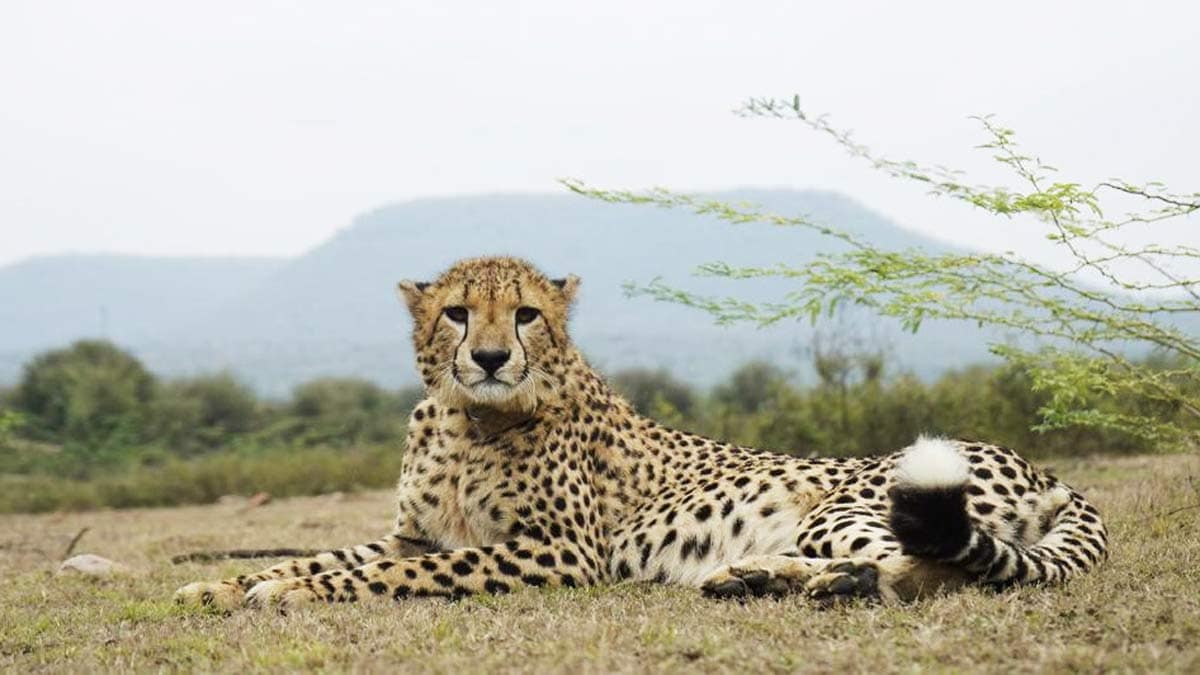
India’s cheetah story entered its fifth year on a gloomy note on Monday, with the death of Gaurav, a Namibian cheetah aged over 10, at Kuno National Park, Madhya Pradesh.
Gaurav died at around 4 pm on Monday while undergoing treatment, days after he was rescued from the wild with signs of severe weakness. According to the Cheetah Project, he was found weak and dull on September 12, with visible muscle wasting and severe dehydration. He was immediately treated and shifted to Palpur, where he was kept in quarantine for close observation.
Veterinarians suspected an underlying chronic condition. Despite continued treatment and supportive care, his condition deteriorated. The exact cause of death will be known only after the post-mortem and analysis of samples collected by the veterinary team, officials said.
Gaurav’s death comes just four days after Project Cheetah marked four years since the first cheetahs were brought back to India on September 17, 2022. The milestone has been accompanied by signs that the project is gradually moving beyond its original reintroduction phase.
One of the biggest developments came with the birth of four cubs at Kuno. The new arrivals add to a growing population of cheetahs born in India and strengthen hopes of establishing a sustainable breeding procedure that can survive without continual supplementation from Africa.
The project has also begun widening its geographical footprint. A cheetah was released at Gandhi Sagar Wildlife Sanctuary by Madhya Pradesh Chief Minister Mohan Yadav on Sunday, taking the number of cheetahs at the sanctuary to four. The move is part of the effort to establish a second cheetah population in Madhya Pradesh and reduce the project’s dependence on a single landscape.
Gaurav’s death, however, brings the focus back to the challenges of maintaining an introduced population in the wild. Unlike the young cubs born at Kuno, he was an ageing animal whose health had already deteriorated before he was rescued.
With his death, Kuno now has 51 cheetahs, including 36 born in India. Sixteen are currently ranging freely in the wild. Four cheetahs at Gandhi Sagar take India’s total cheetah population to 55, according to the latest official figures.
The figures underline the mixed nature of India’s four-year cheetah experiment: the population is breeding, new habitats are being added, and more animals are adapting to Indian climate conditions, but mortality remains an unavoidable part of the difficult journey towards establishing a viable free-ranging population.
