



Historians who know their job will tell you that ancient and medieval texts carrying religious or secular content cannot be fully understood without the help of their commentaries. For example, it is difficult to unravel the meaning of the ancient Vedas or Panini’s Ashtadhyayi unless one reads the detailed exegeses of Acharya Sayana and Patanjali respectively, written several centuries later.
It was the RSS’s mouthpiece, Organiser, published in a language which the sangh parivar despises as a colonial hangover, that fleshed out Prime Minister Narendra Modi’s latest pet thesis—dimagi naxals.
On our 80th Independence Day, without naming anybody, he vaguely lamented that individuals with Maoist ideology had made their place in the corridors of power for several years. It was Prafulla Ketkar who cited the National Advisory Council (NAC) specifically, as a ‘classic’ example of the takeover of the governance systems and machinery by dimagi naxals. Readers will recall, the NAC was instrumental in making the United Progressive Alliance Government institute laws to give effect to key fundamental rights guaranteed by our Constitution—one of them being the RTI Act, which effectuates people’s right to know what the administration is doing in their name.
This is where my analogy becomes compelling because modern scholars employing analytical tools have shown how, on occasion, commentators penned explanations that were influenced by the political context of their times—at complete variance with the meaning and intent of the original passages.
In May 2011, while inaugurating its national RTI cell, then-BJP President Nitin Gadkari appreciated the usefulness of RTI as a tool to establish their goal of ‘Ram Rajya’ or ideal state. He exhorted participants to use RTI to make governments more accountable. He also urged them to train 50-100 people in every district and village in the art of quizzing public authorities.
It is public knowledge that the BJP had employed RTI systematically to expose corruption wherever it was in the opposition and found electoral success later on.
In fact, some of its luminaries like Arun Jaitley and Jaswant Singh filed RTI applications themselves demanding access to sensitive and confidential government records relating to the Bofors scam and the abolition of privy purses.
Today, the votaries of the dimagi naxal trope are ignoring these inconvenient truths from their recent past.
It is an undeniable fact that all eight RTI laws passed between 1997 and 2004 were under governments led by either the Indian National Congress or the DMK (Tamil Nadu) and the J&K People’s Democratic Party.
The only transparency law enacted by the BJP-led NDA Government in 2002 was never implemented. But, between 2019 and 2023, both retrograde amendments to the central RTI Act were pushed through Parliament by the NDA Government despite vociferous opposition. The Whistleblowers Protection Act crafted under the UPA to protect officials, citizens and media persons from harm for exposing corruption and wrongdoing in government has also been under lock and key for the last 12 years.
Meanwhile, more than a hundred citizens have paid the price of their lives for demanding transparency and accountability through RTI.
It is well-documented that the very vocal and organised public demand for transparency laws came from marginalised citizens living in rural areas and urban slum clusters, many of whom were unlettered.
In Rajasthan, officials arrogantly advised them to demand access to food, shelter and work instead of copies of government records which they could neither eat nor use to cover their nakedness.
Yet, it was this ‘illiterate’ civil society which exposed corruption and mismanagement of public funds through a series of ‘jan sunwais’ (public hearings) based on records accessed from government files and demonstrated that preventive measures like social audits could be put in place.
The people’s movement for holding governments accountable by demanding transparency spread far, wide and deep with the enforcement of the central RTI Act.
On average, 50-60 lakh RTIs are filed across the country every year. BJP recognised its potential for making electoral gains only after losing the Lok Sabha elections in 2009 and decided to include RTI as a part of its ‘toolkit’ for ‘regime change ’, unlike activists who were only aiming at systemic reform.
The numerous stories of RTI interventions posted on the social media accounts of the BJP’s State RTI cells bear testimony to their efforts to shape public opinion against the parties/alliances which were in power. Few other opposition parties have achieved such success till date.
Interestingly, at least one research study funded by a Central Government scholarship has shown how RTI activism gave birth to a new line of leadership in rural Odisha as an alternative to politicians to help the citizenry in their dealings with an insensitive administration.
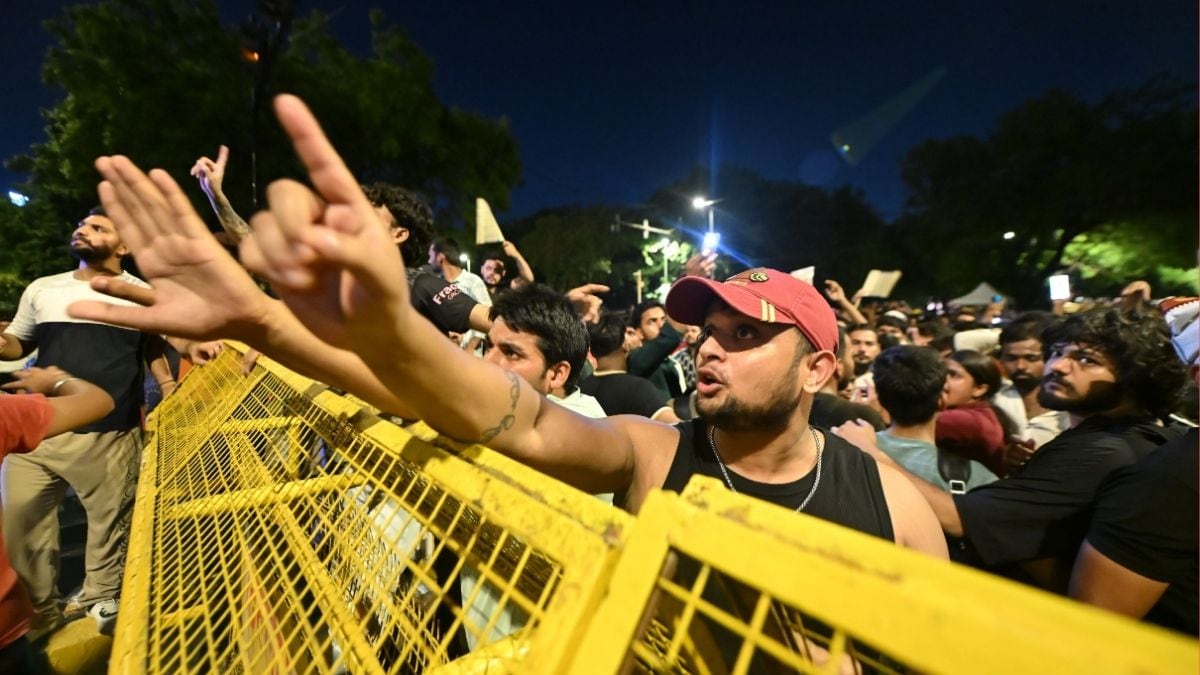
It is no surprise that several leading lights of the erstwhile India Against Corruption and the recent Youth Movement catalysed by the Cockroach Janata Party are either RTI activists themselves or advocates of open government.
Contemporary history shows that civil society movements often led by the youth emerge to demand reform when opposition political parties lack the imagination or fail to do their job effectively.
Since mid-2014, most of the agenda-setting in public affairs is done by the party in power, be it the earlier demonetisation exercise or the latest Special Intensive Revision of electoral rolls. The opposition is reacting intermittently and inadequately.
In 2011, Gadkari also said that politics is the instrument of social reform. Indeed, his party gained currency after Advani’s Rath Yatra hit the streets on the Ram Janmabhoomi issue. If the youth have hit the streets today demanding accountability for the government’s actions and omissions and reform of the manner in which politics is being conducted, should they be demonised?
While speaking at a public event in Delhi, during the early 2000s, former Chief Election Commissioner J.M. Lyngdoh had acerbically lamented that politics in India was like churning poop; any amount of churning only yields poop, not butter. Only time will tell if the political churning that our youth, grounded in the harsh realities of life, have initiated, will lead to freedom from want and fear, i.e., the realisation of our Constitution’s vision of dignity, justice, liberty, equality and fraternity for all.
The author is director, Commonwealth Human Rights Initiative, New Delhi.
The opinions expressed in this article are those of the author and do not purport to reflect the opinions or views of THE WEEK.
