



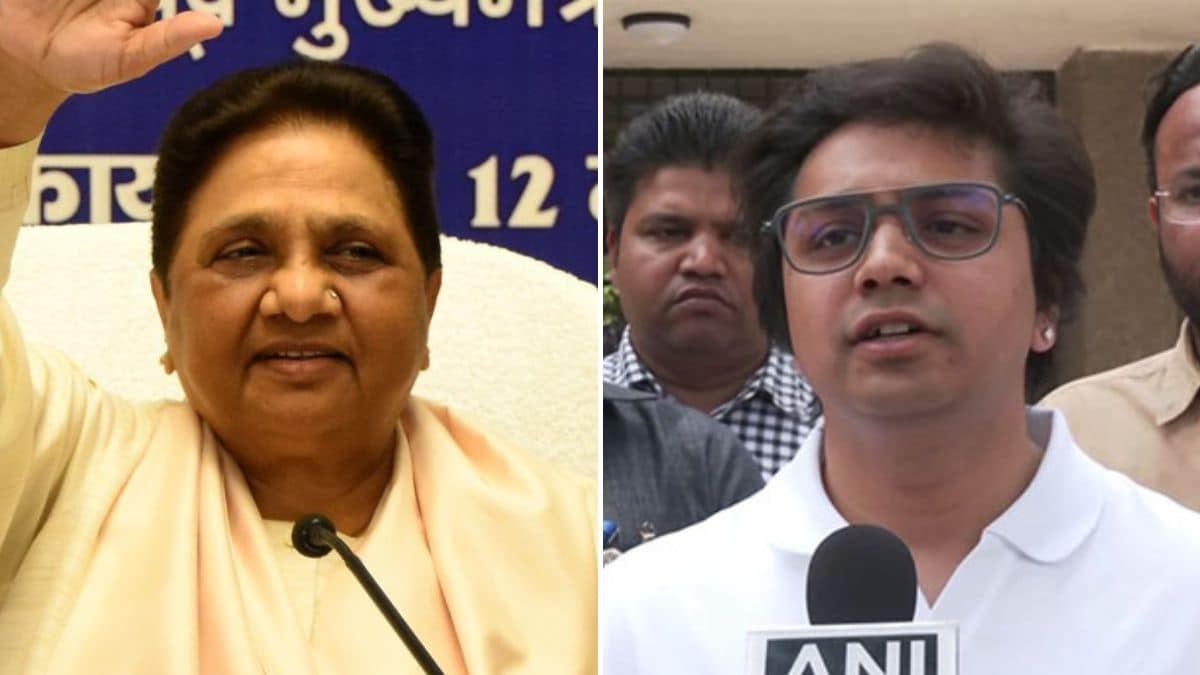
When Akash Anand was removed on September 3 from his post as National Coordinator of the Bahujan Samaj Party (BSP), party supremo and former Uttar Pradesh CM Mayawati explained that it was due to a lack of "maturity".
However, the third such move against the young BSP leader, often seen as Mayawati's heir, has led to speculations that it could be more than just a lack of maturity that led to Akash being pushed to the margins of the party yet again—that too, in just the span of two years.
Indeed, amid reports of infighting in the organisation that led to Akash being demoted to ‘party worker, BSP’ as per his X profile now, an Aaj Tak report claimed that it was a difference in politics that led to the move.
The report added that it was Akash's aggressive style of politics—especially with topics like reservation and other Dalit issues—and his harsh criticism of the BJP and the RSS that Mayawati was not comfortable with. She preferred that he present his views in a measured way, without directly attacking the ruling party.
In fact, it is speculated that a recent X post by the BSP leader allegedly contributed to his ouster, and was later deleted.
The post had been written in support of a Dalit taxi driver from Lucknow, Ankit Kumar, who had claimed he had been fired from Rapido after he confronted four railway employees for their alleged casteist remarks.

"Ankit was running a family by driving a cab and now his livelihood was taken away, just because he raised his voice for his dignity and the respect of his society. RSS chief Mohan Bhagwat ji, who has his own opinion on ending reservation, should answer the question of crores of Dalits like Ankit," he wrote, justifying reservation.
His August 10 rally in Hathras is also said to have made things worse, as it saw him launch scathing attacks against PM Modi and the Yogi Adityanath-led UP government.
He had also addressed Rahul Gandhi as 'uncle' during the rally, which went viral and sparked backlash within the party.
Ironically, this also comes as Mayawati had promised to induct younger leaders into various roles as the party's vote base erodes, and to connect the party's message with Gen Z and Gen-Alpha were unhappy with the political system and government policies.
