



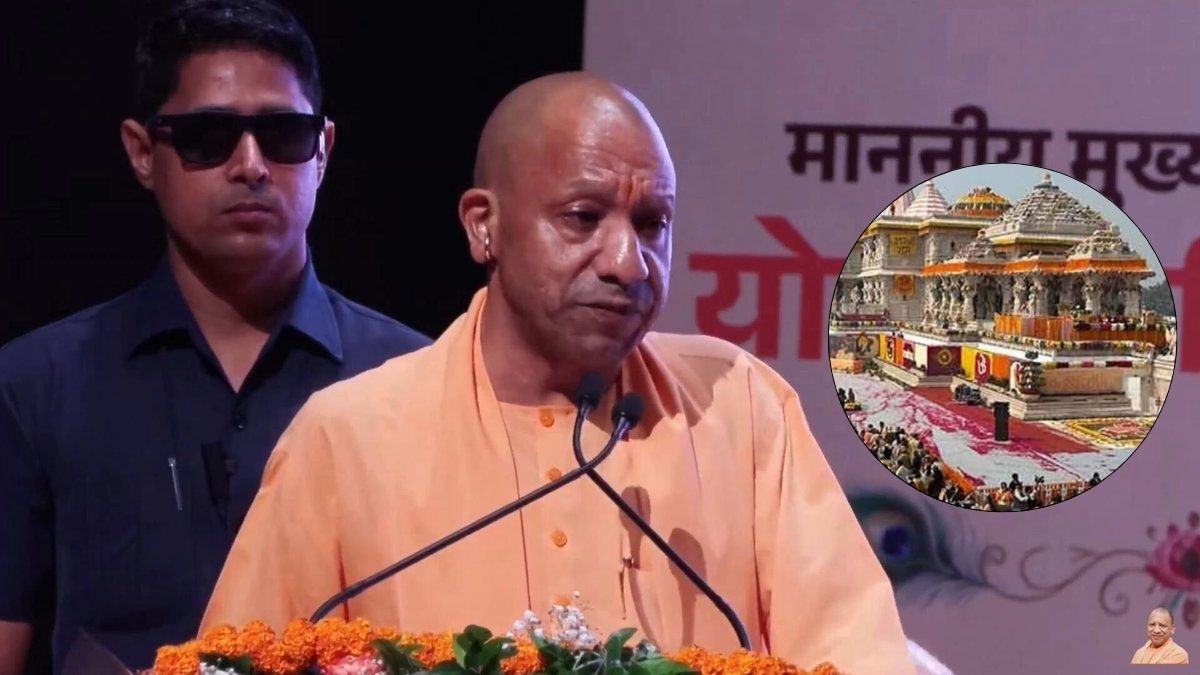
Uttar Pradesh CM Yogi Adityanath landed in Mathura for a two-day visit that will coincide with Janmashtami. His visit comes as the BJP prepares for the 2027 Assembly elections, with the development of religious sites emerging as an important part of the government's focus.
In Mathura, there have been calls and promises to build a grand temple at Krishna Janmabhoomi, along the lines of the Ram temple built in Ayodhya.
Yogi's visit also comes against the backdrop of the government's larger focus on developing major Hindu religious centres. Ayodhya has seen large-scale development around the Ram temple, while the Kashi Vishwanath temple corridor has become a major attraction. A similar corridor is being developed in Vrindavan around the Banke Bihari Temple. Several projects are also under way across the Braj region, covering Mathura, Vrindavan, Gokul and Barsana.
This year, the Mathura temple issue has acquired more political attention. In March, while at the Krishna birthplace, Yogi said that a grand Krishna temple could come up in Mathura, like the Ram temple in Ayodhya.
The statement came as some Hindu religious leaders began pushing the issue more openly. In July, Swami Sachchidanand Maharaj of the Chitragupt Peeth announced a karseva (voluntary community service) for the “liberation” of Krishna's birthplace. The call was explicitly compared with the 1990 karseva that preceded the Babri Masjid demolition and the Ram temple movement.
Sachchidanand also wrote to Akhilesh Yadav, referring to his Yadav background and asking him to join the campaign. The Vishwa Hindu Parishad (VHP), however, kept its distance, saying that the matter was before the courts.
The karseva planned for August 9 did not take place. The organisers called it off, citing the Kanwar Yatra. Now, the new date of the karseva announced by the same group is December 6, which is also the anniversary of demolition of the Babri Masjid.
For the state, the timing matters, as the BJP enters the 2027 elections facing a political contest that is different from previous elections. The construction of the Ram temple was a major promise and electoral issue for the BJP for years. The temple in Ayodhya has now been built and consecrated, changing the political context in which the party approaches the next election.
The BJP's challenge is to retain the support of its core Hindu voters while dealing with the caste and welfare issues that are likely to shape the next election.
The Samajwadi Party has been trying to consolidate its support among backward castes and other social groups while making welfare a major part of its political pitch. The BJP, meanwhile, has to manage demands over reservation and prevent caste mobilisation from cutting across its wider Hindu coalition.
This is where Mathura could become politically important. The development of Mathura and Vrindavan fits into the BJP government's wider emphasis on religious tourism and infrastructure around major Hindu sites. The temple issue adds another political dimension to that development.
The Krishna temple issue also has an emotive appeal in Uttar Pradesh as the BJP may try to cash in on it.
