



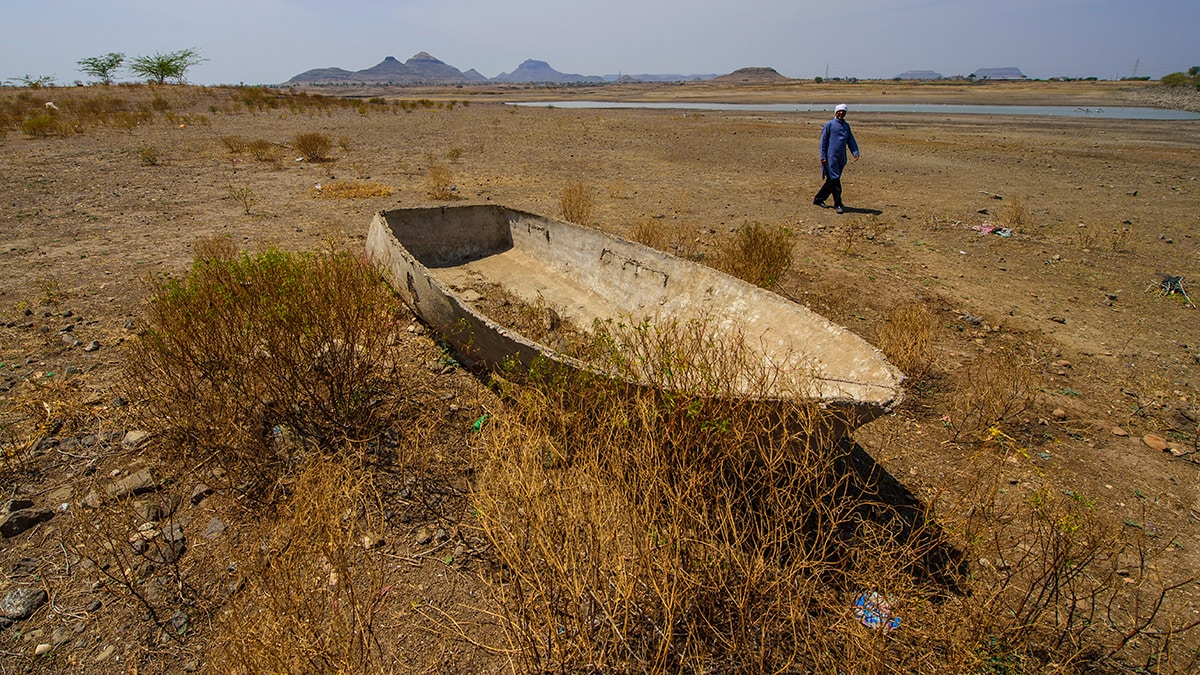
Maharashtra could be heading into a worrying phase of the monsoon, with the India Meteorological Department (IMD) forecasting below-normal rainfall for September after a sharply deficient August.
The development has raised concerns over water availability and agricultural conditions, particularly in Marathwada and Vidarbha, where rainfall has already been uneven and temperatures have remained relatively high.
Maharashtra had entered August with a comfortable rainfall surplus. The state had recorded 40% above-normal rainfall in July, but the situation changed dramatically during August, when rainfall was 46% below the monthly average, according to IMD data.
For the monsoon season from June 1 to August 31, Maharashtra's cumulative rainfall was 12% below normal. At the end of July, the state had instead been running with a 6% surplus.
The uneven distribution of rain is particularly evident at the district level. As of August 31, 17 districts had recorded rainfall deficits ranging from 20% to 59%, putting them in the IMD's 'deficient' rainfall category.
The Konkan-Goa meteorological subdivision recorded an eight-per-cent deficit, while Madhya Maharashtra was around two per cent above normal. Marathwada, however, recorded a 30% deficit, while Vidarbha also experienced a significant shortfall.
Only a handful of districts received excess rainfall during August, highlighting the highly uneven nature of the monsoon across the state.
The IMD's forecast of below-normal rainfall in September could compound the situation, especially for areas dependent on continued monsoon showers for reservoirs, drinking-water supplies and late-season agricultural requirements.
An IMD scientist, SD Sanap, said the situation had been different earlier in the season, but September was likely to remain relatively dry. The IMD has also indicated the possibility of isolated rainfall over parts of the state around September 4-5, although this is unlikely to alter the broader seasonal outlook significantly.
The rainfall pattern is also being accompanied by contrasting temperature conditions. Marathwada and Vidarbha are expected to remain vulnerable to relatively higher temperatures, while temperatures in Konkan and Madhya Maharashtra are likely to remain closer to or below normal, as per the report.
The IMD has attributed the poor rainfall in August, in part, to the movement of low-pressure systems. These systems did not progress sufficiently towards Gujarat and Rajasthan, leaving large parts of central and western India, including Maharashtra, with less rainfall.
The contrast is particularly striking given the heavy rain recorded earlier in the season.
Pune provides an indication of how unusual the August conditions were. The district received excess rainfall during the monsoon season, but August itself was exceptionally dry. According to the IMD, Pune recorded just 24.7 mm of rain in August, making it the city's driest August since 2015. The historical record remains August 1972, when Pune received only 12.4 mm of rainfall.
After a strong July, the sharp August deficit and a forecast of below-normal September rainfall could leave several parts of the state confronting a difficult end to the monsoon.
For farmers, reservoirs and communities already dealing with uneven rainfall, the coming weeks will be crucial.
