



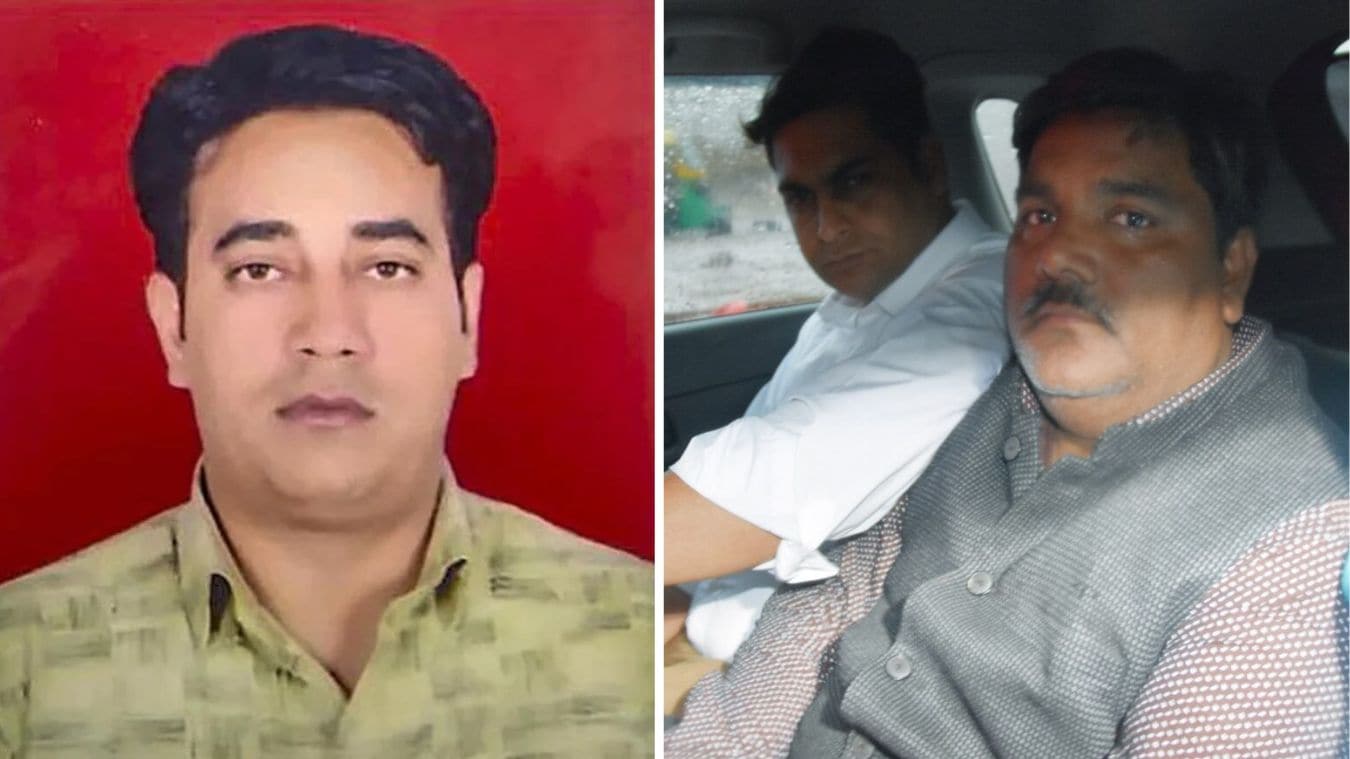
Tahir Hussain, a former AAP councillor who was sentenced to life imprisonment by a trial court on Friday, said he will get justice from the Delhi High Court.
Hussain and four others were handed life imprisonment in the murder of Intelligence Bureau (IB) officer Ankit Sharma during the 2020 Delhi riots.
His reaction came when reporters approached him outside the trial court in Karkardooma, Delhi. "Justice will come from the High Court. The High Court will give justice; it is not too late," he said.
The court on Friday said the case did not fall within the "rarest of rare" category warranting death penalty and that the prosecution could not prove that the convicts were beyond reformation.
Responding to the verdict, Delhi Law Minister Kapil Mishra said the ruling was "the beginning of justice", hoping that the sentence would be converted into death penalty by the Delhi High Court.
"The cruelty with which Ankit Sharma was killed, stabbed with knives even after death, the body thrown into a drain---this is certainly the 'Rarest of Rare'. It is hoped that in the High Court, this life imprisonment will be converted to the death penalty," Mishra posted on X.
Additional Sessions Judge Praveen Singh noted that Sharma was killed by "a murderous mob baying for blood." But the court also observed that the prosecution failed to establish that the convicts were beyond reform or that they would continue to be a threat to society.
Hussain was convicted under IPC sections 302 (murder), 365 (kidnapping or abducting with intent secretly and wrongfully to confine a person), 147 (rioting), 148 (rioting armed with a deadly weapon), 153A (promoting enmity) and 188 (disobedience to an order duly promulgated by a public servant), read with Section 149 (unlawful assembly).
On March 24, 2024, the Delhi court framed charges against Hussain and 10 other accused under various IPC provisions. Six of the co-accused were acquitted on July 13, 2026, while Hussain and four others were convicted.
